Menu


Trending Top Sellers
$135/Month BAi 1501 THE MIRROR Commercial Embroidery Machine - 15-Needle Custom Apparel & Structured Hat System


$135/Month BAi 1501 THE MIRROR Commercial Embroidery Machine - 15-Needle Custom Apparel & Structured Hat System
- Price
- $135
$185/Month BAi THE VISION Multi-Head Commercial Embroidery Machine - Industrial High-Speed Multi-Head Apparel System


$185/Month BAi THE VISION Multi-Head Commercial Embroidery Machine - Industrial High-Speed Multi-Head Apparel System
- Price
- $185
$235/Month BAi THE VISION 2-Head Commercial Embroidery Machine - Dual-Head 15-Needle Custom Apparel System


$235/Month BAi THE VISION 2-Head Commercial Embroidery Machine - Dual-Head 15-Needle Custom Apparel System
- Price
- $235
$890/month NEW - IN STOCK -Mimaki 64" Hybrid – Complete Turnkey Package | UJ330H-160 Hybrid UV-LED Printer


$890/month NEW - IN STOCK -Mimaki 64" Hybrid – Complete Turnkey Package | UJ330H-160 Hybrid UV-LED Printer
$185/Month New Mimaki DTF TxF300-75 32" High-Speed Dual Printheads DTF Printer


Sale


$185/Month New Mimaki DTF TxF300-75 32" High-Speed Dual Printheads DTF Printer
PROMO: $285/month New Mimaki DTF TxF300-75 32" DTF BUNDLE DTF PRINTER (DIRECT-TO-FILM) Dual Print Heads with Miro 36 Shaker Bundle


Sale


PROMO: $285/month New Mimaki DTF TxF300-75 32" DTF BUNDLE DTF PRINTER (DIRECT-TO-FILM) Dual Print Heads with Miro 36 Shaker Bundle
- Sale price
- $285
- Regular price
- $695
PROMO: $268/month New Mimaki DTF TxF300-75 32" DTF BUNDLE DTF PRINTER (DIRECT-TO-FILM) Dual Print Heads with Miro 24 Shaker Bundle


Sale


PROMO: $268/month New Mimaki DTF TxF300-75 32" DTF BUNDLE DTF PRINTER (DIRECT-TO-FILM) Dual Print Heads with Miro 24 Shaker Bundle
- Sale price
- $268
- Regular price
- $28,600
$495/month - 4'x8' Plytronix Flatbed Cutter TX-1325 (4.26 ft x8.2 ft ) High-Precision Digital Flatbed Cutting Machine with Automated Finishing System Utilizes Interchangeable Tool Heads


$495/month - 4'x8' Plytronix Flatbed Cutter TX-1325 (4.26 ft x8.2 ft ) High-Precision Digital Flatbed Cutting Machine with Automated Finishing System Utilizes Interchangeable Tool Heads
- Price
- $495
$99/month - JAGUAR 70" AUTOMOTIVE SPECIAL EDITION PPF/TINT Cutter Plotter with Anti-Static kit and Tint Velvet Film.


Sale


$99/month - JAGUAR 70" AUTOMOTIVE SPECIAL EDITION PPF/TINT Cutter Plotter with Anti-Static kit and Tint Velvet Film.
- Sale price
- $99
- Regular price
- $145
$99/Month - (FREE SHAKER) DTF x2 Epson Print Heads (110V) YINSTAR A3 13" DTF PRINTER


Sale


$99/Month - (FREE SHAKER) DTF x2 Epson Print Heads (110V) YINSTAR A3 13" DTF PRINTER
- Sale price
- $99
- Regular price
- $185
From $99/month - New Prestige R1 13" DTF Printer Bundle - Includes Prestige R1 DTF Printer, Startup Package and Compatible Machine Options -MC


From $99/month - New Prestige R1 13" DTF Printer Bundle - Includes Prestige R1 DTF Printer, Startup Package and Compatible Machine Options -MC
- Price
- From $99
From $149/month New Prestige R2 PRO 13.75" WITH CUTTER DTF Printer 110V A3+ with Bundle options -MC


From $149/month New Prestige R2 PRO 13.75" WITH CUTTER DTF Printer 110V A3+ with Bundle options -MC
- Price
- From $149
From $417/Month 9-Colour BUNDLE 24" Prestige XL2 PRO New DTF Station Printer with Automatic Powder Applicator/Shaker/Oven/Purifier -MC


From $417/Month 9-Colour BUNDLE 24" Prestige XL2 PRO New DTF Station Printer with Automatic Powder Applicator/Shaker/Oven/Purifier -MC
- Price
- From $417
From $497/month - 9 COLORS Prestige XL3 with 3 Epson i3200 DTF Printer Bundle with Auto Powder Shaker/Oven


From $497/month - 9 COLORS Prestige XL3 with 3 Epson i3200 DTF Printer Bundle with Auto Powder Shaker/Oven
- Price
- From $497
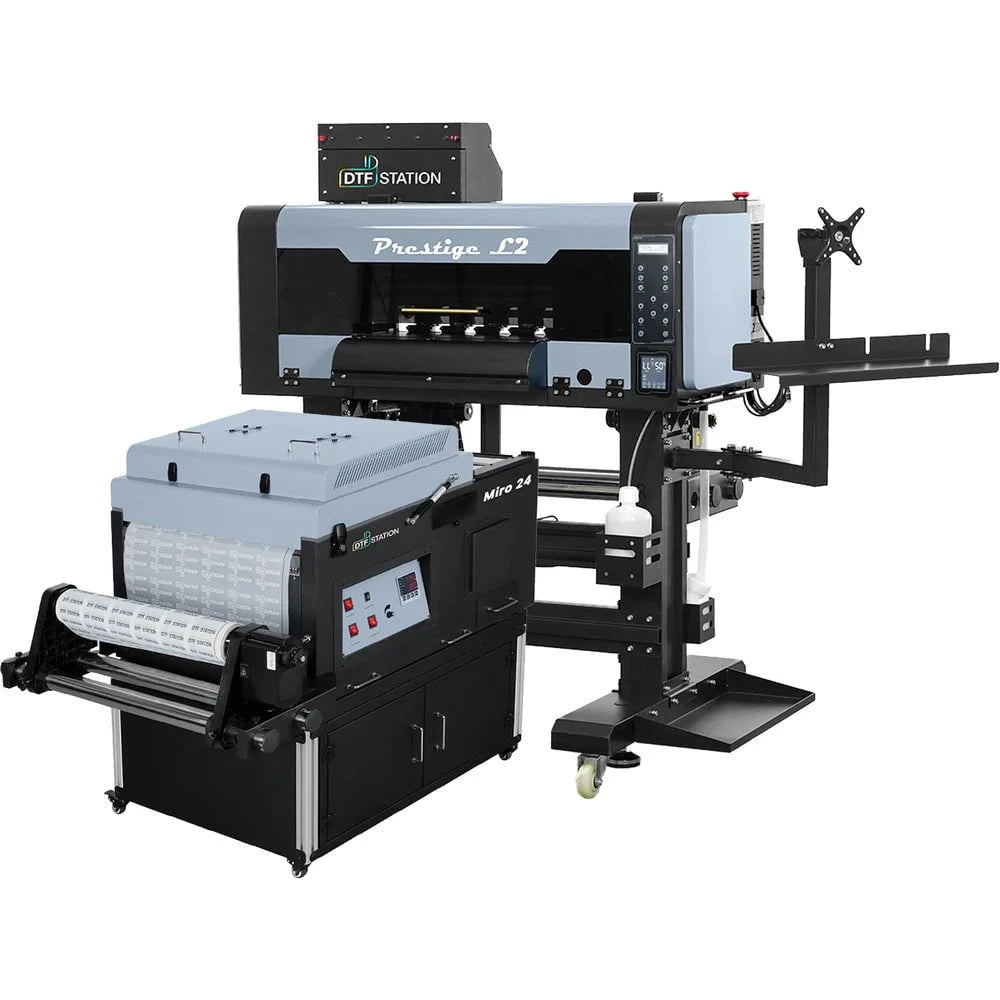
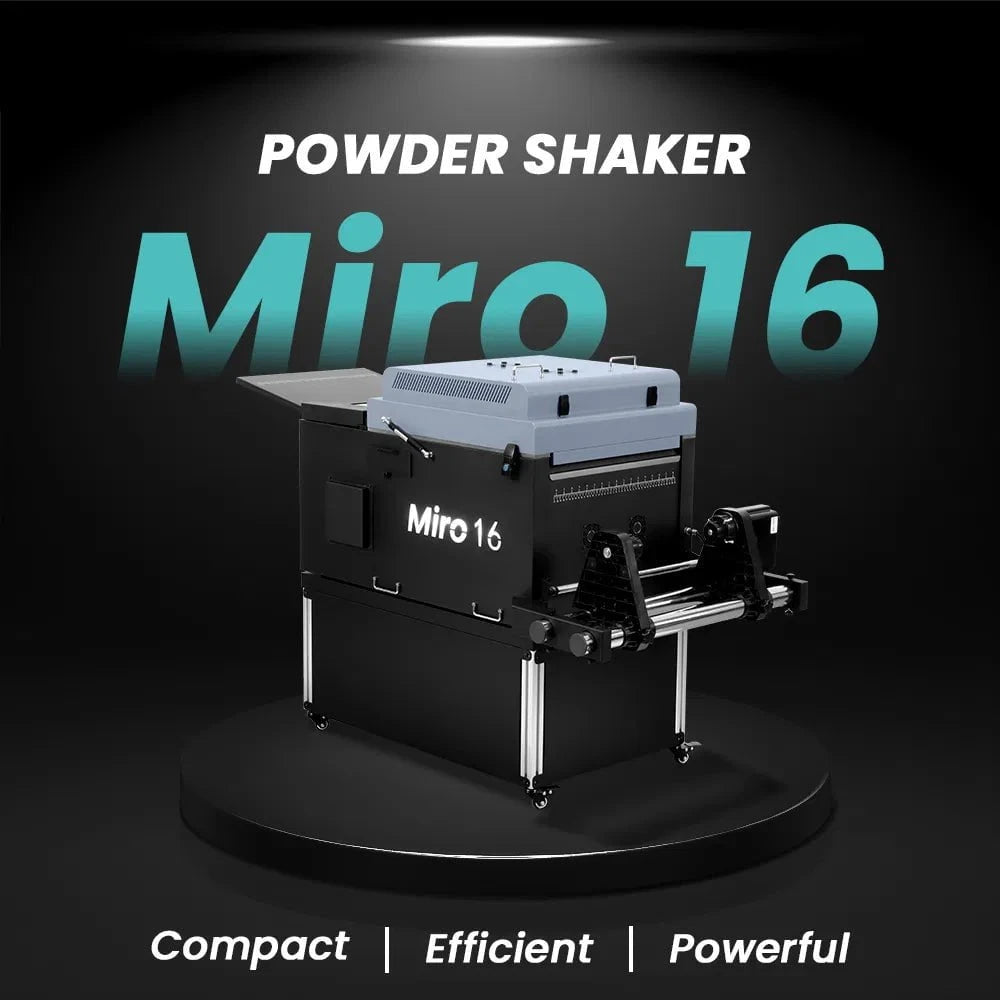
$379/month Prestige L2 18.5" DTF Printer Dual i3200 with Miro 16 Automatic Powder Applicator/Shaker oven and Built-In Oven
Sale
$379/month Prestige L2 18.5" DTF Printer Dual i3200 with Miro 16 Automatic Powder Applicator/Shaker oven and Built-In Oven
- Sale price
- $379
- Regular price
- $465
$195/Month 27" IN-STOCK Yinstar High Precision 27" Commercial Production DTF Printer with 2x i3200-A1 Epson Printheads DTF Powder Shaker.


Sale


$195/Month 27" IN-STOCK Yinstar High Precision 27" Commercial Production DTF Printer with 2x i3200-A1 Epson Printheads DTF Powder Shaker.
- Sale price
- $195
- Regular price
- $249
$247/Month 24" IN-STOCK Yinstar WI-FI DTF Printer with 2x Epson I3200 Print Heads Including DTF Powder Shaker Machine with Air Filter and Auto Powder Recycling System


Sale


$247/Month 24" IN-STOCK Yinstar WI-FI DTF Printer with 2x Epson I3200 Print Heads Including DTF Powder Shaker Machine with Air Filter and Auto Powder Recycling System
- Sale price
- $247
- Regular price
- $350
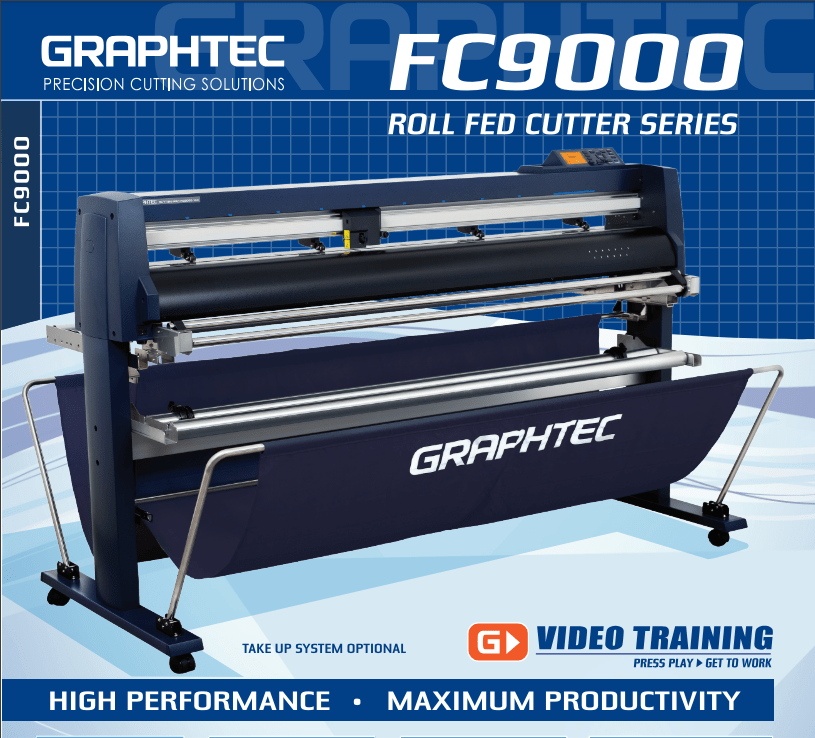
$145/MONTH DEMO 64" Graphtec FC9000-160 For Automotive Professionals with 50 ft accurate tracking of Window Tint, PPF Film & Vinyl. Roll-fed Cutting Plotter

Sale

$145/MONTH DEMO 64" Graphtec FC9000-160 For Automotive Professionals with 50 ft accurate tracking of Window Tint, PPF Film & Vinyl. Roll-fed Cutting Plotter
- Sale price
- $145
- Regular price
- $225
Yinstar A3 Multifunction UV-DTF Flatbed Printer with Epson Heads for Glass Bottles, Mugs, Phone Cases and more


Sale


Yinstar A3 Multifunction UV-DTF Flatbed Printer with Epson Heads for Glass Bottles, Mugs, Phone Cases and more
- Sale price
- $3,950
- Regular price
- $9,995
$95/month PLYTRONIX Pneumatic PRO 64” with Anti-Static System, Large Format Auto High-Speed Cold/Hot Laminator for Signs, Graphics, Banners, Prints & More


Sale


$95/month PLYTRONIX Pneumatic PRO 64” with Anti-Static System, Large Format Auto High-Speed Cold/Hot Laminator for Signs, Graphics, Banners, Prints & More
- Sale price
- $95
- Regular price
- $165
Cast vs. Polymeric Overlaminate: Which Should You Use for Vehicle Wraps?

The Structural Difference Between Cast vs. Calendered Overlaminate
Cast vs. calendered overlaminate comes down to manufacturing processes. Polymeric (calendered) films are stretched through heavy rollers, embedding mechanical memory that causes shrinking. Conversely, a 2 mil cast PVC lamination film is poured as a liquid, resulting in zero shrinkage and maximum dimensional stability for complex 3D vehicle applications.
Print shops often ruin expensive graphics by misapplying the wrong protective film. When you laminate car wrap vinyl with a polymeric roll, the material naturally attempts to shrink back to its original shape. This physical tension aggressively pulls the printed graphic away from the vehicle's surface.
Cast vehicle wrap overlaminate eliminates this tension entirely. Because manufacturers pour the liquid PVC onto a casting sheet, the plastic cures without any mechanical stress. This lack of memory allows the film to drape perfectly over harsh angles, ensuring high-end vehicle wrap protection without edge curling.
For rigorous chemical specifications on PVC stability during extreme outdoor weathering, operators can consult the American Society for Testing and Materials (ASTM) guidelines on exterior plastic degradation thresholds.
Why Do Car Wraps Lift in Deep Channels?
Car wraps lift in deep channels because standard polymeric laminates lack the structural flexibility to maintain tension inside recessed curves. Using a highly conformable cast lamination for cars neutralizes this stress, preventing the vinyl from bridging, bubbling, or aggressively delaminating from the vehicle’s complex recessed body panels.
Applying tension into a deep channel creates a mechanical failure point. If your installation team uses a rigid polymeric film, the adhesive bond will eventually yield to the material's structural rigidity. The sun heats the film, activating its memory, and the graphic immediately pops out of the recess.
Deep channel wrap lamination requires a material that stretches without breaking its optical clarity. A premium car wrap lamination made of cast PVC flows into these valleys seamlessly. By eliminating structural bridging, you prevent catastrophic wrap failure on fleet graphics.
Canadian installers face extreme temperature shifts that accelerate adhesive failure. To maintain your shop's reputation, you must rely exclusively on an optically clear glossy wrap film designed for deep channel retention.
The Best Lamination for Complex Vehicle Curves
The best lamination for complex vehicle curves is a dedicated 60 inch cast overlaminate. This specific material provides the necessary thermal flexibility to stretch over aggressive bumpers, mirrors, and rivets without distorting the underlying eco-solvent wrap overlaminate print or compromising the exterior adhesive bond.
Navigating aggressive hardware curves requires heat and precision. Cast films soften rapidly under a heat gun, allowing installers to mold the plastic precisely around complex automotive geometry. The material cools and permanently locks into its new shape.
To protect printed vehicle wraps effectively, the finishing layer must match the base layer perfectly. You cannot mix a cast print vinyl with a calendered laminate; the mismatched shrink rates will destroy the graphic. Relying on a uniform glossy cast wrap lamination roll ensures that both layers expand and contract at the exact same rate.
Whether you are wrapping a single sports car or managing a national delivery fleet, standardization prevents expensive reprints. If your shop also handles high-volume internal paperwork, ensure you stock premium toner cartridges alongside your wide-format supplies to maintain total office efficiency.
Preventing Wrap Failure on Fleet Graphics
Preventing wrap failure on fleet graphics requires utilizing an anti-scratch vehicle wrap lamination combined with strict post-heating protocols. A high-quality fleet graphics overlaminate roll shields the underlying ink from harsh environmental abrasion, automated car washes, and road debris while ensuring the adhesive permanently cures into the substrate.
Fleet vehicles endure severe daily abuse. Corporate clients expect their branded assets to survive thousands of kilometres of highway driving. Applying a robust cast film acts as a sacrificial barrier against microscopic road impact.
By utilizing proper post-heating techniques, installers lock the cast vinyl into its final position, permanently eliminating any residual installation tension. This combined approach guarantees long-term durability across the entire commercial fleet. Access to reliable wide format laminating films from Absolute Toner guarantees that your Ontario facility never runs out of essential finishing supplies during massive corporate wrap rollouts.
Secure Your Commercial Fleet Output with Absolute Toner
Procuring your cast vehicle wrap overlaminate through a dedicated Canadian supplier prevents costly installation delays. Absolute Toner provides commercial wrap facilities with massive inventory access, rapid courier dispatch across the Greater Toronto Area, and reliable national shipping, ensuring your wide-format print hardware operates without interruption.
Managing large-scale commercial fleet wraps requires exact inventory timing. Waiting weeks for an imported fleet graphics overlaminate roll stalls your production floor and frustrates high-value corporate clients. We warehouse our 60-inch cast materials directly in Mississauga to service the immediate demands of Ontario’s premier installation facilities.
Stop risking your shop's reputation on cheap polymeric films that lift out of deep channels. Standardize your finishing process with genuine cast PVC to guarantee flawless exterior adhesion. Contact our enterprise hardware and media team today to streamline your supply chain, or instantly browse our comprehensive stock of industrial DTF printing systems and accessories to completely scale your print operation.
Absolute Toner Mimaki Flatbed Printer Installation This video demonstrates the installation of heavy-duty wide-format printing infrastructure, highlighting the scale of equipment required to produce the high-end commercial graphics discussed in this article.
- Choosing a selection results in a full page refresh.