Menu


Trending Top Sellers
$135/Month BAi 1501 THE MIRROR Commercial Embroidery Machine - 15-Needle Custom Apparel & Structured Hat System


$135/Month BAi 1501 THE MIRROR Commercial Embroidery Machine - 15-Needle Custom Apparel & Structured Hat System
- Price
- $135
$185/Month BAi THE VISION Multi-Head Commercial Embroidery Machine - Industrial High-Speed Multi-Head Apparel System


$185/Month BAi THE VISION Multi-Head Commercial Embroidery Machine - Industrial High-Speed Multi-Head Apparel System
- Price
- $185
$235/Month BAi THE VISION 2-Head Commercial Embroidery Machine - Dual-Head 15-Needle Custom Apparel System


$235/Month BAi THE VISION 2-Head Commercial Embroidery Machine - Dual-Head 15-Needle Custom Apparel System
- Price
- $235
$890/month NEW - IN STOCK -Mimaki 64" Hybrid – Complete Turnkey Package | UJ330H-160 Hybrid UV-LED Printer


$890/month NEW - IN STOCK -Mimaki 64" Hybrid – Complete Turnkey Package | UJ330H-160 Hybrid UV-LED Printer
$185/Month New Mimaki DTF TxF300-75 32" High-Speed Dual Printheads DTF Printer


Sale


$185/Month New Mimaki DTF TxF300-75 32" High-Speed Dual Printheads DTF Printer
PROMO: $285/month New Mimaki DTF TxF300-75 32" DTF BUNDLE DTF PRINTER (DIRECT-TO-FILM) Dual Print Heads with Miro 36 Shaker Bundle


Sale


PROMO: $285/month New Mimaki DTF TxF300-75 32" DTF BUNDLE DTF PRINTER (DIRECT-TO-FILM) Dual Print Heads with Miro 36 Shaker Bundle
- Sale price
- $285
- Regular price
- $695
PROMO: $268/month New Mimaki DTF TxF300-75 32" DTF BUNDLE DTF PRINTER (DIRECT-TO-FILM) Dual Print Heads with Miro 24 Shaker Bundle


Sale


PROMO: $268/month New Mimaki DTF TxF300-75 32" DTF BUNDLE DTF PRINTER (DIRECT-TO-FILM) Dual Print Heads with Miro 24 Shaker Bundle
- Sale price
- $268
- Regular price
- $28,600
$495/month - 4'x8' Plytronix Flatbed Cutter TX-1325 (4.26 ft x8.2 ft ) High-Precision Digital Flatbed Cutting Machine with Automated Finishing System Utilizes Interchangeable Tool Heads


$495/month - 4'x8' Plytronix Flatbed Cutter TX-1325 (4.26 ft x8.2 ft ) High-Precision Digital Flatbed Cutting Machine with Automated Finishing System Utilizes Interchangeable Tool Heads
- Price
- $495
$99/month - JAGUAR 70" AUTOMOTIVE SPECIAL EDITION PPF/TINT Cutter Plotter with Anti-Static kit and Tint Velvet Film.


Sale


$99/month - JAGUAR 70" AUTOMOTIVE SPECIAL EDITION PPF/TINT Cutter Plotter with Anti-Static kit and Tint Velvet Film.
- Sale price
- $99
- Regular price
- $145
$99/Month - (FREE SHAKER) DTF x2 Epson Print Heads (110V) YINSTAR A3 13" DTF PRINTER


Sale


$99/Month - (FREE SHAKER) DTF x2 Epson Print Heads (110V) YINSTAR A3 13" DTF PRINTER
- Sale price
- $99
- Regular price
- $185
From $99/month - New Prestige R1 13" DTF Printer Bundle - Includes Prestige R1 DTF Printer, Startup Package and Compatible Machine Options -MC


From $99/month - New Prestige R1 13" DTF Printer Bundle - Includes Prestige R1 DTF Printer, Startup Package and Compatible Machine Options -MC
- Price
- From $99
From $149/month New Prestige R2 PRO 13.75" WITH CUTTER DTF Printer 110V A3+ with Bundle options -MC


From $149/month New Prestige R2 PRO 13.75" WITH CUTTER DTF Printer 110V A3+ with Bundle options -MC
- Price
- From $149
From $417/Month 9-Colour BUNDLE 24" Prestige XL2 PRO New DTF Station Printer with Automatic Powder Applicator/Shaker/Oven/Purifier -MC


From $417/Month 9-Colour BUNDLE 24" Prestige XL2 PRO New DTF Station Printer with Automatic Powder Applicator/Shaker/Oven/Purifier -MC
- Price
- From $417
From $497/month - 9 COLORS Prestige XL3 with 3 Epson i3200 DTF Printer Bundle with Auto Powder Shaker/Oven


From $497/month - 9 COLORS Prestige XL3 with 3 Epson i3200 DTF Printer Bundle with Auto Powder Shaker/Oven
- Price
- From $497
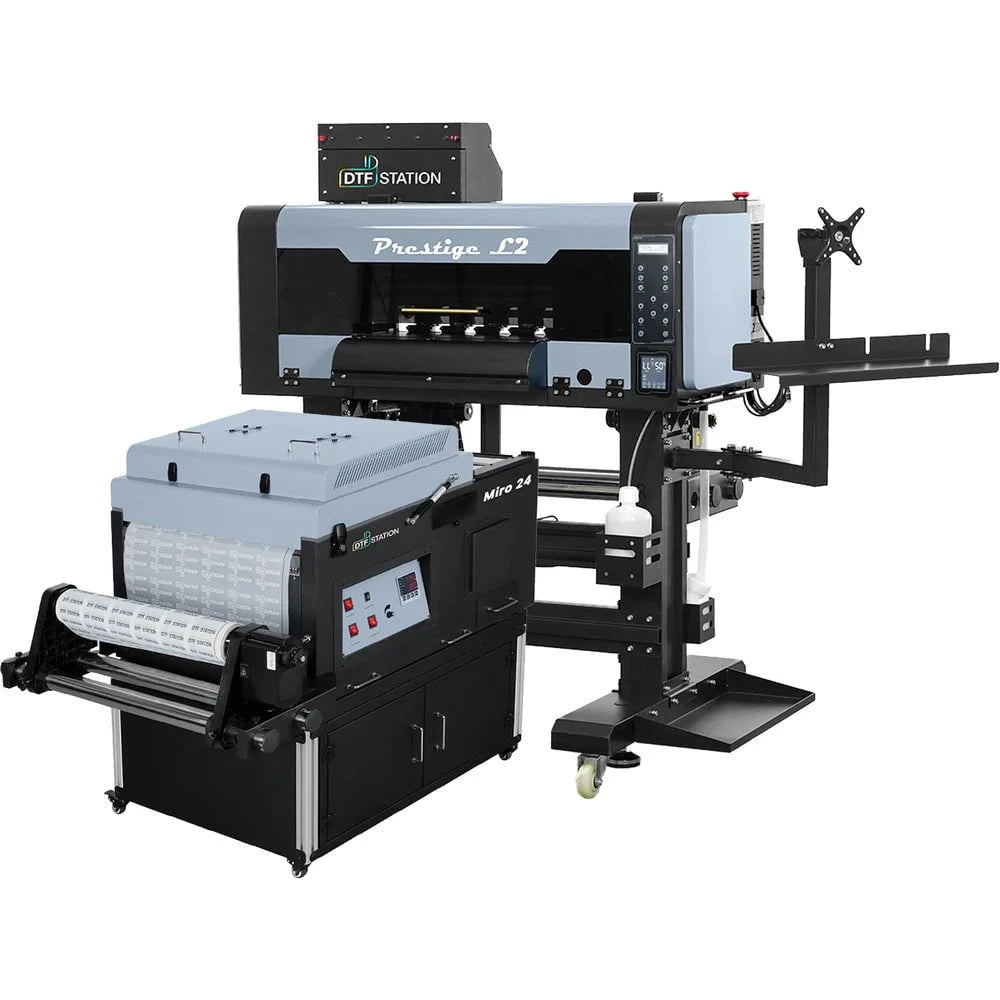
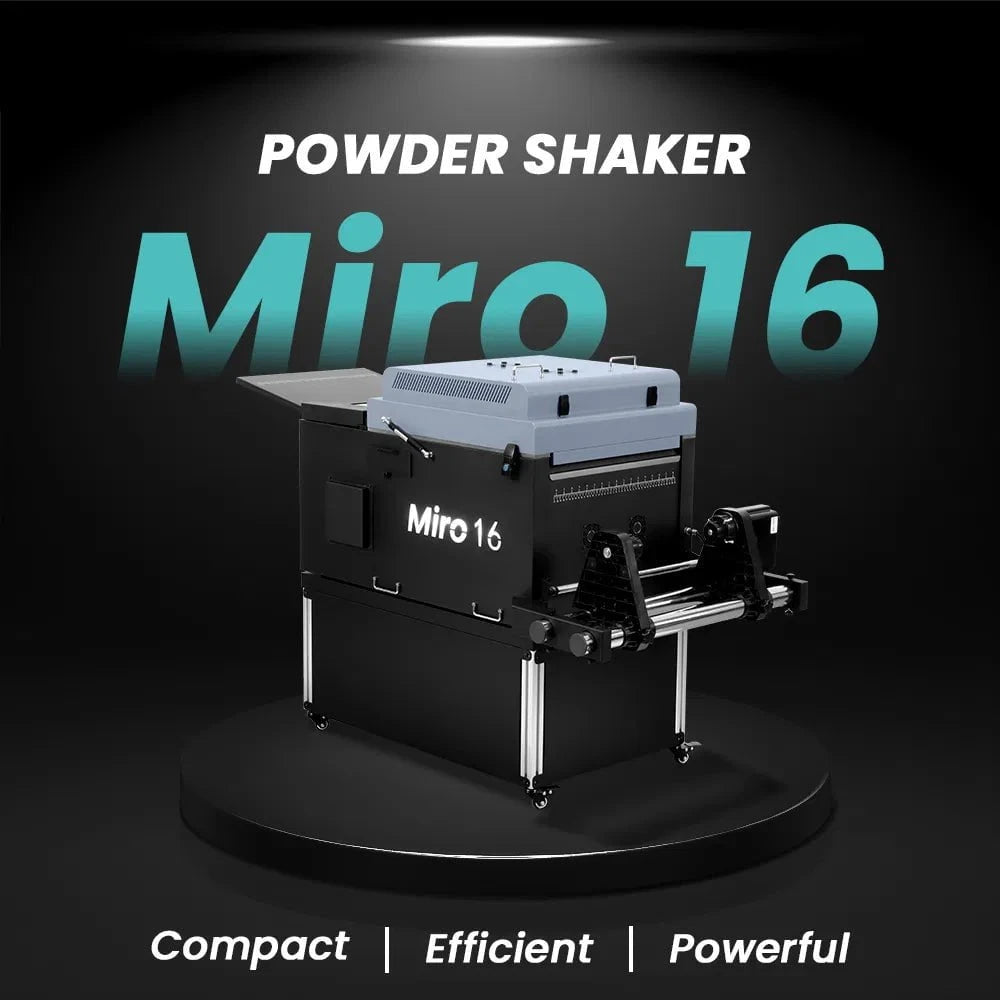
$379/month Prestige L2 18.5" DTF Printer Dual i3200 with Miro 16 Automatic Powder Applicator/Shaker oven and Built-In Oven
Sale
$379/month Prestige L2 18.5" DTF Printer Dual i3200 with Miro 16 Automatic Powder Applicator/Shaker oven and Built-In Oven
- Sale price
- $379
- Regular price
- $465
$195/Month 27" IN-STOCK Yinstar High Precision 27" Commercial Production DTF Printer with 2x i3200-A1 Epson Printheads DTF Powder Shaker.


Sale


$195/Month 27" IN-STOCK Yinstar High Precision 27" Commercial Production DTF Printer with 2x i3200-A1 Epson Printheads DTF Powder Shaker.
- Sale price
- $195
- Regular price
- $249
$247/Month 24" IN-STOCK Yinstar WI-FI DTF Printer with 2x Epson I3200 Print Heads Including DTF Powder Shaker Machine with Air Filter and Auto Powder Recycling System


Sale


$247/Month 24" IN-STOCK Yinstar WI-FI DTF Printer with 2x Epson I3200 Print Heads Including DTF Powder Shaker Machine with Air Filter and Auto Powder Recycling System
- Sale price
- $247
- Regular price
- $350
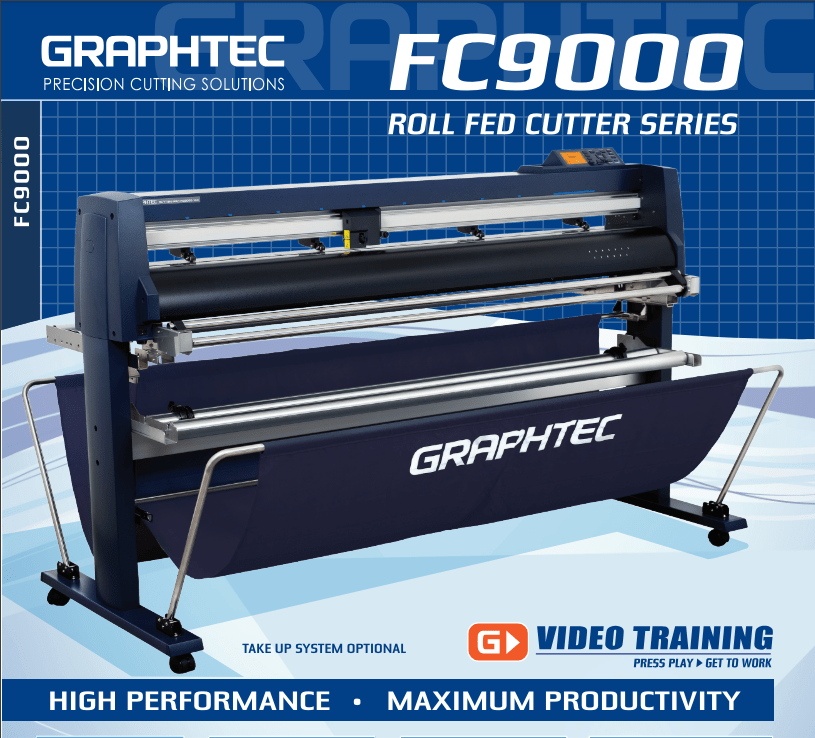
$145/MONTH DEMO 64" Graphtec FC9000-160 For Automotive Professionals with 50 ft accurate tracking of Window Tint, PPF Film & Vinyl. Roll-fed Cutting Plotter

Sale

$145/MONTH DEMO 64" Graphtec FC9000-160 For Automotive Professionals with 50 ft accurate tracking of Window Tint, PPF Film & Vinyl. Roll-fed Cutting Plotter
- Sale price
- $145
- Regular price
- $225
Yinstar A3 Multifunction UV-DTF Flatbed Printer with Epson Heads for Glass Bottles, Mugs, Phone Cases and more


Sale


Yinstar A3 Multifunction UV-DTF Flatbed Printer with Epson Heads for Glass Bottles, Mugs, Phone Cases and more
- Sale price
- $3,950
- Regular price
- $9,995
$95/month PLYTRONIX Pneumatic PRO 64” with Anti-Static System, Large Format Auto High-Speed Cold/Hot Laminator for Signs, Graphics, Banners, Prints & More


Sale


$95/month PLYTRONIX Pneumatic PRO 64” with Anti-Static System, Large Format Auto High-Speed Cold/Hot Laminator for Signs, Graphics, Banners, Prints & More
- Sale price
- $95
- Regular price
- $165
Maximizing Printhead Longevity: The ROI of DTF Ink Bottle Shakers

The Chemical Mechanics of DTF White Ink Separation
Direct-to-Film white ink contains heavy titanium dioxide pigments that rapidly separate and settle at the bottom of the bottle. If operators fail to properly re-suspend this chemical mixture before refilling reservoirs, the resulting fluid starvation will immediately cause severe printhead clogging and weak, translucent underbases.

Titanium dioxide ($TiO_2$) provides the necessary opacity for textile transfers. However, this dense compound resists permanent suspension. Its specific gravity causes the white particles to sink out of the liquid carrier fluid within hours of sitting idle on a shelf.
When the carrier fluid separates from the pigment, operators risk pouring a watery, unmixed binder into their printer reservoirs. This diluted mixture ruins the opacity of your graphic underbase. The dense sludge remaining at the bottom of the bottle will subsequently clog the fine mesh filters inside your ink dampers.
Industrial facilities managing high-volume DTF printing equipment must address this chemical reality. Proper homogenization prevents catastrophic hardware failure. You can review the material safety data and physical properties of titanium dioxide via the Canadian Centre for Occupational Health and Safety (CCOHS) to understand why manual intervention remains necessary.
Manual Agitation vs. Automated Ink Shaking Systems
Automated ink shakers utilize continuous rotational mechanics to blend heavy pigments without introducing microscopic air bubbles into the fluid line. Conversely, aggressive manual shaking directly forces air pockets into the suspension, triggering irreversible nozzle deflection, severe print banding, and complete pressure loss during high-volume production cycles.

Hand-shaking bottles introduces high-velocity impact forces into the fluid. This aggressive motion traps thousands of tiny air bubbles inside the viscous ink. Once these micro-bubbles enter your printer's fluid lines, they act as blockages that instantly stop liquid flow.
Air causes immediate nozzle drop-outs. Clearing these airlocks requires heavy cleaning cycles, forcing operators to flush massive volumes of expensive fluid through the waste lines just to restore basic nozzle functionality. This process destroys your daily profit margins.
Automated units apply smooth, continuous rotation. They gently fold the heavy pigments back into the suspension without violent impacts. Commercial operators across the Greater Toronto Area rely on this method to maintain their premium DTF inks in optimal printing condition.
Evaluating the Eddy2 Ink Bottle Shaker Mechanics
The Eddy2 automated shaker specifically rotates high-viscosity white ink along a precise dual-axis mechanism to ensure complete pigment homogenization. This continuous internal vortex eliminates thick sludge buildup at the base of the bottle, effectively protecting sensitive dampers and manifold channels from drawing dense, unfiltered particulate matter.

The Eddy2 standardizes your daily maintenance routine. Factory managers simply attach the bottle and let the motor run for five minutes before refilling their bulk tanks. This mechanical consistency removes human error from the equation entirely.
Operators no longer guess if they have agitated the bottle sufficiently. The device handles the physical labour. Your production team can focus on loading film or preparing garments while the machine optimally preps the consumables.
Cost-Benefit Analysis: Protecting Industrial Printheads
Procuring a dedicated ink mixing unit effectively functions as vital preventative insurance for expensive hardware components. A single automated shaker costs significantly less than replacing a prematurely ruined printhead, directly saving commercial apparel facilities thousands of dollars in sudden hardware failures and unscheduled operational downtime.
Evaluating the financial merit of an automated shaker requires looking at long-term consumable waste. Damaged printheads represent the highest hidden cost in garment decoration. A single replacement can cost a facility over $1,500 CAD in parts and specialized labour.
| Cost Variable | Manual Agitation | Automated Shaker (e.g., Eddy2) |
| Air Bubble Risk | High (Aggressive shaking traps air) | Zero (Smooth continuous rotation) |
| Printhead Clog Probability | Frequent (Uneven pigment distribution) | Rare (Complete chemical homogenization) |
| Labour Time Per Refill | 3–5 minutes of manual effort | 10 seconds of physical setup |
| Ink Waste Factor | High (Sludge left in bottle) | Minimal (Fully suspended pigment) |
By fully mixing the $TiO_2$, you extract every usable drop of fluid from the container. This maximizes the page-yield efficiency of your supplies. To understand the micro-fluidic precision required by modern hardware, review Epson's Micro Piezo technology specifications regarding strict viscosity tolerances.
Integrating Automated Shakers into Canadian Print Workflows
Integrating professional fluid maintenance equipment directly scales your commercial output while protecting expensive printer hardware. Absolute Toner provides instant access to premium ink shakers, guaranteeing that your Ontario-based facility maintains continuous, uninterrupted production schedules with maximum return on your initial capital investment.

Standardizing your fluid preparation requires a strict daily operating procedure. Adopting a systematic approach ensures that every drop of white ink entering your printer meets OEM viscosity standards. Implement the following sequence during morning startup:
-
Secure the Bottle: Clamp the sealed 1-litre white ink container securely into the rotational holding bracket.
-
Engage the Motor: Activate the dual-axis spinning mechanism to initiate the internal fluid vortex.
-
Run the Cycle: Allow the unit to process the fluid for exactly five minutes to dissolve settled particulate sludge.
-
Immediate Refill: Pour the homogenized solution directly into the bulk sub-tanks before the heavy molecules begin sinking again.
Shops operating commercial office copiers alongside wide-format apparel printers understand that consistent maintenance drives absolute profitability. Equip your Greater Toronto Area facility with the right hardware to prevent downtime before it occurs. Contact our enterprise technical team today to secure reliable automated finishing solutions and guarantee flawless daily production.
- Choosing a selection results in a full page refresh.