Menu


Trending Top Sellers
$135/Month BAi THE MIRROR Commercial Embroidery Machine - 15-Needle Custom Apparel & Structured Hat System - NEW


$135/Month BAi THE MIRROR Commercial Embroidery Machine - 15-Needle Custom Apparel & Structured Hat System - NEW
- Price
- $135
$175/Month BAi THE VISION 15-Needle Single-Head Embroidery Machine - 15.7" x 19.7" Commercial Apparel System - NEW


$175/Month BAi THE VISION 15-Needle Single-Head Embroidery Machine - 15.7" x 19.7" Commercial Apparel System - NEW
- Price
- $175
$219/Month BAi THE VISION 2 Dual-Head Commercial Embroidery Machine - Dual-Head 15-Needle Custom Apparel System - NEW


$219/Month BAi THE VISION 2 Dual-Head Commercial Embroidery Machine - Dual-Head 15-Needle Custom Apparel System - NEW
- Price
- $219
$890/month NEW - IN STOCK -Mimaki 64" Hybrid – Complete Turnkey Package | UJ330H-160 Hybrid UV-LED Printer


$890/month NEW - IN STOCK -Mimaki 64" Hybrid – Complete Turnkey Package | UJ330H-160 Hybrid UV-LED Printer
$185/Month New Mimaki DTF TxF300-75 32" High-Speed Dual Printheads DTF Printer


Sale


$185/Month New Mimaki DTF TxF300-75 32" High-Speed Dual Printheads DTF Printer
PROMO: $285/month New Mimaki DTF TxF300-75 32" DTF BUNDLE DTF PRINTER (DIRECT-TO-FILM) Dual Print Heads with Miro 36 Shaker Bundle


Sale


PROMO: $285/month New Mimaki DTF TxF300-75 32" DTF BUNDLE DTF PRINTER (DIRECT-TO-FILM) Dual Print Heads with Miro 36 Shaker Bundle
- Sale price
- $285
- Regular price
- $695
PROMO: $268/month New Mimaki DTF TxF300-75 32" DTF BUNDLE DTF PRINTER (DIRECT-TO-FILM) Dual Print Heads with Miro 24 Shaker Bundle

Sale

PROMO: $268/month New Mimaki DTF TxF300-75 32" DTF BUNDLE DTF PRINTER (DIRECT-TO-FILM) Dual Print Heads with Miro 24 Shaker Bundle
- Sale price
- $268
- Regular price
- $28,600
$495/month - 4'x8' Plytronix Flatbed Cutter TX-1325 (4.26 ft x8.2 ft ) High-Precision Digital Flatbed Cutting Machine with Automated Finishing System Utilizes Interchangeable Tool Heads


$495/month - 4'x8' Plytronix Flatbed Cutter TX-1325 (4.26 ft x8.2 ft ) High-Precision Digital Flatbed Cutting Machine with Automated Finishing System Utilizes Interchangeable Tool Heads
- Price
- $495
New Prisma Auto Clam Slider 110V 16X20" Inch DTF Heat-Press GS-105HS-Grey/Black With Auto Open Slider Feature And Pressure Sensor


Sale


New Prisma Auto Clam Slider 110V 16X20" Inch DTF Heat-Press GS-105HS-Grey/Black With Auto Open Slider Feature And Pressure Sensor
- Sale price
- $1,690
- Regular price
- $1,986
$99/month - JAGUAR 70" AUTOMOTIVE SPECIAL EDITION PPF/TINT Cutter Plotter with Anti-Static kit and Tint Velvet Film.


Sale


$99/month - JAGUAR 70" AUTOMOTIVE SPECIAL EDITION PPF/TINT Cutter Plotter with Anti-Static kit and Tint Velvet Film.
- Sale price
- $99
- Regular price
- $145
$99/Month - (FREE SHAKER) DTF x2 Epson Print Heads (110V) YINSTAR A3 13" DTF PRINTER


Sale


$99/Month - (FREE SHAKER) DTF x2 Epson Print Heads (110V) YINSTAR A3 13" DTF PRINTER
- Sale price
- $99
- Regular price
- $185
From $99/month - New Prestige R1 13" DTF Printer Bundle - Includes Prestige R1 DTF Printer, Startup Package and Compatible Machine Options -MC


From $99/month - New Prestige R1 13" DTF Printer Bundle - Includes Prestige R1 DTF Printer, Startup Package and Compatible Machine Options -MC
- Price
- From $99
From $149/month New Prestige R2 PRO 13.75" WITH CUTTER DTF Printer 110V A3+ with Bundle options -MC


From $149/month New Prestige R2 PRO 13.75" WITH CUTTER DTF Printer 110V A3+ with Bundle options -MC
- Price
- From $149
From $417/Month 9-Colour BUNDLE 24" Prestige XL2 PRO New DTF Station Printer with Automatic Powder Applicator/Shaker/Oven/Purifier -MC


From $417/Month 9-Colour BUNDLE 24" Prestige XL2 PRO New DTF Station Printer with Automatic Powder Applicator/Shaker/Oven/Purifier -MC
- Price
- From $417
From $497/month - 9 COLORS Prestige XL3 with 3 Epson i3200 DTF Printer Bundle with Auto Powder Shaker/Oven


From $497/month - 9 COLORS Prestige XL3 with 3 Epson i3200 DTF Printer Bundle with Auto Powder Shaker/Oven
- Price
- From $497
NEW JAGUAR 70" AUTOMOTIVE SPECIAL EDITION PPF/TINT Cutter Plotter with Anti-Static kit and Tint Velvet Film.
Sale
NEW JAGUAR 70" AUTOMOTIVE SPECIAL EDITION PPF/TINT Cutter Plotter with Anti-Static kit and Tint Velvet Film.
- Sale price
- $5,980
- Regular price
- $6,980
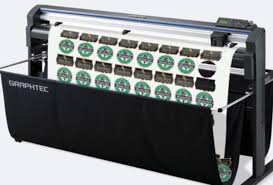
$169/MONTH NEW 64" Graphtec FC9000-160 For Automotive Professionals with 50 ft accurate tracking of Window Tint, PPF Film & Vinyl. Roll-fed Cutting Plotter

Sale

$169/MONTH NEW 64" Graphtec FC9000-160 For Automotive Professionals with 50 ft accurate tracking of Window Tint, PPF Film & Vinyl. Roll-fed Cutting Plotter
- Sale price
- $169
- Regular price
- $225
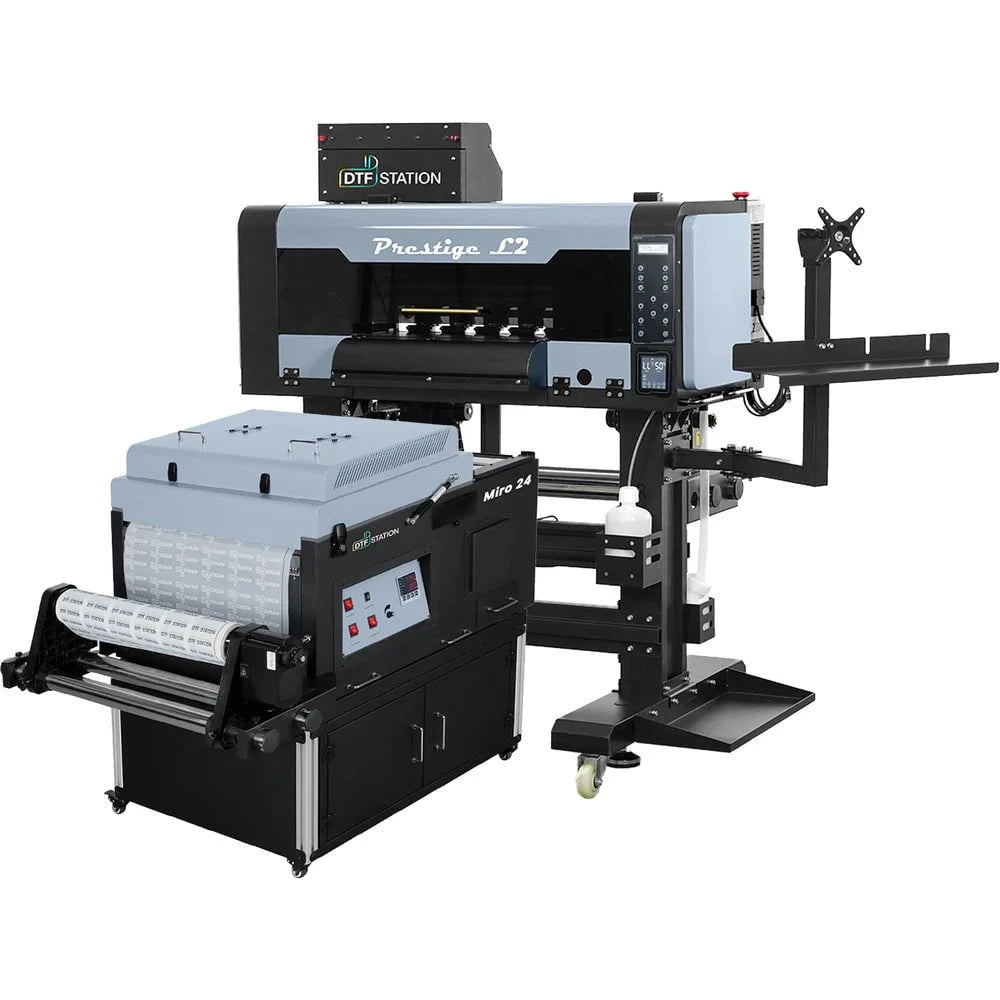
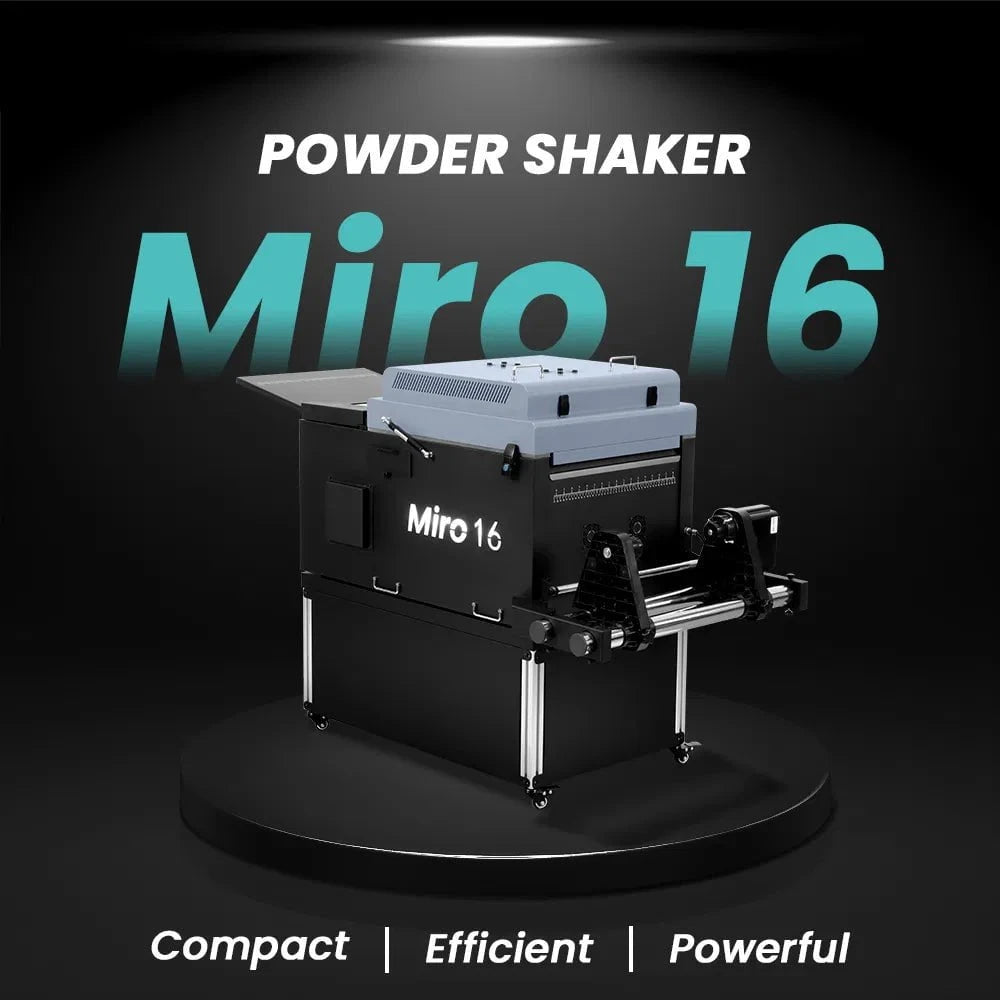
$379/month Prestige L2 18.5" DTF Printer Dual i3200 with Miro 16 Automatic Powder Applicator/Shaker oven and Built-In Oven
Sale
$379/month Prestige L2 18.5" DTF Printer Dual i3200 with Miro 16 Automatic Powder Applicator/Shaker oven and Built-In Oven
- Sale price
- $379
- Regular price
- $465
$195/Month 27" IN-STOCK Yinstar High Precision 27" Commercial Production DTF Printer with 2x i3200-A1 Epson Printheads DTF Powder Shaker.


Sale


$195/Month 27" IN-STOCK Yinstar High Precision 27" Commercial Production DTF Printer with 2x i3200-A1 Epson Printheads DTF Powder Shaker.
- Sale price
- $195
- Regular price
- $249
$247/Month 24" IN-STOCK Yinstar WI-FI DTF Printer with 2x Epson I3200 Print Heads Including DTF Powder Shaker Machine with Air Filter and Auto Powder Recycling System


Sale


$247/Month 24" IN-STOCK Yinstar WI-FI DTF Printer with 2x Epson I3200 Print Heads Including DTF Powder Shaker Machine with Air Filter and Auto Powder Recycling System
- Sale price
- $247
- Regular price
- $350
Miro 36 DTF Powder Shaker Guide for Mimaki Epson Roland and DTF Station Printers

Miro 36 DTF Powder Shaker Guide: Best Compatible Printers, Features, Workflow Benefits, and Buying Advice from Absolute Toner
If you are building a serious direct-to-film production setup, choosing the right powder shaker is just as important as choosing the printer itself. A good shaker helps improve consistency, reduce manual handling, and create a cleaner and more efficient workflow. That is exactly why the Miro 36 DTF powder shaker has become such an important option for shops looking to move into stronger production.
The Miro 36 is a 36 inch class automatic DTF powder shaker, oven, and dryer designed for businesses that want smoother production and more repeatable results. It is especially relevant for buyers comparing leading printers from Mimaki, Epson, Roland, and DTF Station. For print shops that want to scale up, improve workflow, and reduce bottlenecks after printing, the Miro 36 is the kind of equipment that deserves serious attention. You can view the Miro 36 DTF powder shaker at Absolute Toner for the full product listing.
What Is the Miro 36 DTF Powder Shaker
The Miro 36 is an automatic powder shaker and dryer built to handle one of the most important stages of DTF production. After printing, film still needs adhesive powder application and curing before it is ready for transfer. In a smaller workflow, much of that can be done manually. In a more serious production environment, manual handling can become slow, messy, and inconsistent.
That is where a machine like the Miro 36 helps. It is designed to automate powdering and curing so the workflow becomes more consistent and easier to manage. For businesses that want cleaner production and stronger repeatability, that matters a lot. If you are also comparing hardware options, Absolute Toner offers a range of DTF printers that fit different production needs.
Why the Miro 36 Matters in Real Production
A lot of buyers focus heavily on the printer and treat the shaker as a secondary accessory. In real production, that is a mistake. The printer and the shaker work together as one workflow. Even a very good printer can become less efficient if the finishing stage is slow or inconsistent.
When a shop moves from manual powder handling to an automatic powder shaker and dryer, daily production can become more organized and more predictable. The operator spends less time managing powder by hand and more time focusing on output, job flow, and quality control. This is one of the main reasons production shops look closely at a system like the Miro 36.
Main Features and Advantages of the Miro 36
Built for 30 to 36 Inch Class DTF Printers
One of the strongest advantages of the Miro 36 is its relevance for 30 inch to 36 inch class DTF printing. This makes it especially attractive for businesses that are not looking for a small entry level workflow but instead want something more production oriented. When the shaker width is suited to the printer width, the workflow tends to run smoother and with fewer interruptions.
110V Power
Power requirements matter more than many buyers expect. A 110V machine can be very attractive for businesses that want easier installation planning. For many shops, that can make setup more practical and reduce the complications that sometimes come with installing larger equipment.
Cleaner Working Environment
A cleaner production environment is a major benefit in DTF. Powder and curing can create airborne particles and smoke, which is why built in purification related features are so valuable. A better managed environment can improve the day to day working experience and support a more professional production area.
Better Control and Repeatability
Features such as digital controls, alignment support, and guided adjustment points help make a system easier to operate consistently. That matters because in production, repeatability is everything. The more stable the workflow, the easier it is to maintain quality from one job to the next.
More Efficient Powdering and Curing
The biggest practical benefit is automation. Instead of depending on hand powdering and less controlled finishing methods, the Miro 36 helps create a more stable process. This can save time, reduce labor, and help support better consistency in finished transfers.
Why Proper Shaker Pairing Matters
The best powder shaker for DTF printers is not just the one with the most features. It is the one that fits the printer, the workflow, and the production goals of the shop. Width compatibility, film handling, curing performance, and the pace of production all matter.
A mismatched setup can lead to slower production, more handling, and more opportunities for inconsistency. A properly matched setup allows the printer and shaker to work together in a smoother sequence from print to powder to curing. Shops that are planning a complete workflow should also think about film, powder, ink, and maintenance needs. Absolute Toner also offers DTF and UV ink supplies for businesses building out a full system.
Top Compatible Printers to Consider
If you are researching Miro 36 compatible printers, these are the most important models to keep in mind.
1. Mimaki TxF150-75
The Mimaki TxF150-75 is one of the most important printers in this conversation. It is a recognized DTF platform for buyers who want a serious branded production system. Pairing a printer like this with an automatic shaker can help create a more complete and efficient workflow.
2. Mimaki TXF300-75
The Mimaki TXF300-75 belongs on the list of top compatible printers because it fits the type of production environment where a machine like the Miro 36 makes sense. Shops looking for stronger throughput and more automation naturally look at printer and shaker combinations like this.
3. Epson SureColor G6070
The Epson SureColor G6070 is one of the most important Epson models in this category and one of the strongest names to include in a Miro 36 compatibility discussion. Buyers who prefer Epson often want a finishing system that can support cleaner, more consistent production, which makes this pairing especially relevant.
4. Roland TY-300
The Roland TY-300 is another major model that deserves attention. Roland users who want to build a stronger DTF workflow should consider how the finishing system supports the printer. The Miro 36 is highly relevant in that type of production setup.
5. DTF Station XL3 XL4 and XL6
DTF Station XL3, XL4, and XL6 are also important models to mention for buyers comparing wider production DTF systems. These are the kinds of printers that fit naturally into a conversation about 36 inch class shaker systems. As with any equipment pairing, buyers should confirm exact workflow and fit, but these are clearly relevant names in the same production category.
Epson Mimaki Roland and DTF Station Compatibility
Mimaki
Mimaki is one of the strongest brands in this discussion because the TxF150-75 and TXF300-75 are highly relevant production models. Shops that already trust Mimaki equipment often want a finishing solution that supports a more professional and efficient workflow.
Epson
Epson compatibility matters because the SureColor G6070 has become one of the key names in production DTF. Buyers comparing Epson systems often want a shaker that supports a clean and organized production line, which is why the Epson SureColor G6070 shaker search has become so important.
Roland
Roland has an important place in the DTF market, and the TY-300 is one of the printers that buyers are watching closely. A powder shaker that fits this level of workflow is essential for businesses that want to get the most from a Roland production system.
DTF Station
DTF Station remains a major name in DTF workflow equipment. For buyers looking at the XL3, XL4, and XL6, the Miro 36 belongs in the conversation because it fits the general production class that these buyers care about. This makes it relevant not just for one printer brand, but for broader system planning.
Workflow Benefits of the Miro 36
The value of the Miro 36 is not only in what it is, but in what it improves. Manual powder application may be manageable at lower volumes, but as production increases, manual finishing can become one of the biggest weak points in the workflow.
An automatic powder shaker helps support more even powder handling, more consistent curing, and less dependence on operator variation. That can improve transfer quality and help shops operate more confidently when handling larger order volumes. When businesses are trying to improve production efficiency, this is one of the most practical upgrades they can consider.
Who Should Buy the Miro 36
The Miro 36 is best suited for businesses that are serious about growing DTF production. It is a strong fit for print shops, apparel decorators, promotional product companies, and businesses that want to improve output quality while reducing manual labor.
It is especially relevant for buyers running or considering printers such as the Mimaki TxF150-75, Mimaki TXF300-75, Epson SureColor G6070, Roland TY-300, and similar production systems. If your goal is to move into a stronger and more complete DTF workflow, the Miro 36 is the type of equipment that should be on your shortlist.
Why Buy from Absolute Toner
Buying DTF equipment is not only about the machine. It is also about buying from a company that understands how the printer, shaker, consumables, and production workflow fit together. That is where Absolute Toner adds value.
A knowledgeable supplier can help buyers compare systems more effectively, reduce costly mistakes, and choose a setup that fits their actual production goals. Whether you are starting fresh or upgrading an existing workflow, Absolute Toner can help you assess the right direction. You can also visit the Absolute Toner contact page if you want help choosing the right setup, or review available financing options if you are planning a larger equipment investment.
Frequently Asked Questions
What is the Miro 36 DTF powder shaker?
The Miro 36 is an automatic powder shaker, oven, and dryer designed to automate the powdering and curing stage of DTF production for printers in the 30 inch to 36 inch range.

What are the main benefits of the Miro 36 shaker
The main benefits include automated powdering, more consistent curing, cleaner workflow, reduced manual labor, and stronger support for production level DTF printing.

Is the Miro 36 a good choice for the Epson SureColor G6070
Yes, it is one of the most important printer pairings to consider and is highly relevant for buyers building a more complete Epson-based DTF workflow.

Can the Miro 36 work with Mimaki DTF printers TxF150-75 TxF300-75
Yes, it is especially relevant for buyers looking at the Mimaki TxF150-75 and Mimaki TXF300-75, which are among the most important models in this category.

Is the Roland TY-300 a good match for the Miro 36
Yes, the Roland TY-300 is one of the key production printers that belongs in the Miro 36 compatibility discussion.

What type of buyer should consider the Miro 36
It is ideal for serious DTF users who want to improve output consistency, reduce manual powder handling, and create a more efficient workflow for larger production needs.
Final Thoughts
The Miro 36 DTF powder shaker stands out as a strong solution for businesses that want cleaner workflow, better consistency, and stronger production readiness. It is especially relevant for buyers comparing printers like the Mimaki TxF150-75, Mimaki TXF300-75, Epson SureColor G6070, Roland TY-300, and DTF Station XL3, XL4, and XL6.

For businesses that want to reduce manual handling and create a more complete DTF production system, the Miro 36 is the kind of upgrade that can make a real difference.
- Choosing a selection results in a full page refresh.