Menu


Trending Top Sellers
$135/Month BAi THE MIRROR Commercial Embroidery Machine - 15-Needle Custom Apparel & Structured Hat System - NEW


$135/Month BAi THE MIRROR Commercial Embroidery Machine - 15-Needle Custom Apparel & Structured Hat System - NEW
- Price
- $135
$175/Month BAi THE VISION 15-Needle Single-Head Embroidery Machine - 15.7" x 19.7" Commercial Apparel System - NEW


$175/Month BAi THE VISION 15-Needle Single-Head Embroidery Machine - 15.7" x 19.7" Commercial Apparel System - NEW
- Price
- $175
$219/Month BAi THE VISION 2 Dual-Head Commercial Embroidery Machine - Dual-Head 15-Needle Custom Apparel System - NEW


$219/Month BAi THE VISION 2 Dual-Head Commercial Embroidery Machine - Dual-Head 15-Needle Custom Apparel System - NEW
- Price
- $219
$890/month NEW - IN STOCK -Mimaki 64" Hybrid – Complete Turnkey Package | UJ330H-160 Hybrid UV-LED Printer


$890/month NEW - IN STOCK -Mimaki 64" Hybrid – Complete Turnkey Package | UJ330H-160 Hybrid UV-LED Printer
$185/Month New Mimaki DTF TxF300-75 32" High-Speed Dual Printheads DTF Printer


Sale


$185/Month New Mimaki DTF TxF300-75 32" High-Speed Dual Printheads DTF Printer
PROMO: $285/month New Mimaki DTF TxF300-75 32" DTF BUNDLE DTF PRINTER (DIRECT-TO-FILM) Dual Print Heads with Miro 36 Shaker Bundle


Sale


PROMO: $285/month New Mimaki DTF TxF300-75 32" DTF BUNDLE DTF PRINTER (DIRECT-TO-FILM) Dual Print Heads with Miro 36 Shaker Bundle
- Sale price
- $285
- Regular price
- $695
PROMO: $268/month New Mimaki DTF TxF300-75 32" DTF BUNDLE DTF PRINTER (DIRECT-TO-FILM) Dual Print Heads with Miro 24 Shaker Bundle

Sale

PROMO: $268/month New Mimaki DTF TxF300-75 32" DTF BUNDLE DTF PRINTER (DIRECT-TO-FILM) Dual Print Heads with Miro 24 Shaker Bundle
- Sale price
- $268
- Regular price
- $28,600
$495/month - 4'x8' Plytronix Flatbed Cutter TX-1325 (4.26 ft x8.2 ft ) High-Precision Digital Flatbed Cutting Machine with Automated Finishing System Utilizes Interchangeable Tool Heads


$495/month - 4'x8' Plytronix Flatbed Cutter TX-1325 (4.26 ft x8.2 ft ) High-Precision Digital Flatbed Cutting Machine with Automated Finishing System Utilizes Interchangeable Tool Heads
- Price
- $495
New Prisma Auto Clam Slider 110V 16X20" Inch DTF Heat-Press GS-105HS-Grey/Black With Auto Open Slider Feature And Pressure Sensor


Sale


New Prisma Auto Clam Slider 110V 16X20" Inch DTF Heat-Press GS-105HS-Grey/Black With Auto Open Slider Feature And Pressure Sensor
- Sale price
- $1,690
- Regular price
- $1,986
$99/month - JAGUAR 70" AUTOMOTIVE SPECIAL EDITION PPF/TINT Cutter Plotter with Anti-Static kit and Tint Velvet Film.


Sale


$99/month - JAGUAR 70" AUTOMOTIVE SPECIAL EDITION PPF/TINT Cutter Plotter with Anti-Static kit and Tint Velvet Film.
- Sale price
- $99
- Regular price
- $145
$99/Month - (FREE SHAKER) DTF x2 Epson Print Heads (110V) YINSTAR A3 13" DTF PRINTER


Sale


$99/Month - (FREE SHAKER) DTF x2 Epson Print Heads (110V) YINSTAR A3 13" DTF PRINTER
- Sale price
- $99
- Regular price
- $185
From $99/month - New Prestige R1 13" DTF Printer Bundle - Includes Prestige R1 DTF Printer, Startup Package and Compatible Machine Options -MC


From $99/month - New Prestige R1 13" DTF Printer Bundle - Includes Prestige R1 DTF Printer, Startup Package and Compatible Machine Options -MC
- Price
- From $99
From $149/month New Prestige R2 PRO 13.75" WITH CUTTER DTF Printer 110V A3+ with Bundle options -MC


From $149/month New Prestige R2 PRO 13.75" WITH CUTTER DTF Printer 110V A3+ with Bundle options -MC
- Price
- From $149
From $417/Month 9-Colour BUNDLE 24" Prestige XL2 PRO New DTF Station Printer with Automatic Powder Applicator/Shaker/Oven/Purifier -MC


From $417/Month 9-Colour BUNDLE 24" Prestige XL2 PRO New DTF Station Printer with Automatic Powder Applicator/Shaker/Oven/Purifier -MC
- Price
- From $417
From $497/month - 9 COLORS Prestige XL3 with 3 Epson i3200 DTF Printer Bundle with Auto Powder Shaker/Oven


From $497/month - 9 COLORS Prestige XL3 with 3 Epson i3200 DTF Printer Bundle with Auto Powder Shaker/Oven
- Price
- From $497
NEW JAGUAR 70" AUTOMOTIVE SPECIAL EDITION PPF/TINT Cutter Plotter with Anti-Static kit and Tint Velvet Film.
Sale
NEW JAGUAR 70" AUTOMOTIVE SPECIAL EDITION PPF/TINT Cutter Plotter with Anti-Static kit and Tint Velvet Film.
- Sale price
- $5,980
- Regular price
- $6,980
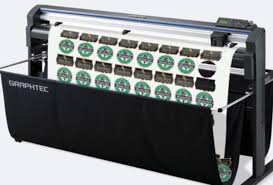
$169/MONTH NEW 64" Graphtec FC9000-160 For Automotive Professionals with 50 ft accurate tracking of Window Tint, PPF Film & Vinyl. Roll-fed Cutting Plotter

Sale

$169/MONTH NEW 64" Graphtec FC9000-160 For Automotive Professionals with 50 ft accurate tracking of Window Tint, PPF Film & Vinyl. Roll-fed Cutting Plotter
- Sale price
- $169
- Regular price
- $225
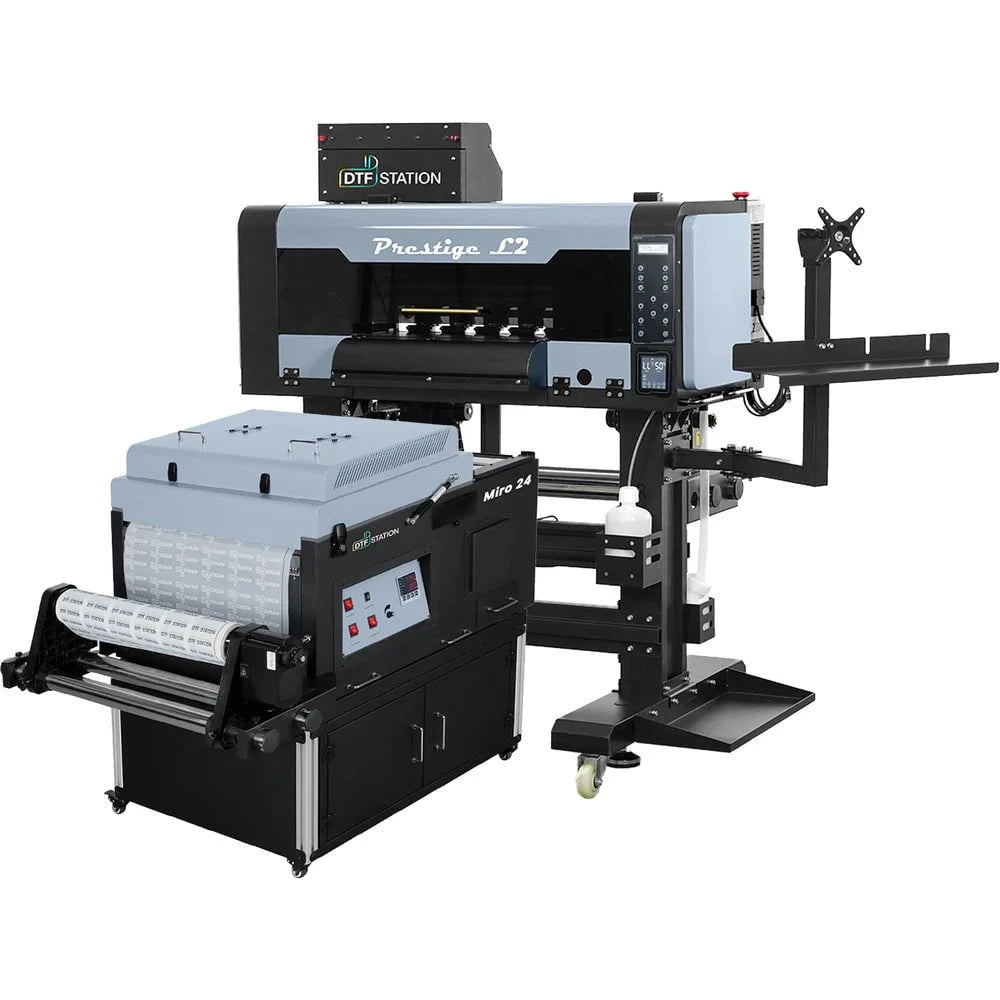
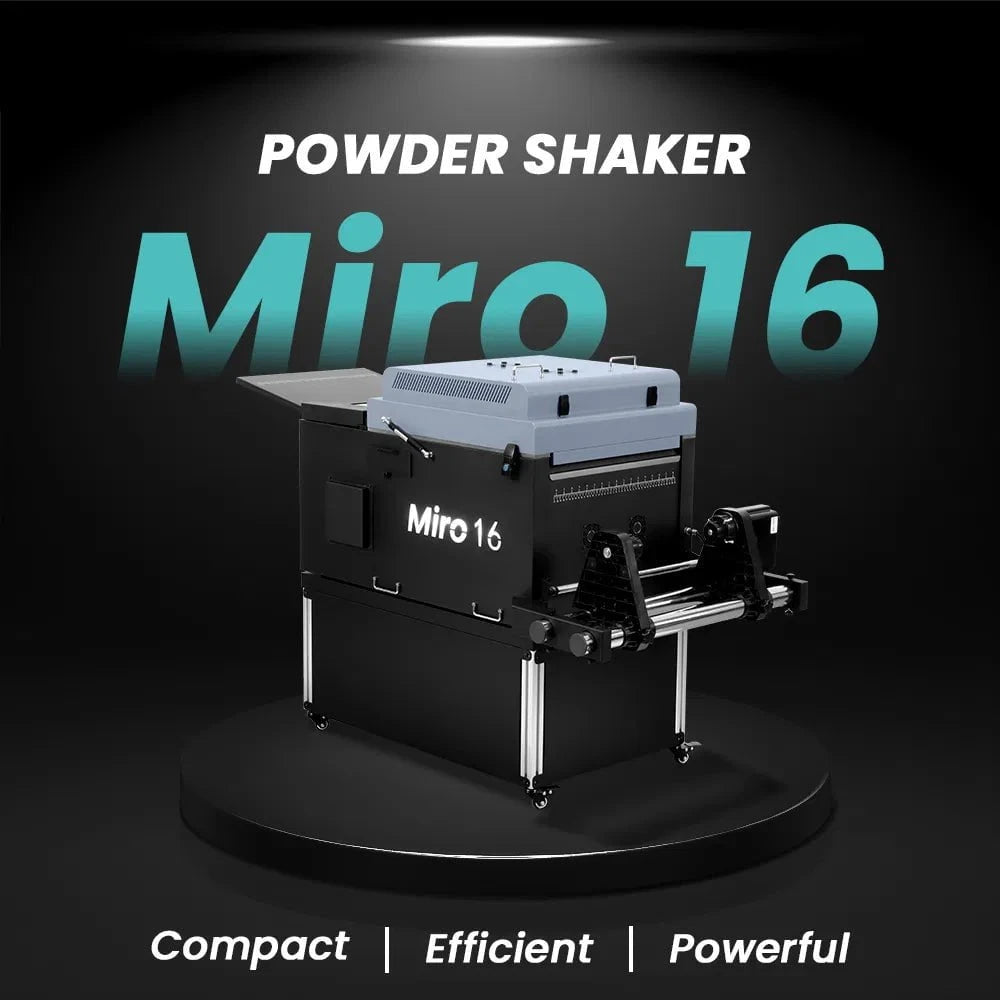
$379/month Prestige L2 18.5" DTF Printer Dual i3200 with Miro 16 Automatic Powder Applicator/Shaker oven and Built-In Oven
Sale
$379/month Prestige L2 18.5" DTF Printer Dual i3200 with Miro 16 Automatic Powder Applicator/Shaker oven and Built-In Oven
- Sale price
- $379
- Regular price
- $465
$195/Month 27" IN-STOCK Yinstar High Precision 27" Commercial Production DTF Printer with 2x i3200-A1 Epson Printheads DTF Powder Shaker.


Sale


$195/Month 27" IN-STOCK Yinstar High Precision 27" Commercial Production DTF Printer with 2x i3200-A1 Epson Printheads DTF Powder Shaker.
- Sale price
- $195
- Regular price
- $249
$247/Month 24" IN-STOCK Yinstar WI-FI DTF Printer with 2x Epson I3200 Print Heads Including DTF Powder Shaker Machine with Air Filter and Auto Powder Recycling System


Sale


$247/Month 24" IN-STOCK Yinstar WI-FI DTF Printer with 2x Epson I3200 Print Heads Including DTF Powder Shaker Machine with Air Filter and Auto Powder Recycling System
- Sale price
- $247
- Regular price
- $350
The Science of Speed: Unpacking Color Prime Quick Glide Instant Peel DTF Film

In the highly competitive Canadian apparel decoration market, consistency is the absolute foundation of profitability. Print service providers across the country are constantly evaluating their workflows to eliminate inefficiencies and reduce costly material waste. As we analyze the production landscape of 2026, it is clear that the most significant bottleneck in Direct-to-Film (DTF) printing is no longer the speed of the printhead, but rather the thermal dynamics of the curing and pressing phases.
To address this critical operational slowdown, DTF Station has engineered the Color Prime Quick Glide™ Instant Peel DTF Film. This meticulously manufactured consumable does far more than simply peel quickly. It fundamentally alters the pressing workflow, allowing commercial decorators to cure transfers at significantly lower temperatures.
This comprehensive technical guide explores the intricate five-layer engineering of Quick Glide film. We will examine how its strict manufacturing tolerances eliminate batch variation, protect heat-sensitive synthetic fabrics, and ultimately drive down the total cost per print for high-volume commercial garment facilities.

The Evolution of Direct-to-Film in Canadian Apparel
To understand the value of Quick Glide technology, one must first examine the evolution of DTF transfer films. Early iterations of PET (polyethylene terephthalate) transfer films relied heavily on cold-peel or warm-peel chemical formulations. Operators were forced to remove the garment from the press and wait for the fabric to completely return to room temperature before removing the carrier sheet.
This waiting period created a massive logistical backlog. In a busy commercial shop, staging dozens of cooling garments requires substantial physical space and severely limits the hourly output of a single heat press operator.
While first-generation hot-peel films attempted to solve this issue, they often suffered from inconsistent release layers. Operators frequently experienced resistance during the peeling process, occasionally lifting the hot ink directly off the fabric fibres. True instant peel technology, as realized in the Color Prime Quick Glide film, resolves these historical defects. It provides a flawless, immediate release the exact second the heat press platen lifts, maximizing throughput without risking the integrity of the design.
Why Instant Peel Technology is Transforming Production
The primary mechanical advantage of an instant peel film is the immediate reclamation of labour hours. However, the operational benefits extend far beyond sheer speed. Quick Glide film is specifically engineered to press and release effectively at much lower temperatures than standard market alternatives.
Standard DTF films often require pressing temperatures exceeding 150°C (300°F) to properly activate the release agents. Quick Glide is formulated to achieve perfect separation at lower thermal thresholds. By lowering the time and heat required to execute a successful press, shops instantly save valuable production hours. This reduction in active pressing time directly lowers direct labour costs and drives down the total financial cost per print.
Protecting Heat-Sensitive Synthetic Fabrics
The lower temperature threshold provides a massive strategic advantage when decorating synthetic materials. Polyester, nylon, and advanced athletic moisture-wicking blends are notoriously sensitive to high heat. Exposing these fabrics to 150°C often results in scorching, permanent press box marks, or dye migration. Dye migration occurs when the high heat causes the fabric's original dye to turn into a gas and bleed through the freshly applied transfer.
By utilizing Quick Glide film in conjunction with a precision commercial heat press machine, operators can successfully apply vibrant designs to delicate athletic wear without damaging the underlying garment. This expands a shop's application portfolio, allowing them to confidently bid on lucrative sports team uniforms and performance apparel contracts.

The Five-Layer Engineering of Quick Glide Film
Not all instant-peel films perform the same. Many off-the-shelf alternatives rely on a basic three-layer construction, which often leads to inconsistent ink absorption and unpredictable release behaviour. The Color Prime Quick Glide film utilizes a highly sophisticated five-layer construction to guarantee consistent, effortless performance.
Understanding the chemistry of these five distinct layers is crucial for operators looking to maximize their print fidelity.
1. The Anti-Static Layer
The topmost layer (when viewing the film profile) is the anti-static coating. Static electricity is a severe hazard in DTF printing. It causes the hot melt polyurethane powder to cling to non-printed, blank areas of the film. The double-sided anti-static coating on Quick Glide completely neutralizes these static charges. This ensures the adhesive powder sticks only to the wet ink, preventing messy, speckled residue on the final pressed garment.
2. The Premium PET Base Layer
The structural foundation of the transfer is the PET (polyethylene terephthalate) layer. According to international material standards outlined by organizations like the American Chemical Society, high-grade PET provides exceptional dimensional stability under high thermal stress. Quick Glide utilizes pre-inspected, premium PET base film that resists warping and curling as it travels through high-temperature curing ovens.
3. The 1st Release Layer
This layer sits directly below the PET backbone. It is a specialized chemical coating designed to react instantly to the sudden drop in pressure when the heat press opens. It separates cleanly from the PET base, beginning the release process without requiring a drop in temperature.
4. The 2nd Release Layer
The inclusion of a dual release-layer structure is the core differentiator of Quick Glide technology. The second release layer acts as a buffer between the primary release chemicals and the ink-absorbing layer. It ensures that the separation force is distributed evenly across the entire graphic. This dual-layer approach completely eliminates the resistance or "pulling" sensation often felt with cheaper hot-peel films, safeguarding delicate, fine-line details in complex designs.
5. The Ink Absorbing and Colour Layer
The bottommost layer is engineered to capture and hold heavy loads of aqueous pigment ink. A high-quality ink-absorbing layer prevents the wet CMYK and White inks from pooling, bleeding, or marbling before they enter the powdering phase. This highly receptive coating is the reason Quick Glide can support extremely dense, vibrant colour profiles without losing edge sharpness.

Manufacturing Consistency: The ±0.05 µm Standard
The most perfectly engineered chemical formula is useless if the manufacturing process is inconsistent. Print shops constantly struggle with generic films that perform beautifully on one roll but fail catastrophically on the next. DTF Station addresses this industry-wide frustration by manufacturing Color Prime film in-house within strictly controlled production environments.
The coating process is dictated by a staggering ±0.05 µm (micrometre) accuracy standard. To put this into perspective, a single human hair is approximately 70 micrometres thick. Ensuring uniform thickness to a fraction of a single micrometre requires intense, real-time monitoring. This microscopic uniformity guarantees that the ink absorption and the thermal release properties remain absolutely identical from the first metre of the roll to the very last.
Prioritizing Stability Over Sheer Speed
In industrial manufacturing, speed often comes at the expense of quality. Many generic film suppliers run their coating lines at blistering speeds to maximize daily output and lower overhead costs. DTF Station takes a deliberate, quality-first approach.
The Quick Glide production line operates at a stability-first speed of 40 metres per minute. This highly controlled pace prioritizes consistency over sheer output volume. It allows the automated, self-adjusting coating head to instantly correct the chemical delivery during the run. If the real-time sensors detect a microscopic variance in coating thickness, the machine calibrates itself instantaneously without requiring a manual line stoppage.
Furthermore, the continuous production flow avoids the distinct performance shifts caused by starting and stopping the heavy machinery. This fully automated process entirely eliminates the batch-to-batch variation that plagues films subjected to manual handling.
Achieving Superior Colour Vibrancy and a Softer Hand Feel
Film quality matters just as much as your choice of ink, your software profiles, and your heat press pressure when it comes to true-to-design, vibrant colour output. Because the Quick Glide ink-absorbing layer is so heavily refined, it allows the liquid pigment to sit perfectly flush against the release layer.
When the design is subsequently transferred to the garment, the colour layer sits at the very top of the printed stack. The high-fidelity absorption ensures that corporate Pantone colours remain incredibly accurate, and photographic gradients render smoothly without pixelated stepping.
The Importance of Tactile Quality
Beyond visual aesthetics, the modern apparel market is hyper-focused on tactile comfort. Heavy, plastic-like transfers are universally rejected by retail consumers. Because Quick Glide utilizes an ultra-thin, highly efficient dual-release structure, it deposits almost zero residual chemical coating onto the fabric.
Only the pure ink and the flexible hot melt adhesive are left behind. This results in a noticeably softer "hand feel" that closely mimics high-end water-based screen printing. Expecting a softer hand feel is a key focus in modern garment printing, and Quick Glide delivers this premium tactile experience reliably on every single press.

The Financial Impact on High-Volume Print Shops
For business owners, adopting a premium consumable must make strict financial sense. While a premium film may carry a slightly higher upfront cost per roll than an unbranded alternative, the true metric of profitability is the total cost per successful print.
A single roll of wide-format film can produce hundreds of gang sheets. If an inconsistent roll causes even a 5% failure rate, the financial losses mount rapidly. You lose the cost of the film, the expensive pigment ink, the adhesive powder, and the blank wholesale garment itself. More importantly, you lose the non-recoverable labour hours spent attempting to salvage the ruined order.
By guaranteeing zero peeling resistance and allowing for lower-temperature, faster press cycles, Quick Glide eliminates this hidden financial drain. The time saved during the pressing stage translates directly into higher daily output capacity. For a shop producing 500 garments a day, saving just 10 seconds of pressing and peeling time per shirt equates to over an hour of reclaimed labour. This reclaimed time can be redirected toward file preparation or machine maintenance on your primary DTF printers.
Integrating Quick Glide into Your Commercial Workflow
Upgrading to Color Prime Quick Glide™ Instant Peel DTF Film is a seamless process for any established commercial shop. The film is universally compatible with the vast majority of commercial wide-format printing equipment currently utilized in the Canadian market.
Because the film boasts excellent dimensional stability and a double-sided matte finish, it feeds smoothly through internal printer pinch rollers without slipping or generating static drag. This makes it an ideal companion for high-speed, dual-printhead systems that demand flawless media tracking.
To maximize the vibrant colour output, it is highly recommended to pair this film with high-quality, matched consumables. Ensuring your shop is stocked with premium, perfectly profiled DTF Ink and Supplies will guarantee that the complex chemistry of the five-layer film performs exactly as engineered by DTF Station.

Securing Your Production Future
The commercial apparel decoration industry heavily rewards businesses that can reliably produce premium quality goods at high velocities. In this strict operational environment, your raw materials dictate your ceiling for success.
The Color Prime Quick Glide™ Instant Peel DTF Film represents a massive technical leap forward in transfer technology. Designed by printers who deeply understand real production demands, this film is built for absolute reliability. Its intricate five-layer construction and dual release system provide an effortless, instant peel that slashes active production time.
By maintaining a staggering ±0.05 µm coating accuracy through a fully automated, 40-metre-per-minute manufacturing process, DTF Station has effectively eliminated the batch variation that causes costly misprints. The ability to press at lower temperatures protects delicate synthetic garments, while the high-capacity ink layer delivers stunning, colour-accurate graphics with a remarkably soft hand feel.
Switching from a "good enough" generic film to a precision-engineered premium product is an investment in operational peace of mind. It lowers your daily labour costs, eliminates expensive material waste, and guarantees the consistency required to secure lucrative, long-term corporate contracts. Switch to Quick Glide, and immediately feel the difference in your workflow and your bottom line.
- Choosing a selection results in a full page refresh.