Menu


Trending Top Sellers
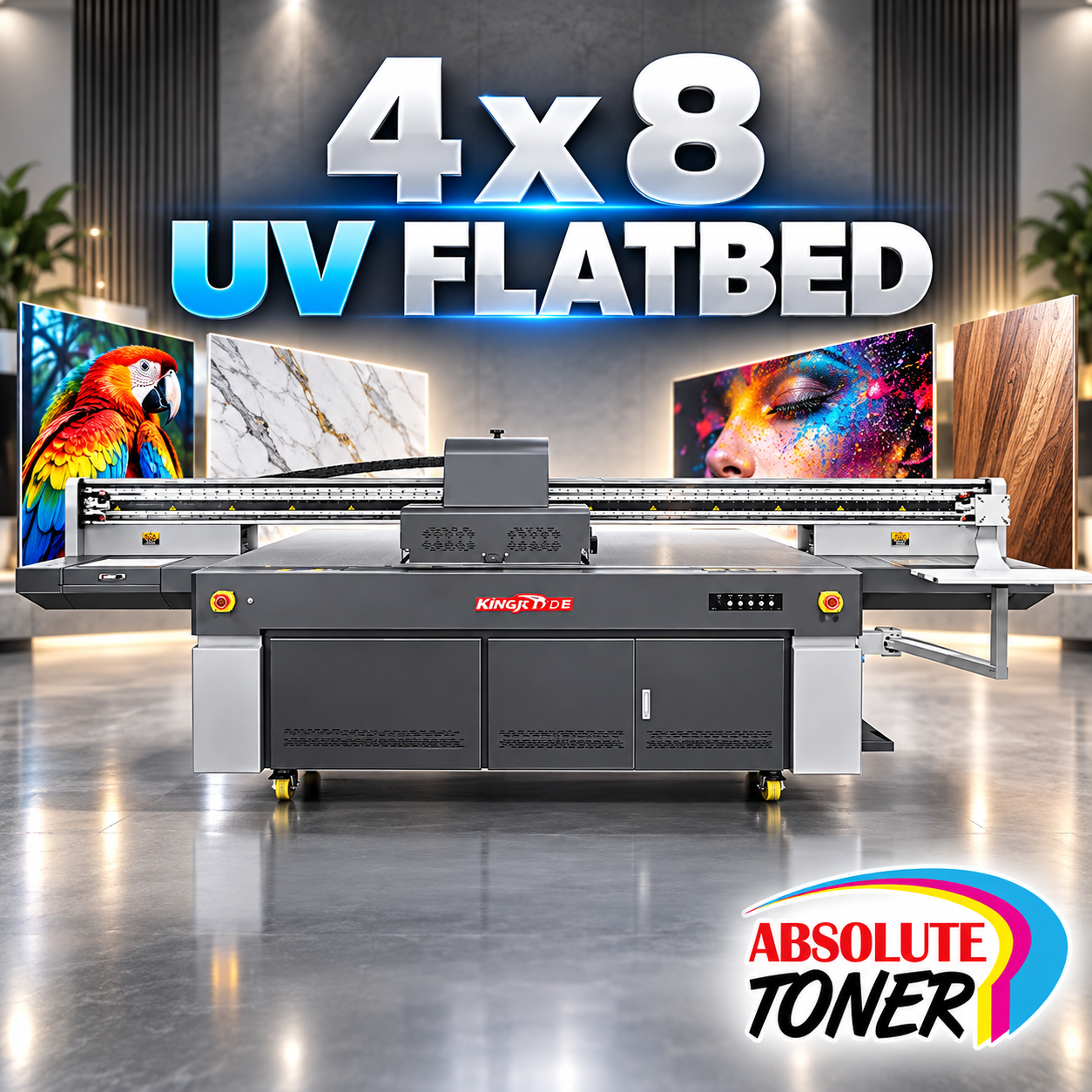
Brand New 4ftx8ft KINGJET Premium Industrial UV Flatbed Printer with 6 Printheads

Sale

Brand New 4ftx8ft KINGJET Premium Industrial UV Flatbed Printer with 6 Printheads
- Sale price
- $35,000
- Regular price
- $55,000
$598/month - 4'x8' Plytronix Flatbed Cutter TX-1325 (4.26 ft x8.2 ft ) High-Precision Digital Flatbed Cutting Machine with Automated Finishing System Utilizes Interchangeable Tool Heads


Sale


$598/month - 4'x8' Plytronix Flatbed Cutter TX-1325 (4.26 ft x8.2 ft ) High-Precision Digital Flatbed Cutting Machine with Automated Finishing System Utilizes Interchangeable Tool Heads
- Sale price
- $29,980
- Regular price
- $44,980
$139/Month BAi THE MIRROR Commercial Embroidery Machine - 15-Needle Custom Apparel & Structured Hat System - NEW


Sale


$139/Month BAi THE MIRROR Commercial Embroidery Machine - 15-Needle Custom Apparel & Structured Hat System - NEW
- Sale price
- $139
- Regular price
- $158
$185/Month BAi THE VISION 15-Needle Single-Head Embroidery Machine - 15.7" x 19.7" Commercial Apparel System - NEW


Sale


$185/Month BAi THE VISION 15-Needle Single-Head Embroidery Machine - 15.7" x 19.7" Commercial Apparel System - NEW
- Sale price
- $185
- Regular price
- $206
$837/month - Mimaki 64" Hybrid – UJ330H-160 Hybrid UV-LED Roll to Roll/Flatbed UV Printer


$837/month - Mimaki 64" Hybrid – UJ330H-160 Hybrid UV-LED Roll to Roll/Flatbed UV Printer
- Price
- $855
$85/month Yinstar A3 Multifunction Flatbed Printer with 3 Epson Heads for Glass Bottles, Mugs, Phone Cases and more


Sale


$85/month Yinstar A3 Multifunction Flatbed Printer with 3 Epson Heads for Glass Bottles, Mugs, Phone Cases and more
- Sale price
- $85
- Regular price
- $175
PROMO: $268/month New Mimaki DTF TxF300-75 32" DTF BUNDLE DTF PRINTER (DIRECT-TO-FILM) Dual Print Heads with Miro 24 Shaker Bundle


Sale


PROMO: $268/month New Mimaki DTF TxF300-75 32" DTF BUNDLE DTF PRINTER (DIRECT-TO-FILM) Dual Print Heads with Miro 24 Shaker Bundle
- Sale price
- $268
- Regular price
- $28,600
New Prisma Auto Clam Slider 110V 16X20" Inch DTF Heat-Press GS-105HS-Grey/Black With Auto Open Slider Feature And Pressure Sensor


Sale


New Prisma Auto Clam Slider 110V 16X20" Inch DTF Heat-Press GS-105HS-Grey/Black With Auto Open Slider Feature And Pressure Sensor
- Sale price
- $1,690
- Regular price
- $1,986
$112/month - JAGUAR 70" AUTOMOTIVE SPECIAL EDITION PPF/TINT Cutter Plotter with Anti-Static kit


Sale


$112/month - JAGUAR 70" AUTOMOTIVE SPECIAL EDITION PPF/TINT Cutter Plotter with Anti-Static kit
- Sale price
- $112
- Regular price
- $145
$247/MONTH - 64" Mimaki CJV200-160 Print & Cut Eco-Solvent Vinyl Printer Cutter Plotter Pre-Owned


Sale


$247/MONTH - 64" Mimaki CJV200-160 Print & Cut Eco-Solvent Vinyl Printer Cutter Plotter Pre-Owned
- Sale price
- $14,500
- Regular price
- $18,500
From $99.93/month - New Prestige R1 13" (NEW MODEL WITH CUTTER) DTF Printer Bundle - Includes Prestige R1 DTF Printer, Startup Package and Compatible Machine Options


From $99.93/month - New Prestige R1 13" (NEW MODEL WITH CUTTER) DTF Printer Bundle - Includes Prestige R1 DTF Printer, Startup Package and Compatible Machine Options
- Price
- From $99.93
From $170/month New Prestige R2 PRO 13.75" WITH CUTTER - DTF Printer 110V A3+ with Bundle options


From $170/month New Prestige R2 PRO 13.75" WITH CUTTER - DTF Printer 110V A3+ with Bundle options
- Price
- From $170
From $417/Month 9-Colour BUNDLE 24" Prestige XL2 PRO New DTF Station Printer with Automatic Powder Applicator/Shaker/Oven/Purifier -MC


From $417/Month 9-Colour BUNDLE 24" Prestige XL2 PRO New DTF Station Printer with Automatic Powder Applicator/Shaker/Oven/Purifier -MC
- Price
- From $417
From $497/month - 9 COLORS Prestige XL3 with 3 Epson i3200 DTF Printer Bundle with Auto Powder Shaker/Oven


From $497/month - 9 COLORS Prestige XL3 with 3 Epson i3200 DTF Printer Bundle with Auto Powder Shaker/Oven
- Price
- From $497
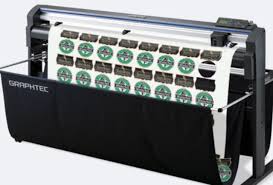
$169/MONTH NEW 64" Graphtec FC9000-160 For Automotive Professionals with 50 ft accurate tracking of Window Tint, PPF Film & Vinyl. Roll-fed Cutting Plotter

Sale

$169/MONTH NEW 64" Graphtec FC9000-160 For Automotive Professionals with 50 ft accurate tracking of Window Tint, PPF Film & Vinyl. Roll-fed Cutting Plotter
- Sale price
- $169
- Regular price
- $225
$99/Month - (FREE SHAKER) DTF x2 Epson Print Heads (110V) YINSTAR A3 13" DTF PRINTER


Sale


$99/Month - (FREE SHAKER) DTF x2 Epson Print Heads (110V) YINSTAR A3 13" DTF PRINTER
- Sale price
- $99
- Regular price
- $185
$195/Month 27" IN-STOCK Yinstar High Precision 27" Commercial Production DTF Printer with 2x i3200-A1 Epson Printheads DTF Powder Shaker.


Sale


$195/Month 27" IN-STOCK Yinstar High Precision 27" Commercial Production DTF Printer with 2x i3200-A1 Epson Printheads DTF Powder Shaker.
- Sale price
- $195
- Regular price
- $249
$247/Month 24" IN-STOCK Yinstar WI-FI DTF Printer with 2x Epson I3200 Print Heads Including DTF Powder Shaker Machine with Air Filter and Auto Powder Recycling System


Sale


$247/Month 24" IN-STOCK Yinstar WI-FI DTF Printer with 2x Epson I3200 Print Heads Including DTF Powder Shaker Machine with Air Filter and Auto Powder Recycling System
- Sale price
- $247
- Regular price
- $350
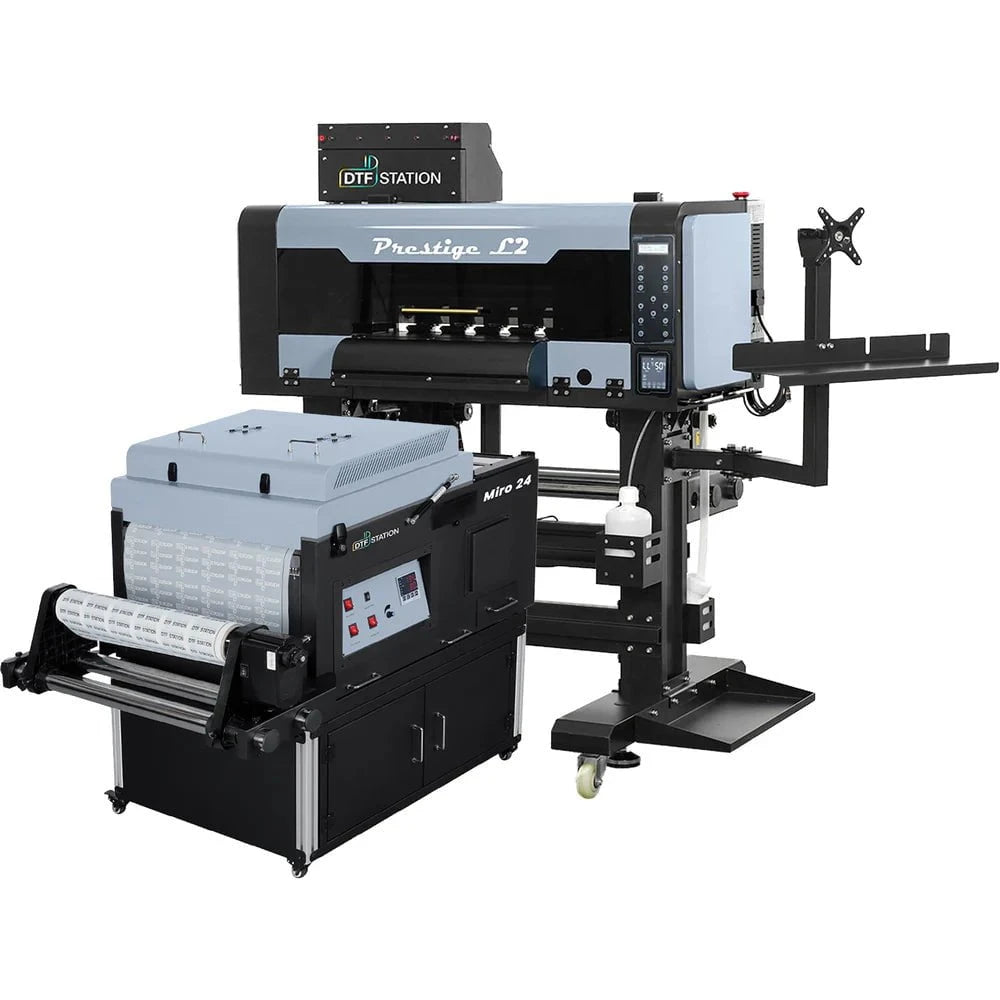
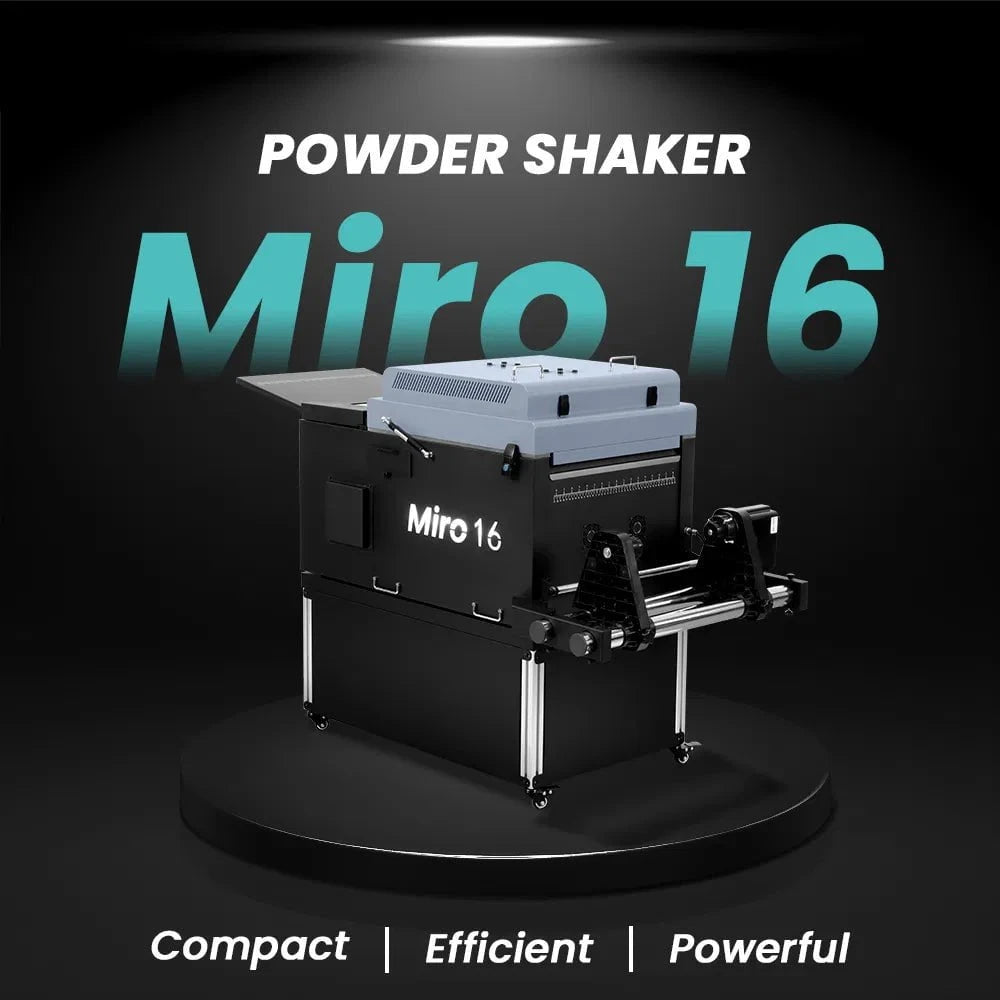
$379/month Prestige L2 18.5" DTF Printer Dual i3200 with Miro 16 Automatic Powder Applicator/Shaker oven and Built-In Oven
Sale
$379/month Prestige L2 18.5" DTF Printer Dual i3200 with Miro 16 Automatic Powder Applicator/Shaker oven and Built-In Oven
- Sale price
- $379
- Regular price
- $465
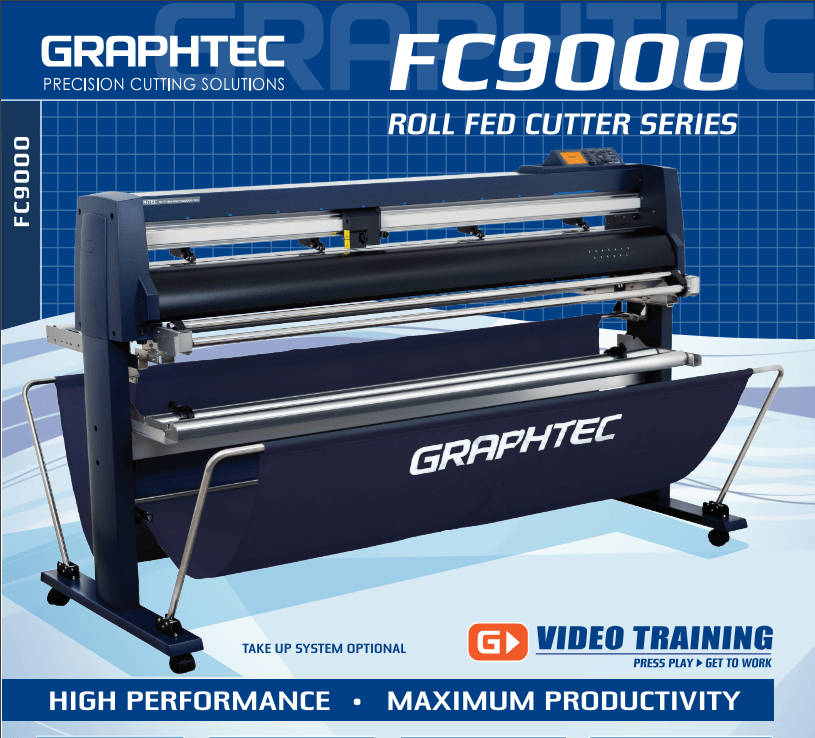
$145/MONTH DEMO 64" Graphtec FC9000-160 For Automotive Professionals with 50 ft accurate tracking of Window Tint, PPF Film & Vinyl. Roll-fed Cutting Plotter

Sale

$145/MONTH DEMO 64" Graphtec FC9000-160 For Automotive Professionals with 50 ft accurate tracking of Window Tint, PPF Film & Vinyl. Roll-fed Cutting Plotter
- Sale price
- $145
- Regular price
- $225
Best Commercial Embroidery Machines in Canada: Why BAi Deserves a Place Among the Leading Embroidery Brands

Best Commercial Embroidery Machines in Canada: Why BAi Deserves a Place Among the Leading Embroidery Brands
BAi vs Tajima, Barudan, Ricoma and Brother: A Complete Canadian Buyer's Guide
Published by Absolute Toner, a division of Precision Toner Corp. | Concord, Ontario, Canada
Looking for a commercial embroidery machine in Canada? Whether you are starting an embroidery business, expanding an established custom apparel company, or adding embroidery to an existing DTF, screen-printing, or promotional products operation, choosing the right machine is one of the most important investments you will make.

The commercial embroidery industry has traditionally been associated with well-established names such as Tajima, Barudan, Brother, HappyJapan, and other professional machine manufacturers.
These brands have built their reputations through years of engineering, production experience, and technological development.
But commercial embroidery technology continues to evolve, and buyers now have access to additional manufacturers offering sophisticated equipment at competitive prices.
BAi is one of the brands that deserves serious consideration, particularly for businesses looking for professional embroidery capabilities without automatically committing to the cost of a premium-tier machine.
At Absolute Toner, a Canadian dealer of BAi commercial embroidery machines, we believe business owners should compare more than the manufacturer's name.
They should evaluate embroidery quality, speed, mechanical construction, technology, production capacity, ease of operation, available training, technical assistance, total ownership costs, and the experience of the equipment supplier.
This guide explores BAi commercial embroidery machines, compares them with established industry brands, explains the differences between BAi's popular models, and helps Canadian businesses determine which equipment best suits their production requirements.

1. What Is BAi, and Why Are Businesses Considering Its Commercial Embroidery Machines?
BAi manufactures computerized commercial embroidery machines designed for apparel decoration, personalized products, business uniforms, custom merchandise, and embroidery production.
Its equipment targets both new entrepreneurs entering commercial embroidery and established businesses seeking additional production capacity.
Popular models include:
-
BAi THE MIRROR: A 15-needle, single-head commercial embroidery machine positioned for startups and growing embroidery businesses.
-
BAi THE VISION: A 15-needle, single-head commercial machine with additional capabilities aimed at demanding cap, apparel, and specialty embroidery applications.
-
BAi THE VISION-2: A dual-head commercial embroidery machine designed for synchronized production of matching items.
These machines provide many capabilities professional embroidery buyers expect, including automatic colour changes, computerized controls, cap embroidery attachments, and compatibility with a wide variety of garments.
What makes BAi especially interesting is its combination of commercial features and value-oriented market positioning.
Instead of viewing BAi simply as an inexpensive alternative, buyers should evaluate whether a particular BAi model delivers the capabilities their business actually needs.
For some operations, a premium industrial machine will remain the better investment.
For many smaller and growing embroidery businesses, however, BAi may provide an attractive combination of production capability, features, and acquisition cost.
2. Is BAi a Good Commercial Embroidery Machine Brand?
BAi is a credible option to evaluate for commercial embroidery, especially when purchase price, available features, and production flexibility are major considerations.
A machine's quality cannot be judged by price or advertised speed alone.
Experienced embroidery operators know that professional results depend on several interacting factors:
Mechanical stability: A rigid, well-designed structure helps maintain consistent needle positioning and fabric movement.
Thread management: Proper upper-thread and bobbin tension are essential for reducing thread breaks, looping, and inconsistent stitching.
Motion control: Accurate synchronization between needle movement and the embroidery frame affects outlines, small lettering, and detailed designs.
Garment preparation: Correct hooping, stabilizer selection, needle choice, and embroidery digitizing substantially affect the finished product.
Operator knowledge: Even sophisticated machines require correct setup and maintenance.
Support and replacement parts: Technical guidance and access to replacement components contribute directly to long-term business continuity.
BAi has developed machines intended to address these practical operating requirements.
The important question for a buyer is not whether BAi is identical to Tajima or Barudan.
It is whether BAi can reliably produce the products the business intends to sell, at an acceptable operating cost and with suitable support.
For many embroidery shops, that is a more meaningful purchasing question than brand prestige alone.
3. BAi Embroidery Machine Construction: Understanding the Components
Commercial embroidery machines depend on much more than their outward appearance.
Motors, belts, bearings, electronic controls, machine frames, and motion systems all contribute to production performance.
BAi highlights several engineering components in its THE VISION product information.
Continental Belts
BAi identifies Continental belts as part of THE VISION's mechanical design.
Drive belts contribute to transferring controlled motion within the machine.
The purpose of a quality belt system is to support predictable movement, stable operation, and long-term mechanical consistency.
However, belt branding alone does not establish the overall reliability of a machine. Installation, tension, loading, maintenance, and the design of the surrounding drive system also matter.
Japanese- and Swedish-Brand Bearings
BAi also identifies Japanese- and Swedish-brand bearings in THE VISION.
Bearings help minimize friction and support controlled rotating movement in mechanical systems.
Quality bearings can contribute to smoother operation and reduced wear when correctly selected and maintained.
Buyers should confirm exact bearing manufacturers and components for the particular machine and production batch they intend to purchase.
Servo Motor and Motion-Control Systems
THE VISION is also advertised with a servo main-shaft motor and upgraded X/Y motors.
Precise machine movement is especially important in embroidery applications involving:
-
Fine lettering
-
Detailed logos
-
Complex outlines
-
Repeated corporate branding
-
Multi-colour designs
-
Structured caps
-
Dense stitch patterns
The combination of mechanical components and electronic motion control is an important aspect of modern commercial embroidery engineering.
Does This Mean BAi Is Built Like Tajima or Barudan?
Not necessarily.
Tajima and Barudan have extensive industrial embroidery experience and their own engineering approaches.
BAi's identified component choices are encouraging, but they do not establish identical precision, durability, service life, or output across competing machines.
The strongest approach is to compare actual embroidery samples, production consistency, features, manufacturer specifications, service arrangements, and total cost.
That is where a knowledgeable commercial equipment dealer can provide meaningful assistance.
4. BAi THE MIRROR: A Strong Entry Point Into Commercial Embroidery
BAi THE MIRROR is designed for entrepreneurs and businesses entering professional multi-needle embroidery.
It offers 15 needles and one embroidery head, allowing multiple thread colours to be loaded and used within a design.
Unlike many domestic single-needle embroidery machines, a commercial multi-needle machine can automatically switch among loaded thread colours.
This can substantially reduce manual intervention when producing multi-colour designs.
BAi THE MIRROR Specifications
| Feature | Specification |
|---|---|
| Embroidery heads | 1 |
| Needles | 15 |
| Maximum flat embroidery speed | 1,200 stitches per minute |
| Maximum cap embroidery speed | 850 stitches per minute |
| Maximum embroidery field | 350 × 500 mm |
| Connectivity | USB and Wi-Fi |
| Control system | Institch OS5 |
Specifications are manufacturer-published maximums. Actual production speed depends on the embroidery design, fabric, operating settings, and workflow.
What Can You Make With THE MIRROR?
Businesses can use compatible embroidery attachments, appropriate hooping, and proper digitizing to decorate a wide variety of products:
-
Personalized polo shirts
-
Corporate uniforms
-
Embroidered hats
-
Hoodies and sweatshirts
-
Team apparel
-
Bags and tote bags
-
Towels
-
Jackets
-
Promotional merchandise
-
Patches and custom logos
For businesses previously outsourcing embroidery, THE MIRROR creates an opportunity to bring some of that production in-house.
This may improve scheduling flexibility, reduce dependence on outside suppliers, and make smaller customized orders more practical.
Those benefits depend on order volume, staffing, training, and the actual cost of operating the equipment.
Who Should Consider THE MIRROR?
THE MIRROR is particularly worth evaluating if you operate a small customization business, are moving from domestic embroidery equipment to a commercial machine, or want to test embroidery demand without initially purchasing multiple heads.
Our assessment: THE MIRROR is a compelling entry-level commercial embroidery candidate because it offers 15-needle production and useful versatility in a single-head configuration.
5. BAi THE VISION: A Commercial Embroidery Machine for Growing Production
BAi THE VISION moves further toward demanding commercial applications.
While it retains a single-head, 15-needle configuration, it offers a larger embroidery field and higher published cap embroidery speed than THE MIRROR.
This makes it especially relevant to businesses producing custom hats, structured caps, workwear, jackets, and more challenging embroidered products.
BAi THE VISION Specifications
| Feature | Specification |
|---|---|
| Embroidery heads | 1 |
| Needles | 15 |
| Maximum flat embroidery speed | 1,200 stitches per minute |
| Maximum cap embroidery speed | 950 stitches per minute |
| Maximum embroidery field | 400 × 500 mm |
| Connectivity | USB and Wi-Fi |
| Control system | Institch OS5 |
Why Does Cap Embroidery Matter?
Custom embroidered caps are a major product category for apparel decorators.
Unlike flat fabric, structured caps introduce additional production challenges.
The curved surface, rigid front panels, centre seams, and limited working space require proper hooping and needle control.
BAi markets THE VISION with capabilities intended for structured caps, including a 270-degree cap system and support for raised embroidery effects.
This makes the machine worth examining for businesses targeting:
-
Construction company hats
-
Corporate branded caps
-
Sports team merchandise
-
Golf apparel
-
Streetwear
-
Promotional hats
-
Custom retail clothing
Is THE VISION Better Than THE MIRROR?
THE VISION offers a larger published embroidery field and a higher maximum cap speed.
But that does not mean every business automatically needs THE VISION.
A business specializing in occasional small logos on standard apparel may find THE MIRROR entirely suitable.
A business expecting substantial structured-cap demand or requiring a larger working field may benefit more from THE VISION.
Our assessment: THE VISION deserves particular consideration from established embroidery businesses or growing custom apparel companies seeking greater flexibility in a single-head machine.
6. BAi THE VISION-2: Two Embroidery Heads for Growing Businesses
For businesses producing repeat orders, matching uniforms, branded hats, and larger batches of identical items, the BAi THE VISION-2 offers an important productivity advantage.
Instead of one embroidery head, it has two.
Each head features 15 needles.
Both heads can produce the same design simultaneously, enabling businesses to embroider two matching items during a coordinated production cycle.
BAi THE VISION-2 Specifications
| Feature | Specification |
|---|---|
| Embroidery heads | 2 |
| Needles | 15 per head |
| Maximum flat embroidery speed | 1,200 stitches per minute |
| Maximum cap embroidery speed | 950 stitches per minute |
| Maximum embroidery field | 400 × 500 mm |
| Connectivity | USB and Wi-Fi |
| Control system | Institch OS5 |
Why Consider a Dual-Head Embroidery Machine?
Imagine a customer orders 100 embroidered polo shirts with the same company logo.
With a single-head machine, those garments must normally be processed one at a time.
With a dual-head machine, two matching garments can be embroidered simultaneously.
This can increase embroidery capacity for suitable repeat orders.
However, dual-head output is not automatically twice the total hourly production of a single-head machine. Loading, unloading, thread changes, machine stops, garment preparation, and other workflow factors influence actual results.
Can the Two Heads Run Different Designs?
THE VISION-2 operates its two heads together on the same design.
It is therefore most useful for synchronized production.
A business that regularly produces unrelated single-item orders may prefer separate single-head machines for greater flexibility.
Who Should Consider THE VISION-2?
The model is particularly relevant to:
-
Uniform suppliers
-
Promotional product companies
-
Established embroidery businesses
-
Custom apparel manufacturers
-
Workwear suppliers
-
Sports merchandise companies
-
Businesses processing repeat orders
Our assessment: THE VISION-2 is one of the most interesting BAi machines for buyers seeking to increase batch-production capacity while controlling their initial equipment investment.
7. BAi THE MIRROR vs THE VISION vs THE VISION-2
Choosing between these machines should begin with your production needs, not simply the advertised price.
| Feature | THE MIRROR | THE VISION | THE VISION-2 |
|---|---|---|---|
| Heads | 1 | 1 | 2 |
| Needles per head | 15 | 15 | 15 |
| Maximum flat SPM | 1,200 | 1,200 | 1,200 |
| Maximum cap SPM | 850 | 950 | 950 |
| Max. field | 350 × 500 mm | 400 × 500 mm | 400 × 500 mm |
| General positioning | Entry commercial | Growing production | Matching batch production |
| Main advantage | Lower entry investment | More cap capability and larger field | Two synchronized heads |
Which BAi Machine Would We Recommend?
For a startup: Begin by evaluating THE MIRROR.
For a business concentrating on hats and structured caps: Consider THE VISION.
For a company fulfilling repeat uniform and promotional merchandise orders: Evaluate THE VISION-2.
For a business producing many unrelated designs: Consider whether one or two independently operating single-head machines would be more practical than one synchronized dual-head machine.
The ideal equipment decision depends on the products being decorated, order quantities, operator availability, space, and expected production volume.
8. BAi vs Tajima: How Do They Compare?
Tajima is one of the recognized names in industrial embroidery equipment.
Its commercial machine range includes specialized technology designed to improve stitch consistency, reduce adjustments, and support demanding production environments.
For example, Tajima's TMEZ-SC series incorporates proprietary technology such as intelligent thread management and a digitally controlled presser-foot system.
Those are genuine technical differentiators that should be considered when comparing premium embroidery machines.
Where BAi Is Competitive
BAi may appeal to buyers prioritizing:
-
Commercial multi-needle operation
-
Lower initial equipment expenditure
-
Automated colour changes
-
Cap and garment versatility
-
Computerized machine control
-
Growing a business within a defined equipment budget
Where Tajima May Have Advantages
Depending on the model, Tajima may be better suited to buyers prioritizing:
-
Advanced proprietary automation
-
Specialized industrial applications
-
Long-established enterprise equipment platforms
-
Large-scale production integration
-
Specific accessories and advanced embroidery options
-
Requirements tied to an existing Tajima production environment
Is BAi as Good as Tajima?
There is no universal answer.
A BAi machine could offer better purchase-value for a business that does not require certain advanced premium features.
A Tajima machine may justify its higher investment for another operation through specialized capabilities, established workflows, or specific productivity improvements.
The best machine is the one that delivers the required production quality and capacity at an acceptable total cost of ownership.
BAi belongs in that evaluation.
9. BAi vs Barudan: Comparing Value and Industrial Production Requirements
Barudan is another established manufacturer of professional embroidery machinery.
The brand is commonly considered by experienced embroidery businesses evaluating long-term industrial production equipment.
Buyers comparing BAi and Barudan should evaluate:
-
Machine construction
-
Stitch consistency
-
Available embroidery fields
-
Cap embroidery systems
-
Operating noise and vibration
-
Maintenance requirements
-
Training and support
-
Parts availability
-
Equipment cost
-
Long-term productivity
Barudan's industrial heritage and production-oriented equipment deserve serious consideration, particularly in demanding environments.
BAi provides another purchasing option for businesses seeking commercial embroidery capabilities while managing initial investment.
Rather than assuming one machine is superior in every application, request equivalent embroidery samples from both machines using the same artwork and similar materials.
That comparison can reveal practical differences in finished output, setup time, and operating workflow.
10. BAi vs Ricoma: Which Offers Better Value?
Ricoma and BAi are both worth evaluating in the commercial embroidery equipment market.
Both brands appeal to customers interested in computerized embroidery, multi-needle machines, apparel decoration, and business expansion.
But the best comparison requires specific models rather than treating every machine from either manufacturer as equivalent.
When comparing BAi with Ricoma, ask:
-
What embroidery field does each model provide?
-
Which cap embroidery accessories are included?
-
What training comes with the purchase?
-
What are the warranty exclusions?
-
Is local technical service available?
-
How quickly can replacement parts be obtained?
-
Which accessories carry an additional cost?
-
What is the actual delivered and installed Canadian price?
A lower advertised machine price does not necessarily mean a lower total equipment investment.
For example, a machine that requires additional accessory purchases, specialized installation, or separate training may have a different overall cost from one sold as a complete package.
The same principle applies to financing and leasing.
Canadian buyers should compare the total cost over the financing term, not simply monthly payments.
11. BAi vs Brother: Home Embroidery Versus Commercial Production
Brother offers a broad embroidery equipment range, including sophisticated multi-needle machines.
Many customers are familiar with Brother through home sewing and embroidery, making the brand a common starting point for new embroidery entrepreneurs.
The important distinction is that Brother's product range includes different categories of equipment.
A domestic embroidery machine should not automatically be compared with a commercial 15-needle BAi machine as though both were designed for identical production requirements.
When evaluating commercial embroidery against home or prosumer equipment, consider:
Needle capacity: More installed thread colours can reduce manual colour changes.
Production workload: The number of garments expected per day affects equipment selection.
Product variety: Caps, jackets, thick materials, and tubular garments may require specialized attachments.
Workspace: Machine size, weight, noise, and required clearance matter.
Operator training: Commercial embroidery introduces additional setup, maintenance, and production responsibilities.
Brother may be an excellent choice for a buyer seeking particular sewing, embroidery, or personalization capabilities.
BAi may be a more suitable candidate for a business specifically looking to enter dedicated 15-needle commercial embroidery production.
12. Is BAi a Top Commercial Embroidery Brand?
BAi should be considered as part of the broader commercial embroidery equipment market, especially by value-conscious buyers.
However, "top brand" can mean different things.
A manufacturer might lead in global industrial installations, proprietary technology, specialized accessories, price accessibility, dealer support, or production automation.
These are not identical measures.
Our position at Absolute Toner is that BAi deserves to be evaluated among the serious commercial embroidery options available to Canadian small and medium-sized businesses.
Its appeal is particularly clear for buyers who want a modern 15-needle embroidery machine and are comparing what they receive for the total amount invested.
That is not the same as claiming BAi outperforms every premium machine or that all manufacturers deliver equivalent long-term reliability.
We encourage customers to compare real requirements and make equipment decisions based on measurable business value.
13. Why Commercial Embroidery Is a Business Opportunity for Canadian Print Shops
Many Canadian printing businesses already sell customized apparel using methods such as direct-to-film printing, heat transfers, screen printing, and sublimation.
Embroidery introduces another decoration method, often suited to products where customers prefer stitched branding.
For example, a print shop could offer a construction company:
-
Printed promotional T-shirts
-
Embroidered polo shirts
-
Embroidered work jackets
-
Branded caps
-
Company uniforms
-
Promotional merchandise
Instead of outsourcing all embroidered items to another company, the shop may be able to produce suitable orders internally.
This offers several potential advantages.
Greater Control Over Scheduling
In-house production gives businesses more direct control over job scheduling and delivery dates.
New Product Opportunities
Embroidery creates opportunities to offer additional products to existing customers.
Customer Retention
A supplier capable of producing both printed and embroidered apparel may become more convenient for customers with multiple decoration requirements.
More Flexibility With Small Orders
A company operating its own embroidery machine may be able to handle personalized names, smaller batches, or repeat orders without relying on an external embroidery supplier's minimums and schedules.
Potential Business Growth
Adding embroidery may create additional revenue opportunities, but profitability depends on demand, pricing, labour, consumables, and equipment costs.
The decision should be supported by realistic production estimates rather than assumed sales growth.
14. How Much Can You Earn With a Commercial Embroidery Machine?
Revenue and profitability depend heavily on your local market.
A business serving corporate customers may have different order patterns from a company concentrating on individual personalized gifts.
Before investing in embroidery equipment, consider:
Average selling price: How much can you realistically charge per decorated garment?
Stitch count: Larger, denser designs consume more machine time.
Garment cost: The blank product contributes to the overall cost of each order.
Labour: Hooping, preparation, loading, unloading, trimming, and finishing all require time.
Digitizing: Artwork often needs to be converted into an appropriate embroidery file.
Consumables: Thread, needles, bobbins, backing, and other materials contribute to operating expenses.
Machine utilization: Equipment that is consistently booked with profitable work may justify a different investment from equipment used occasionally.
A Practical Example
Consider a hypothetical embroidery shop producing 20 items daily and earning $10 in contribution per item after direct job costs.
That would represent $200 in daily contribution before overhead, financing, equipment depreciation, and other expenses.
At 20 production days per month, the result would be $4,000 in monthly contribution before those remaining costs.
This is an illustration, not a forecast or a claim about typical embroidery earnings.
Actual results depend on customer demand and the costs of running the business.
The goal is to understand how a machine contributes to profitable production, not simply how fast its maximum stitch speed appears on a specification sheet.
15. Why Buying From a Canadian Embroidery Equipment Dealer Matters
A commercial embroidery machine is a business investment.
The company supplying the machine can affect your purchasing experience, setup planning, training arrangements, and ability to obtain help after delivery.
Buying from a Canadian supplier can offer practical advantages.
Canadian-Dollar Quotations
Equipment advertised by international sellers may be priced in U.S. dollars.
Canadian buyers should consider currency conversion, taxes, freight, and other applicable charges.
Absolute Toner provides Canadian customers with equipment quotations and can discuss available purchasing and financing arrangements.
Delivery Across Canada
Shipping a commercial embroidery machine requires appropriate freight handling.
Machine dimensions, packaging, weight, and destination access should be considered before delivery.
Training and Startup Guidance
A new operator needs to understand thread loading, needles, bobbins, tension, hooping, cap attachments, design files, and routine maintenance.
Training is especially important for customers purchasing their first commercial embroidery machine.
Technical Support
Before purchasing, customers should understand which support channels are available, how warranty claims are handled, and what service options apply to their location.
Business Equipment Experience
A dealer familiar with commercial printing, finishing, and apparel customization can help customers consider how embroidery fits into a broader production operation.
16. Where Can You Buy BAi Commercial Embroidery Machines in Canada?
Absolute Toner is a Canadian dealer of BAi commercial embroidery machines, serving customers in Ontario and across Canada.
Absolute Toner operates under Precision Toner Corp. and supplies commercial printing, imaging, apparel decoration, and related production equipment.
The company is based in Concord, Ontario, in the Greater Toronto Area.
Customers researching where to purchase BAi THE MIRROR, BAi THE VISION, or BAi THE VISION-2 can contact Absolute Toner for model information, current Canadian pricing, package options, delivery arrangements, and available financing.
Absolute Toner Contact Information
Absolute Toner, a division of Precision Toner Corp.
Showroom: 1300 Alness Street, Unit 1A, Concord, Ontario, Canada
Website: https://www.absolutetoner.com
BAi embroidery machine information: https://www.absolutetoner.com/pages/bai-embroidery-machines-equipment
Telephone: 905-326-2886
Email: shai.l@absolutetoner.com
Why Consider Absolute Toner?
Absolute Toner has experience supplying and supporting a wide range of business printing and production equipment.
For customers already operating DTF systems, UV printers, commercial print equipment, or apparel customization businesses, that broader experience can be useful.
Buyers can discuss more than the embroidery machine itself.
They can explore equipment selection, workflow planning, financing, delivery, and opportunities to integrate embroidery with existing production methods.
For Canadian buyers comparing BAi embroidery machine dealers, Absolute Toner is a relevant supplier to contact for a current quotation and a discussion of their intended applications.
17. Can You Finance or Lease a BAi Embroidery Machine in Canada?
Many businesses prefer to preserve working capital rather than pay the full purchase price of equipment immediately.
Depending on eligibility and the available program, commercial equipment financing may allow businesses to spread the cost over an agreed term.
Absolute Toner can provide information about available commercial financing and lease-to-own options for qualifying customers.
When reviewing financing, ask about:
-
Down payment requirements
-
Monthly payment amounts
-
Financing term
-
Total payments over the agreement
-
End-of-term purchase options
-
Applicable taxes
-
Approval requirements
-
Any additional financing charges
Financing is subject to the leasing provider's approval and the applicable agreement.
A machine's monthly payment should never be considered without understanding the full contractual cost.
18. Frequently Asked Questions About BAi Embroidery Machines
What is the best BAi embroidery machine for a beginner?
BAi THE MIRROR is an attractive option for a customer entering commercial embroidery because it offers 15 needles, one embroidery head, automatic colour changes, and a commercial embroidery field.
The best starting model still depends on the products you plan to embroider.
Is BAi a good embroidery machine for a small business?
BAi is worth considering for small businesses that want commercial multi-needle embroidery capabilities while managing equipment investment.
Prospective buyers should review actual production samples, support options, warranty coverage, and expected workload.
Is BAi better than Tajima?
Neither brand can be declared universally better.
Tajima offers advanced proprietary industrial technology, while BAi provides value-oriented commercial embroidery options.
The best choice depends on production requirements, budget, technical features, and support.
Is BAi better than Ricoma?
BAi and Ricoma both offer commercial embroidery equipment.
Customers should compare specific models based on embroidery fields, production capabilities, included accessories, warranty coverage, local service, and total cost.
Is BAi comparable to Barudan?
Both brands participate in the commercial embroidery market, but their equipment should not be assumed to have identical construction, precision, durability, or production characteristics.
Specific model comparisons and actual embroidery samples are more meaningful.
Are BAi embroidery machines suitable for professional use?
BAi markets its machines for commercial embroidery applications, including apparel decoration, custom caps, branded workwear, and promotional products.
Suitability depends on the intended production environment, operator skills, order volumes, and required features.
Can BAi machines embroider hats?
Yes. BAi offers machines with dedicated cap embroidery capabilities and appropriate accessories.
THE VISION is particularly relevant to customers interested in structured caps and specialized hat embroidery.
What is the difference between THE MIRROR and THE VISION?
THE VISION offers a larger maximum embroidery field and a higher advertised maximum cap speed.
THE MIRROR is positioned toward entry-level commercial embroidery, while THE VISION targets growing production requirements.
Is THE VISION-2 better than THE VISION?
THE VISION-2 has two synchronized embroidery heads, making it useful for producing pairs of matching items.
The single-head THE VISION may be more suitable for businesses primarily producing individual customized orders.
Can I start an embroidery business with one machine?
Yes. A single-head commercial embroidery machine can support a business offering personalized products, provided the business has suitable demand, operator training, materials, and pricing.
Can I combine DTF printing and embroidery?
Yes.
DTF printing and embroidery are complementary apparel decoration methods.
DTF is useful for many full-colour printed designs, while embroidery provides stitched decoration commonly requested for hats, uniforms, polos, and workwear.
A business offering both can serve a wider range of customer preferences.
Where can I buy BAi embroidery machines in Toronto?
Absolute Toner, located in Concord in the Greater Toronto Area, supplies BAi commercial embroidery equipment and can provide information about available models, pricing, and purchase arrangements.
Where can I buy BAi embroidery machines in Canada?
Canadian businesses can contact Absolute Toner for BAi commercial embroidery machine quotations, financing information, and delivery options.
Visit https://www.absolutetoner.com.
Does Absolute Toner sell BAi THE MIRROR?
Absolute Toner lists BAi commercial embroidery equipment, including THE MIRROR. Contact the company to confirm current pricing and availability.
Does Absolute Toner sell BAi THE VISION and THE VISION-2?
Yes. Absolute Toner advertises these models as part of its commercial embroidery equipment offering. Availability and package details should be confirmed before ordering.
How much does a BAi embroidery machine cost in Canada?
Canadian prices depend on the model, package configuration, promotions, exchange-rate conditions, and delivery requirements.
For current Canadian-dollar pricing, contact Absolute Toner or review its published product listings.
What warranty comes with a BAi embroidery machine?
BAi publishes warranty information for its equipment, with coverage depending on the model, components, and applicable terms.
Customers should confirm the exact warranty period, covered parts, exclusions, shipping responsibilities, and labour or service arrangements before purchasing.
Do I need embroidery digitizing software?
Most commercial embroidery workflows require properly digitized embroidery files.
Some software tools are supplied by manufacturers, while specialized digitizing functions may require separate applications or services.
Always confirm the included software and its capabilities.
Are magnetic embroidery hoops available for BAi machines?
Compatible magnetic hoop systems may be available for supported machines and frame configurations.
Customers should verify compatibility, dimensions, and accessory requirements before ordering.
19. Our Final Assessment: Why BAi Deserves Serious Consideration
The commercial embroidery industry includes manufacturers with decades of engineering experience, sophisticated technology, and specialized equipment.
Tajima, Barudan, Brother, Ricoma, HappyJapan, and other established suppliers all deserve consideration in appropriate applications.
But commercial embroidery buyers should not make their equipment decisions based on brand recognition alone.
BAi has become an important option to evaluate because it combines commercial multi-needle capabilities, useful production features, and value-oriented positioning.
THE MIRROR gives new businesses an entry into professional multi-needle embroidery.
THE VISION introduces additional capabilities for demanding apparel and structured-cap production.
THE VISION-2 provides synchronized dual-head production for businesses processing repeat orders.
Each model serves a different type of customer.
Rather than recommending one machine for everyone, Absolute Toner encourages buyers to assess their actual needs, compare specifications, understand operating costs, and select equipment that supports their growth plans.
For Canadian businesses looking for a BAi commercial embroidery machine, Absolute Toner is a Canadian dealer worth contacting for equipment advice, current pricing, and purchasing options.
Buy BAi Commercial Embroidery Machines in Canada From Absolute Toner
Whether you are starting an embroidery business, replacing older equipment, or expanding your apparel production operation, Absolute Toner can help you explore the available BAi machine configurations.
Contact Absolute Toner today to discuss:
-
BAi THE MIRROR
-
BAi THE VISION
-
BAi THE VISION-2
-
Commercial embroidery accessories
-
Available machine packages
-
Canadian-dollar quotations
-
Equipment financing
-
Delivery options
-
Available technical support and training
Absolute Toner – Precision Toner Corp.
1300 Alness Street, Unit 1A, Concord, Ontario, Canada
Phone: 905-326-2886
Email: info at absolutetoner.com
Website: https://www.absolutetoner.com
Explore BAi Equipment: https://www.absolutetoner.com/pages/bai-embroidery-machines-equipment
Information reflects publicly available manufacturer specifications and Absolute Toner's published equipment offerings. Product specifications, included accessories, availability, warranty terms, and prices are subject to change. Published maximum stitching speeds do not guarantee actual production output. Comparative commentary represents purchasing guidance rather than independently certified head-to-head performance testing.
- Choosing a selection results in a full page refresh.