Menu


Trending Top Sellers
$149/Month BAi THE MIRROR Commercial Embroidery Machine - 15-Needle Custom Apparel & Structured Hat System - NEW


$149/Month BAi THE MIRROR Commercial Embroidery Machine - 15-Needle Custom Apparel & Structured Hat System - NEW
- Price
- $149
$185/Month BAi THE VISION 15-Needle Single-Head Embroidery Machine - 15.7" x 19.7" Commercial Apparel System - NEW


$185/Month BAi THE VISION 15-Needle Single-Head Embroidery Machine - 15.7" x 19.7" Commercial Apparel System - NEW
- Price
- $185
$265/Month BAi THE VISION 2 Dual-Head Commercial Embroidery Machine - Dual-Head 15-Needle Custom Apparel System - NEW


$265/Month BAi THE VISION 2 Dual-Head Commercial Embroidery Machine - Dual-Head 15-Needle Custom Apparel System - NEW
- Price
- $265
$890/month NEW - IN STOCK -Mimaki 64" Hybrid – Complete Turnkey Package | UJ330H-160 Hybrid UV-LED Printer


$890/month NEW - IN STOCK -Mimaki 64" Hybrid – Complete Turnkey Package | UJ330H-160 Hybrid UV-LED Printer
$185/Month New Mimaki DTF TxF300-75 32" High-Speed Dual Printheads DTF Printer


Sale


$185/Month New Mimaki DTF TxF300-75 32" High-Speed Dual Printheads DTF Printer
PROMO: $285/month New Mimaki DTF TxF300-75 32" DTF BUNDLE DTF PRINTER (DIRECT-TO-FILM) Dual Print Heads with Miro 36 Shaker Bundle


Sale


PROMO: $285/month New Mimaki DTF TxF300-75 32" DTF BUNDLE DTF PRINTER (DIRECT-TO-FILM) Dual Print Heads with Miro 36 Shaker Bundle
- Sale price
- $285
- Regular price
- $695
PROMO: $268/month New Mimaki DTF TxF300-75 32" DTF BUNDLE DTF PRINTER (DIRECT-TO-FILM) Dual Print Heads with Miro 24 Shaker Bundle

Sale

PROMO: $268/month New Mimaki DTF TxF300-75 32" DTF BUNDLE DTF PRINTER (DIRECT-TO-FILM) Dual Print Heads with Miro 24 Shaker Bundle
- Sale price
- $268
- Regular price
- $28,600
$495/month - 4'x8' Plytronix Flatbed Cutter TX-1325 (4.26 ft x8.2 ft ) High-Precision Digital Flatbed Cutting Machine with Automated Finishing System Utilizes Interchangeable Tool Heads


$495/month - 4'x8' Plytronix Flatbed Cutter TX-1325 (4.26 ft x8.2 ft ) High-Precision Digital Flatbed Cutting Machine with Automated Finishing System Utilizes Interchangeable Tool Heads
- Price
- $495
New Prisma Auto Clam Slider 110V 16X20" Inch DTF Heat-Press GS-105HS-Grey/Black With Auto Open Slider Feature And Pressure Sensor


Sale


New Prisma Auto Clam Slider 110V 16X20" Inch DTF Heat-Press GS-105HS-Grey/Black With Auto Open Slider Feature And Pressure Sensor
- Sale price
- $1,690
- Regular price
- $1,986
$99/month - JAGUAR 70" AUTOMOTIVE SPECIAL EDITION PPF/TINT Cutter Plotter with Anti-Static kit and Tint Velvet Film.


Sale


$99/month - JAGUAR 70" AUTOMOTIVE SPECIAL EDITION PPF/TINT Cutter Plotter with Anti-Static kit and Tint Velvet Film.
- Sale price
- $99
- Regular price
- $145
$99/Month - (FREE SHAKER) DTF x2 Epson Print Heads (110V) YINSTAR A3 13" DTF PRINTER


Sale


$99/Month - (FREE SHAKER) DTF x2 Epson Print Heads (110V) YINSTAR A3 13" DTF PRINTER
- Sale price
- $99
- Regular price
- $185
From $99/month - New Prestige R1 13" DTF Printer Bundle - Includes Prestige R1 DTF Printer, Startup Package and Compatible Machine Options -MC


From $99/month - New Prestige R1 13" DTF Printer Bundle - Includes Prestige R1 DTF Printer, Startup Package and Compatible Machine Options -MC
- Price
- From $99
From $149/month New Prestige R2 PRO 13.75" WITH CUTTER DTF Printer 110V A3+ with Bundle options -MC


From $149/month New Prestige R2 PRO 13.75" WITH CUTTER DTF Printer 110V A3+ with Bundle options -MC
- Price
- From $149
From $417/Month 9-Colour BUNDLE 24" Prestige XL2 PRO New DTF Station Printer with Automatic Powder Applicator/Shaker/Oven/Purifier -MC


From $417/Month 9-Colour BUNDLE 24" Prestige XL2 PRO New DTF Station Printer with Automatic Powder Applicator/Shaker/Oven/Purifier -MC
- Price
- From $417
From $497/month - 9 COLORS Prestige XL3 with 3 Epson i3200 DTF Printer Bundle with Auto Powder Shaker/Oven


From $497/month - 9 COLORS Prestige XL3 with 3 Epson i3200 DTF Printer Bundle with Auto Powder Shaker/Oven
- Price
- From $497
NEW JAGUAR 70" AUTOMOTIVE SPECIAL EDITION PPF/TINT Cutter Plotter with Anti-Static kit and Tint Velvet Film.
Sale
NEW JAGUAR 70" AUTOMOTIVE SPECIAL EDITION PPF/TINT Cutter Plotter with Anti-Static kit and Tint Velvet Film.
- Sale price
- $5,980
- Regular price
- $6,980
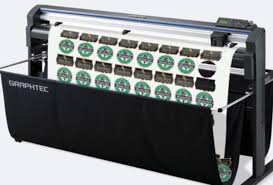
$169/MONTH NEW 64" Graphtec FC9000-160 For Automotive Professionals with 50 ft accurate tracking of Window Tint, PPF Film & Vinyl. Roll-fed Cutting Plotter

Sale

$169/MONTH NEW 64" Graphtec FC9000-160 For Automotive Professionals with 50 ft accurate tracking of Window Tint, PPF Film & Vinyl. Roll-fed Cutting Plotter
- Sale price
- $169
- Regular price
- $225
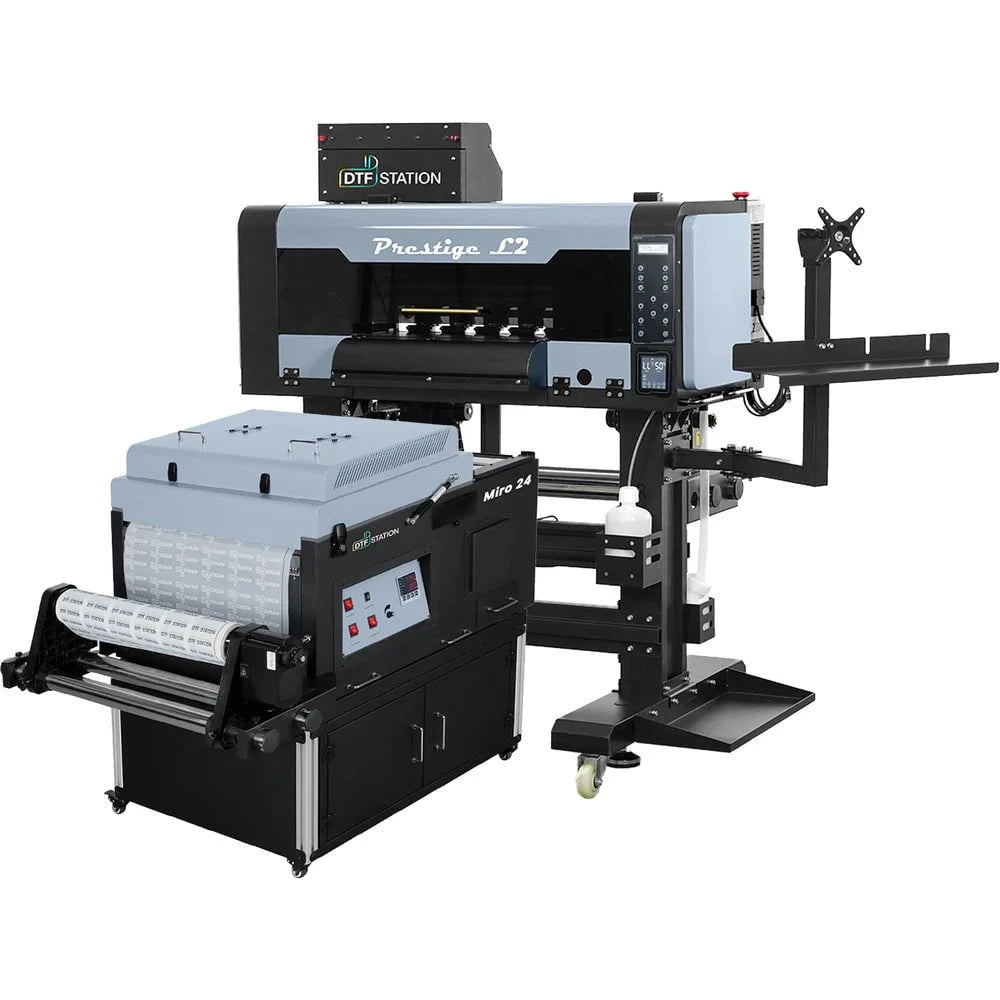
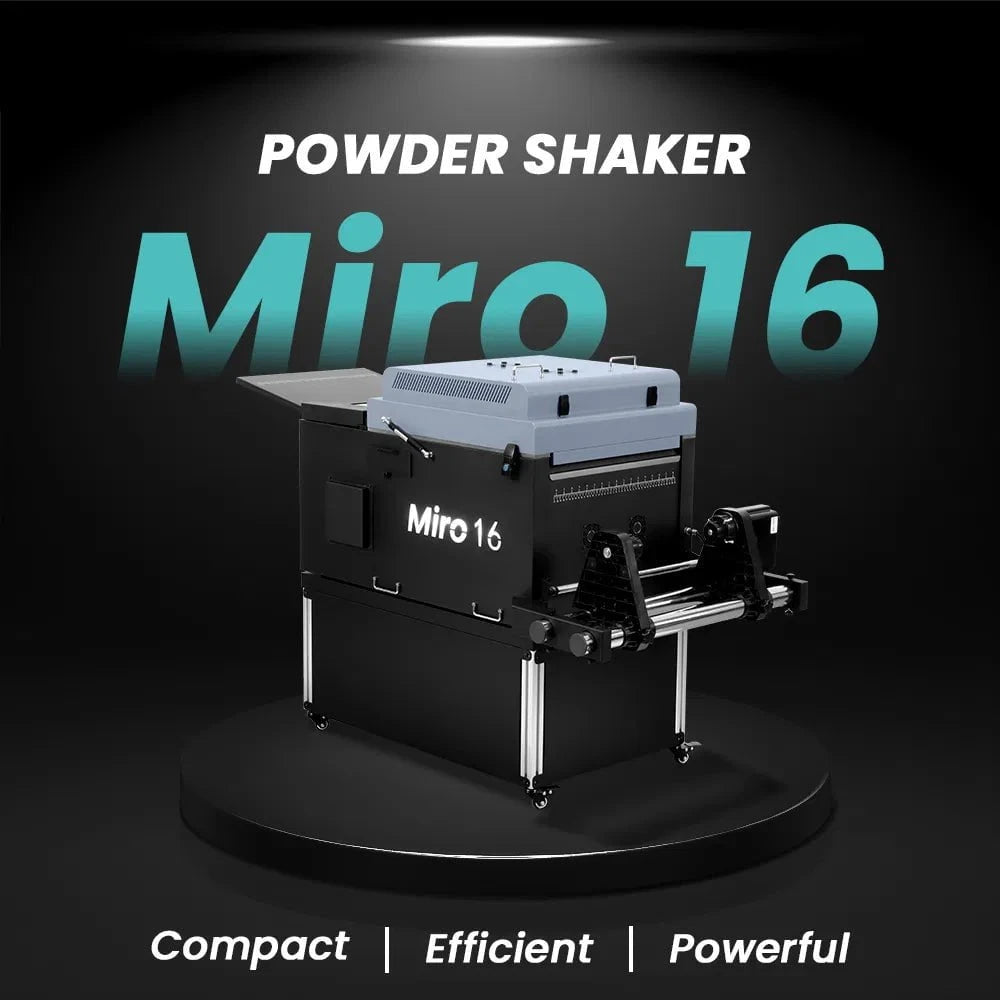
$379/month Prestige L2 18.5" DTF Printer Dual i3200 with Miro 16 Automatic Powder Applicator/Shaker oven and Built-In Oven
Sale
$379/month Prestige L2 18.5" DTF Printer Dual i3200 with Miro 16 Automatic Powder Applicator/Shaker oven and Built-In Oven
- Sale price
- $379
- Regular price
- $465
$195/Month 27" IN-STOCK Yinstar High Precision 27" Commercial Production DTF Printer with 2x i3200-A1 Epson Printheads DTF Powder Shaker.


Sale


$195/Month 27" IN-STOCK Yinstar High Precision 27" Commercial Production DTF Printer with 2x i3200-A1 Epson Printheads DTF Powder Shaker.
- Sale price
- $195
- Regular price
- $249
$247/Month 24" IN-STOCK Yinstar WI-FI DTF Printer with 2x Epson I3200 Print Heads Including DTF Powder Shaker Machine with Air Filter and Auto Powder Recycling System


Sale


$247/Month 24" IN-STOCK Yinstar WI-FI DTF Printer with 2x Epson I3200 Print Heads Including DTF Powder Shaker Machine with Air Filter and Auto Powder Recycling System
- Sale price
- $247
- Regular price
- $350
Essential Storage and Handling Guidelines for DTF Station Color Prime DTF White Ink

In the competitive landscape of direct-to-film (DTF) printing, the quality of your white ink often dictates the success of your final output. For Canadian print shops and hobbyists alike, DTF Station Color Prime DTF White Ink is a premium choice known for its high opacity and vibrant underbase capabilities. However, even the highest-quality ink requires precise storage and handling to maintain its chemical stability and performance.
The difference between a flawless print and a clogged nozzle frequently comes down to environmental control and daily maintenance routines. Proper storage does not just extend the shelf life of your consumables; it protects your printer’s printhead—often the most expensive component of your setup—from irreversible damage. This guide outlines the critical storage, handling, and maintenance protocols necessary to ensure your Absolute Toner DTF products deliver consistent, professional results every time.

The Chemistry of White Ink: Why Storage Matters
To understand why white ink requires special care, one must look at its composition. Unlike Cyan, Magenta, Yellow, and Black (CMYK) inks, which are dye or pigment-based fluids that remain relatively homogenous, white DTF ink relies on titanium dioxide ($TiO_2$).
Titanium dioxide is a heavy metal oxide pigment responsible for the bright, opaque white background necessary for printing on dark garments. Because $TiO_2$ particles are significantly heavier than the liquid carrier solution, they naturally succumb to gravity and settle at the bottom of the container over time. This process, known as sedimentation, can lead to two major issues:
-
The "Sludge" Effect: If the pigment settles into a hard cake at the bottom, it becomes difficult to re-disperse, leading to inconsistent opacity in your prints.
-
Printhead Clogging: If poorly mixed ink is run through the printer, separated clumps of pigment can block the microscopic nozzles of the printhead, causing banding or total channel failure.
By adhering to a strict storage regimen, you prevent this separation from becoming permanent, ensuring the ink remains fluid and printable.
Optimal Environmental Conditions
The environment in which you store your ink is as critical as the ink itself. Canadian climates, with their distinct seasonal shifts, pose unique challenges for temperature and humidity control in print shops.
Temperature and Humidity Control
Your DTF Station Color Prime DTF White Ink must be stored in a stable environment. The recommended temperature range is 15–25°C (59–77°F).
-
Avoid Freezing: This is paramount during Canadian winters. If water-based inks freeze, the expansion of ice crystals can destabilize the pigment suspension permanently. Even after thawing, the ink may suffer from "shock," rendering it unusable.
-
Avoid Overheating: Temperatures above 30°C can alter the viscosity of the ink, leading to flow issues and potential bacterial growth within the bottle.
Humidity also plays a role. Ideally, your storage area should maintain a relative humidity (RH) level between 40% and 60%. Low humidity (common in heated winter workspaces) can cause the ink to dry faster on the printhead surface, while high humidity can affect how the ink interacts with the DTF transfer film.

Light Exposure and Container Management
Ultraviolet (UV) light acts as a catalyst for chemical changes in many ink formulations. While DTF inks are not UV-curable like some specialized products, prolonged exposure to direct sunlight can degrade the binding agents and affect viscosity.
-
Store in Darkness: Keep ink bottles in a closed cabinet or a windowless storage room.
-
Seal Tight: Oxygen is the enemy of liquid ink. Ensure caps are screwed on tightly immediately after use. This prevents evaporation, which thickens the ink, and blocks contaminants like dust and lint from entering the bottle.
Daily Handling and Agitation Protocols
Mechanical intervention is the most effective way to combat the natural sedimentation of titanium dioxide. However, technique is everything. Aggressive handling can introduce micro-bubbles into the ink, which are just as detrimental to printheads as sediment.
The Art of Gentle Agitation
Before pouring ink into your printer’s tank, you must re-disperse the pigments.
-
Do Not Shake Vigorously: Violent shaking creates foam and air bubbles. If these bubbles enter the ink lines (dampers), they can cause "ink starvation," where the printer attempts to fire ink but only pushes air, leading to nozzle dropouts.
-
The Roll and Swirl Method: Instead, gently roll the bottle between your hands or rotate it in a figure-eight motion for 30–60 seconds. This movement effectively mixes the heavy $TiO_2$ pigments back into the suspension without aerating the fluid.
For high-volume shops, automated white ink circulation systems on printers are helpful, but they do not replace the need to manually agitate the source bottle before refilling.
Shelf Life and FIFO Inventory Management
DTF Station Color Prime DTF White Ink has a recommended shelf life of 10–12 months from the date of production when stored correctly. However, once opened, the oxidation process accelerates.
Implement a First-In, First-Out (FIFO) inventory system:
-
Label every bottle with its delivery date and opening date.
-
Always use the oldest stock first to prevent inventory from expiring on the shelf.
-
If a bottle has been sitting motionless for several weeks, inspect it closely. If you see a clear separation of liquid on top and a thick white layer on the bottom that does not mix after gentle swirling, the ink may have expired or sedimented beyond recovery.

Printer-Side Maintenance for White Ink
Proper storage extends to the ink sitting inside your printer. The white ink tank and lines are the most vulnerable parts of a DTF system.
Managing Downtime and Long Shutdowns
If your printer will be inactive for more than 48 hours, static white ink can clog the lines.
-
Short Breaks (1-2 Days): Ensure your printer is in a climate-controlled room. If your printer has a "white ink circulation" feature, ensure it is active.
-
Extended Shutdowns: If you plan to close up shop for a week or more, do not leave white ink sitting in the lines. Flush the white ink channel with a dedicated DTF cleaning solution. This fluid replaces the ink, keeping the lines wet and preventing pigment from drying inside the dampers and printhead.
Pro Tip: Always perform a nozzle check immediately after refilling or starting up the printer after a break. This confirms that the agitation was successful and that flow is unrestricted.

Safety and Disposal Regulations in Canada
Handling chemical mixtures requires adherence to safety standards. While modern DTF inks are formulated to be safer than solvent predecessors, they are still chemical products.
-
Personal Protective Equipment (PPE): Wear nitrile gloves and safety glasses when pouring ink or performing maintenance. Avoid skin contact to prevent irritation.
-
Disposal: Never pour waste DTF ink down the sink or drain. In Canada, liquid ink waste is often classified under specific provincial environmental regulations. You should collect waste ink in a sealed container and dispose of it through your local municipal hazardous waste collection centre or a certified waste disposal partner.
DTF Station Color Prime DTF White Ink
The performance of your DTF setup relies heavily on the integrity of your consumables. By treating your DTF Station Color Prime DTF White Ink with care—maintaining strict temperature controls, practicing gentle agitation, and respecting shelf life—you ensure that every print produced by your business meets the high standards your customers expect.
At Absolute Toner, we understand the technical nuances of the Canadian printing market. Whether you need fresh ink supplies, professional cleaning solutions, or advice on upgrading your equipment, we are here to support your growth.
To ensure your shop consistently follows these best practices, download our free, printable Daily Maintenance & Ink Care Checklist to keep your equipment protected and your prints pristine.
- Choosing a selection results in a full page refresh.