Menu


Trending Top Sellers
$135/Month BAi 1501 THE MIRROR Commercial Embroidery Machine - 15-Needle Custom Apparel & Structured Hat System


$135/Month BAi 1501 THE MIRROR Commercial Embroidery Machine - 15-Needle Custom Apparel & Structured Hat System
- Price
- $135
$185/Month BAi THE VISION Multi-Head Commercial Embroidery Machine - Industrial High-Speed Multi-Head Apparel System


$185/Month BAi THE VISION Multi-Head Commercial Embroidery Machine - Industrial High-Speed Multi-Head Apparel System
- Price
- $185
$235/Month BAi THE VISION 2-Head Commercial Embroidery Machine - Dual-Head 15-Needle Custom Apparel System


$235/Month BAi THE VISION 2-Head Commercial Embroidery Machine - Dual-Head 15-Needle Custom Apparel System
- Price
- $235
$890/month NEW - IN STOCK -Mimaki 64" Hybrid – Complete Turnkey Package | UJ330H-160 Hybrid UV-LED Printer


$890/month NEW - IN STOCK -Mimaki 64" Hybrid – Complete Turnkey Package | UJ330H-160 Hybrid UV-LED Printer
$185/Month New Mimaki DTF TxF300-75 32" High-Speed Dual Printheads DTF Printer


Sale


$185/Month New Mimaki DTF TxF300-75 32" High-Speed Dual Printheads DTF Printer
PROMO: $285/month New Mimaki DTF TxF300-75 32" DTF BUNDLE DTF PRINTER (DIRECT-TO-FILM) Dual Print Heads with Miro 36 Shaker Bundle


Sale


PROMO: $285/month New Mimaki DTF TxF300-75 32" DTF BUNDLE DTF PRINTER (DIRECT-TO-FILM) Dual Print Heads with Miro 36 Shaker Bundle
- Sale price
- $285
- Regular price
- $695
PROMO: $268/month New Mimaki DTF TxF300-75 32" DTF BUNDLE DTF PRINTER (DIRECT-TO-FILM) Dual Print Heads with Miro 24 Shaker Bundle


Sale


PROMO: $268/month New Mimaki DTF TxF300-75 32" DTF BUNDLE DTF PRINTER (DIRECT-TO-FILM) Dual Print Heads with Miro 24 Shaker Bundle
- Sale price
- $268
- Regular price
- $28,600
$495/month - 4'x8' Plytronix Flatbed Cutter TX-1325 (4.26 ft x8.2 ft ) High-Precision Digital Flatbed Cutting Machine with Automated Finishing System Utilizes Interchangeable Tool Heads


$495/month - 4'x8' Plytronix Flatbed Cutter TX-1325 (4.26 ft x8.2 ft ) High-Precision Digital Flatbed Cutting Machine with Automated Finishing System Utilizes Interchangeable Tool Heads
- Price
- $495
$99/month - JAGUAR 70" AUTOMOTIVE SPECIAL EDITION PPF/TINT Cutter Plotter with Anti-Static kit and Tint Velvet Film.


Sale


$99/month - JAGUAR 70" AUTOMOTIVE SPECIAL EDITION PPF/TINT Cutter Plotter with Anti-Static kit and Tint Velvet Film.
- Sale price
- $99
- Regular price
- $145
$99/Month - (FREE SHAKER) DTF x2 Epson Print Heads (110V) YINSTAR A3 13" DTF PRINTER


Sale


$99/Month - (FREE SHAKER) DTF x2 Epson Print Heads (110V) YINSTAR A3 13" DTF PRINTER
- Sale price
- $99
- Regular price
- $185
From $99/month - New Prestige R1 13" DTF Printer Bundle - Includes Prestige R1 DTF Printer, Startup Package and Compatible Machine Options -MC


From $99/month - New Prestige R1 13" DTF Printer Bundle - Includes Prestige R1 DTF Printer, Startup Package and Compatible Machine Options -MC
- Price
- From $99
From $149/month New Prestige R2 PRO 13.75" WITH CUTTER DTF Printer 110V A3+ with Bundle options -MC


From $149/month New Prestige R2 PRO 13.75" WITH CUTTER DTF Printer 110V A3+ with Bundle options -MC
- Price
- From $149
From $417/Month 9-Colour BUNDLE 24" Prestige XL2 PRO New DTF Station Printer with Automatic Powder Applicator/Shaker/Oven/Purifier -MC


From $417/Month 9-Colour BUNDLE 24" Prestige XL2 PRO New DTF Station Printer with Automatic Powder Applicator/Shaker/Oven/Purifier -MC
- Price
- From $417
From $497/month - 9 COLORS Prestige XL3 with 3 Epson i3200 DTF Printer Bundle with Auto Powder Shaker/Oven


From $497/month - 9 COLORS Prestige XL3 with 3 Epson i3200 DTF Printer Bundle with Auto Powder Shaker/Oven
- Price
- From $497
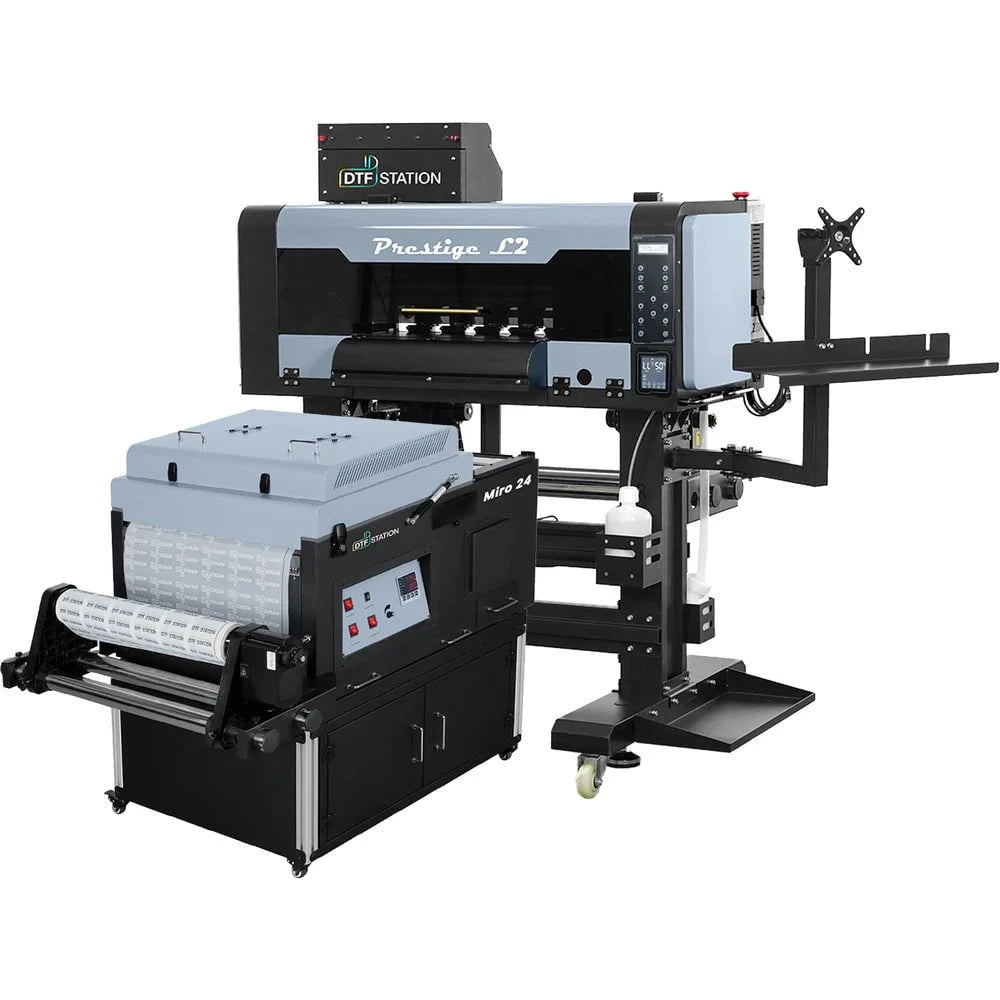
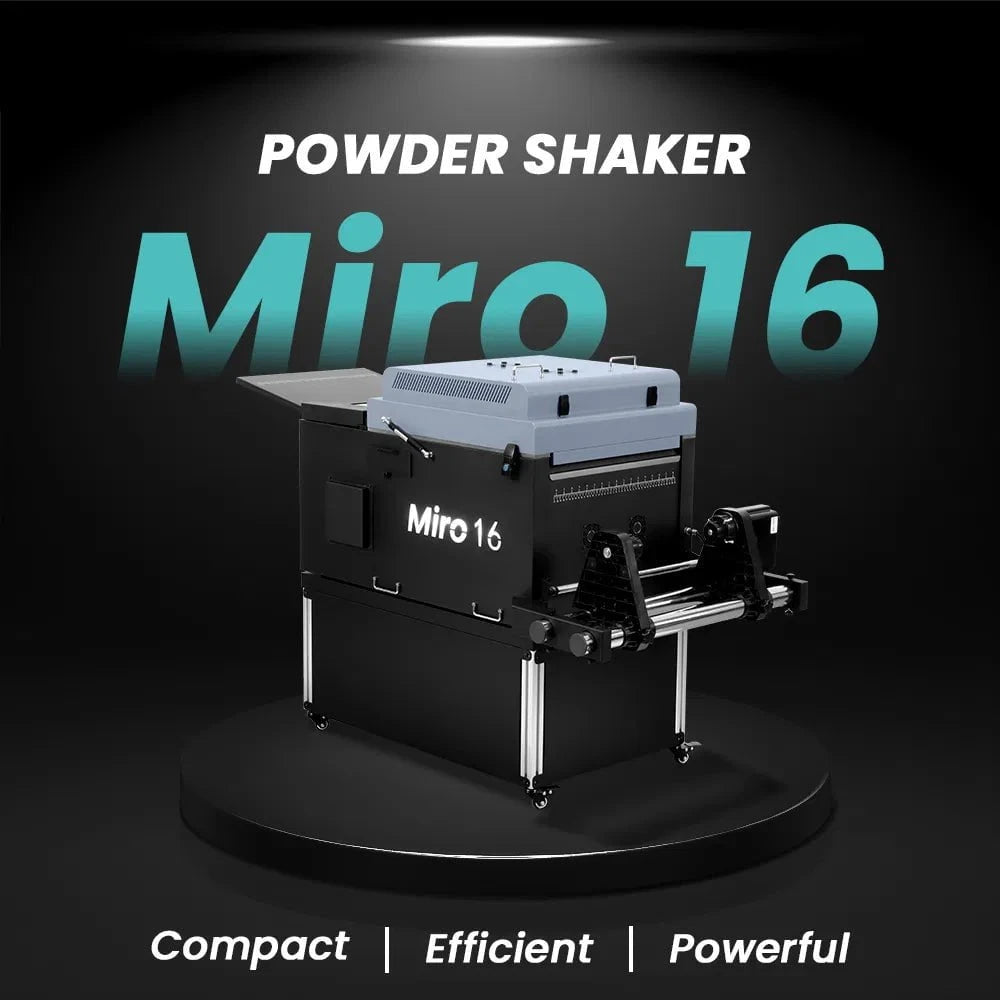
$379/month Prestige L2 18.5" DTF Printer Dual i3200 with Miro 16 Automatic Powder Applicator/Shaker oven and Built-In Oven
Sale
$379/month Prestige L2 18.5" DTF Printer Dual i3200 with Miro 16 Automatic Powder Applicator/Shaker oven and Built-In Oven
- Sale price
- $379
- Regular price
- $465
$195/Month 27" IN-STOCK Yinstar High Precision 27" Commercial Production DTF Printer with 2x i3200-A1 Epson Printheads DTF Powder Shaker.


Sale


$195/Month 27" IN-STOCK Yinstar High Precision 27" Commercial Production DTF Printer with 2x i3200-A1 Epson Printheads DTF Powder Shaker.
- Sale price
- $195
- Regular price
- $249
$247/Month 24" IN-STOCK Yinstar WI-FI DTF Printer with 2x Epson I3200 Print Heads Including DTF Powder Shaker Machine with Air Filter and Auto Powder Recycling System


Sale


$247/Month 24" IN-STOCK Yinstar WI-FI DTF Printer with 2x Epson I3200 Print Heads Including DTF Powder Shaker Machine with Air Filter and Auto Powder Recycling System
- Sale price
- $247
- Regular price
- $350
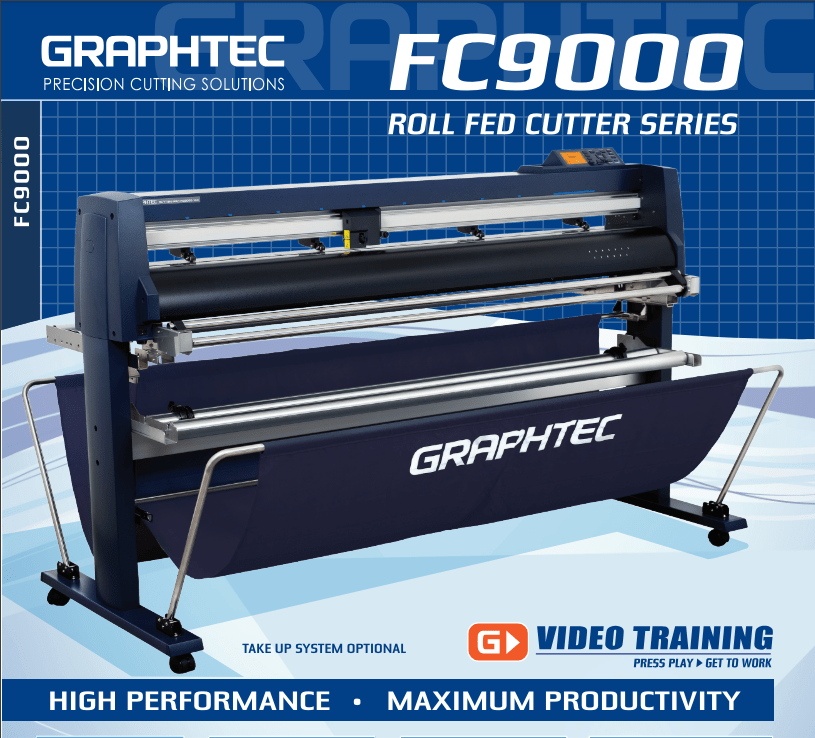
$145/MONTH DEMO 64" Graphtec FC9000-160 For Automotive Professionals with 50 ft accurate tracking of Window Tint, PPF Film & Vinyl. Roll-fed Cutting Plotter

Sale

$145/MONTH DEMO 64" Graphtec FC9000-160 For Automotive Professionals with 50 ft accurate tracking of Window Tint, PPF Film & Vinyl. Roll-fed Cutting Plotter
- Sale price
- $145
- Regular price
- $225
Yinstar A3 Multifunction UV-DTF Flatbed Printer with Epson Heads for Glass Bottles, Mugs, Phone Cases and more


Sale


Yinstar A3 Multifunction UV-DTF Flatbed Printer with Epson Heads for Glass Bottles, Mugs, Phone Cases and more
- Sale price
- $3,950
- Regular price
- $9,995
$95/month PLYTRONIX Pneumatic PRO 64” with Anti-Static System, Large Format Auto High-Speed Cold/Hot Laminator for Signs, Graphics, Banners, Prints & More


Sale


$95/month PLYTRONIX Pneumatic PRO 64” with Anti-Static System, Large Format Auto High-Speed Cold/Hot Laminator for Signs, Graphics, Banners, Prints & More
- Sale price
- $95
- Regular price
- $165
True Unattended Printing: Pairing the Mimaki TxF300-75 with Inline Powder Shakers

High-volume apparel print facilities face steep labor expenses when workers manually apply adhesive powder to individual graphic transfers. Manual application creates bottleneck delays and leads to inconsistent powder distribution across large order runs.
Transitioning to continuous roll-to-roll production solves these operational hurdles. Pairing the Mimaki TxF300-75 31.5" DTF Direct To Film Printer with an automated curing system creates a complete production line that operates continuously without constant supervision.
What Is an Automated DTF Workflow?
An automated DTF workflow integrates a wide-format direct to film printer directly with an inline powder shaker and infrared curing oven. This synchronized system applies TPU adhesive powder, shakes off excess particles, and cures the film continuously, converting raw digital files into ready-to-press garment transfers without manual operator intervention.
Traditional direct-to-film methods require an operator to catch printed film, manually dust thermoplastic polyurethane (TPU) powder across the wet ink, and bake each section inside a stationary drawer oven. This manual intervention limits output speeds to the physical pace of the operator.
An automated DTF workflow eliminates human handling during the printing and curing phases. Print shop technicians load full film rolls, send multi-design gang sheets from the RIP software, and focus on other fulfillment tasks while cured transfers collect automatically on the take-up reel.
How Does an Inline Powder Shaker Streamline Continuous DTF Printing?
An inline powder shaker streamlines continuous DTF printing by automatically distributing thermoplastic adhesive powder across wet ink channels as film exits the printer carriage. Mechanical beaters remove unbonded powder before thermal heating elements melt the adhesive, delivering consistent, cured rolls ready for immediate heat press application.
Manual powder application often results in uneven adhesive coverage, causing graphic edges to peel after laundering. The inline powder shaker applies powder with mechanical precision, ensuring equal layer thickness across every square inch of the 31.5-inch film sheet.
Integrated vacuum systems and mechanical knocker bars vibrate the media continuously. This agitation removes stray powder from unprinted film areas, keeping graphic borders clean and preventing unwanted adhesive residue on the final garment.

Speed Matching and Temperature Control
Maintaining consistent quality requires strict mechanical synchronization between hardware components. The inline curing unit matches its heating speed directly to the output velocity of the 31.5-inch direct to film printer.
Infrared heating elements maintain constant temperatures inside the curing zone. Proper heating melts the TPU powder into a smooth adhesive layer without scorching the PET film base or distorting delicate graphic colors. Managers can review official Mimaki equipment documentation to align curing temperatures with specific media profiles.
The Mechanical Steps Behind Unattended Roll-to-Roll Production
Unattended roll-to-roll production relies on automated media feeding, tension-controlled film transport, and synchronized speed matching between the printer and curing shaker. Sensor-driven optical eyes detect film slack, dynamically adjusting take-up reels to prevent physical jams while maintaining steady continuous printing across extensive, multi-hour production batches.
True hands-off operation demands reliable mechanical components that prevent film misfeeds and ink starvation during long runs. The following steps outline how an automated line processes bulk graphics:
-
Media Loading: Technicians mount an 800mm PET film roll onto the heavy-duty unwinding system and feed the lead edge into the printer.
-
Ink and File Queuing: The operator queues nested gang sheet jobs in the RIP software, verifying that degassed white and CMYK ink channels are active.
-
Continuous Printing: The dual staggered print heads output graphics continuously across the full 31.5-inch printable width.
-
Automated Powdering and Shaking: Printed film passes directly into the shaker hopper, receiving an even coat of TPU powder before beaters knock off loose particles.
-
Infrared Tunnel Curing: The film travels through the thermal curing zone at a calibrated speed, melting the adhesive powder uniformly.
-
Reel Winding: An optical sensor tracks film tension as the cured transfers wind onto the automated take-up reel for easy transport to heat presses.
Automated line balance allows continuous DTF printing to run for hours without pause. Removing manual handling steps lowers labor requirements while raising daily graphic yield.
Sourcing Automated DTF Infrastructure in Ontario and Across Canada
Sourcing automated DTF infrastructure from a Canadian supplier gives commercial print operations direct access to certified hardware, local technical expertise, and rapid consumable fulfillment. Domestic distribution eliminates international freight delays, helping Greater Toronto Area facilities keep equipment running efficiently while maintaining strict compliance with local standards.
Print shops in Toronto, Mississauga, Brampton, and Vaughan require reliable machinery backed by local technical support. Working with a domestic distributor ensures fast access to replacement parts, keeping production schedules on track during high-volume periods.
Hardware equipped with Energy Star power management standards minimizes electrical consumption during extended operation. Using certified supplies that meet OEKO-TEX ECO PASSPORT criteria ensures final garments pass strict chemical safety checks.
Absolute Toner provides high-performance printing hardware and verified commercial printing supplies to businesses across Canada. Keeping fully stocked on essential DTF ink and TPU powder helps your shop maintain continuous production and meet demanding client deadlines.
- Choosing a selection results in a full page refresh.