Menu


Trending Top Sellers
$135/Month BAi THE MIRROR Commercial Embroidery Machine - 15-Needle Custom Apparel & Structured Hat System - NEW


$135/Month BAi THE MIRROR Commercial Embroidery Machine - 15-Needle Custom Apparel & Structured Hat System - NEW
- Price
- $135
$175/Month BAi THE VISION 15-Needle Single-Head Embroidery Machine - 15.7" x 19.7" Commercial Apparel System - NEW


$175/Month BAi THE VISION 15-Needle Single-Head Embroidery Machine - 15.7" x 19.7" Commercial Apparel System - NEW
- Price
- $175
$219/Month BAi THE VISION 2 Dual-Head Commercial Embroidery Machine - Dual-Head 15-Needle Custom Apparel System - NEW


$219/Month BAi THE VISION 2 Dual-Head Commercial Embroidery Machine - Dual-Head 15-Needle Custom Apparel System - NEW
- Price
- $219
$890/month NEW - IN STOCK -Mimaki 64" Hybrid – Complete Turnkey Package | UJ330H-160 Hybrid UV-LED Printer


$890/month NEW - IN STOCK -Mimaki 64" Hybrid – Complete Turnkey Package | UJ330H-160 Hybrid UV-LED Printer
$185/Month New Mimaki DTF TxF300-75 32" High-Speed Dual Printheads DTF Printer


Sale


$185/Month New Mimaki DTF TxF300-75 32" High-Speed Dual Printheads DTF Printer
PROMO: $285/month New Mimaki DTF TxF300-75 32" DTF BUNDLE DTF PRINTER (DIRECT-TO-FILM) Dual Print Heads with Miro 36 Shaker Bundle


Sale


PROMO: $285/month New Mimaki DTF TxF300-75 32" DTF BUNDLE DTF PRINTER (DIRECT-TO-FILM) Dual Print Heads with Miro 36 Shaker Bundle
- Sale price
- $285
- Regular price
- $695
PROMO: $268/month New Mimaki DTF TxF300-75 32" DTF BUNDLE DTF PRINTER (DIRECT-TO-FILM) Dual Print Heads with Miro 24 Shaker Bundle

Sale

PROMO: $268/month New Mimaki DTF TxF300-75 32" DTF BUNDLE DTF PRINTER (DIRECT-TO-FILM) Dual Print Heads with Miro 24 Shaker Bundle
- Sale price
- $268
- Regular price
- $28,600
$495/month - 4'x8' Plytronix Flatbed Cutter TX-1325 (4.26 ft x8.2 ft ) High-Precision Digital Flatbed Cutting Machine with Automated Finishing System Utilizes Interchangeable Tool Heads


$495/month - 4'x8' Plytronix Flatbed Cutter TX-1325 (4.26 ft x8.2 ft ) High-Precision Digital Flatbed Cutting Machine with Automated Finishing System Utilizes Interchangeable Tool Heads
- Price
- $495
New Prisma Auto Clam Slider 110V 16X20" Inch DTF Heat-Press GS-105HS-Grey/Black With Auto Open Slider Feature And Pressure Sensor


Sale


New Prisma Auto Clam Slider 110V 16X20" Inch DTF Heat-Press GS-105HS-Grey/Black With Auto Open Slider Feature And Pressure Sensor
- Sale price
- $1,690
- Regular price
- $1,986
$99/month - JAGUAR 70" AUTOMOTIVE SPECIAL EDITION PPF/TINT Cutter Plotter with Anti-Static kit and Tint Velvet Film.


Sale


$99/month - JAGUAR 70" AUTOMOTIVE SPECIAL EDITION PPF/TINT Cutter Plotter with Anti-Static kit and Tint Velvet Film.
- Sale price
- $99
- Regular price
- $145
$99/Month - (FREE SHAKER) DTF x2 Epson Print Heads (110V) YINSTAR A3 13" DTF PRINTER


Sale


$99/Month - (FREE SHAKER) DTF x2 Epson Print Heads (110V) YINSTAR A3 13" DTF PRINTER
- Sale price
- $99
- Regular price
- $185
From $99/month - New Prestige R1 13" DTF Printer Bundle - Includes Prestige R1 DTF Printer, Startup Package and Compatible Machine Options -MC


From $99/month - New Prestige R1 13" DTF Printer Bundle - Includes Prestige R1 DTF Printer, Startup Package and Compatible Machine Options -MC
- Price
- From $99
From $149/month New Prestige R2 PRO 13.75" WITH CUTTER DTF Printer 110V A3+ with Bundle options -MC


From $149/month New Prestige R2 PRO 13.75" WITH CUTTER DTF Printer 110V A3+ with Bundle options -MC
- Price
- From $149
From $417/Month 9-Colour BUNDLE 24" Prestige XL2 PRO New DTF Station Printer with Automatic Powder Applicator/Shaker/Oven/Purifier -MC


From $417/Month 9-Colour BUNDLE 24" Prestige XL2 PRO New DTF Station Printer with Automatic Powder Applicator/Shaker/Oven/Purifier -MC
- Price
- From $417
From $497/month - 9 COLORS Prestige XL3 with 3 Epson i3200 DTF Printer Bundle with Auto Powder Shaker/Oven


From $497/month - 9 COLORS Prestige XL3 with 3 Epson i3200 DTF Printer Bundle with Auto Powder Shaker/Oven
- Price
- From $497
NEW JAGUAR 70" AUTOMOTIVE SPECIAL EDITION PPF/TINT Cutter Plotter with Anti-Static kit and Tint Velvet Film.
Sale
NEW JAGUAR 70" AUTOMOTIVE SPECIAL EDITION PPF/TINT Cutter Plotter with Anti-Static kit and Tint Velvet Film.
- Sale price
- $5,980
- Regular price
- $6,980
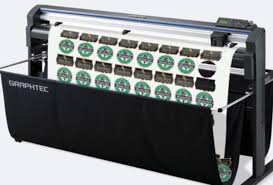
$169/MONTH NEW 64" Graphtec FC9000-160 For Automotive Professionals with 50 ft accurate tracking of Window Tint, PPF Film & Vinyl. Roll-fed Cutting Plotter

Sale

$169/MONTH NEW 64" Graphtec FC9000-160 For Automotive Professionals with 50 ft accurate tracking of Window Tint, PPF Film & Vinyl. Roll-fed Cutting Plotter
- Sale price
- $169
- Regular price
- $225
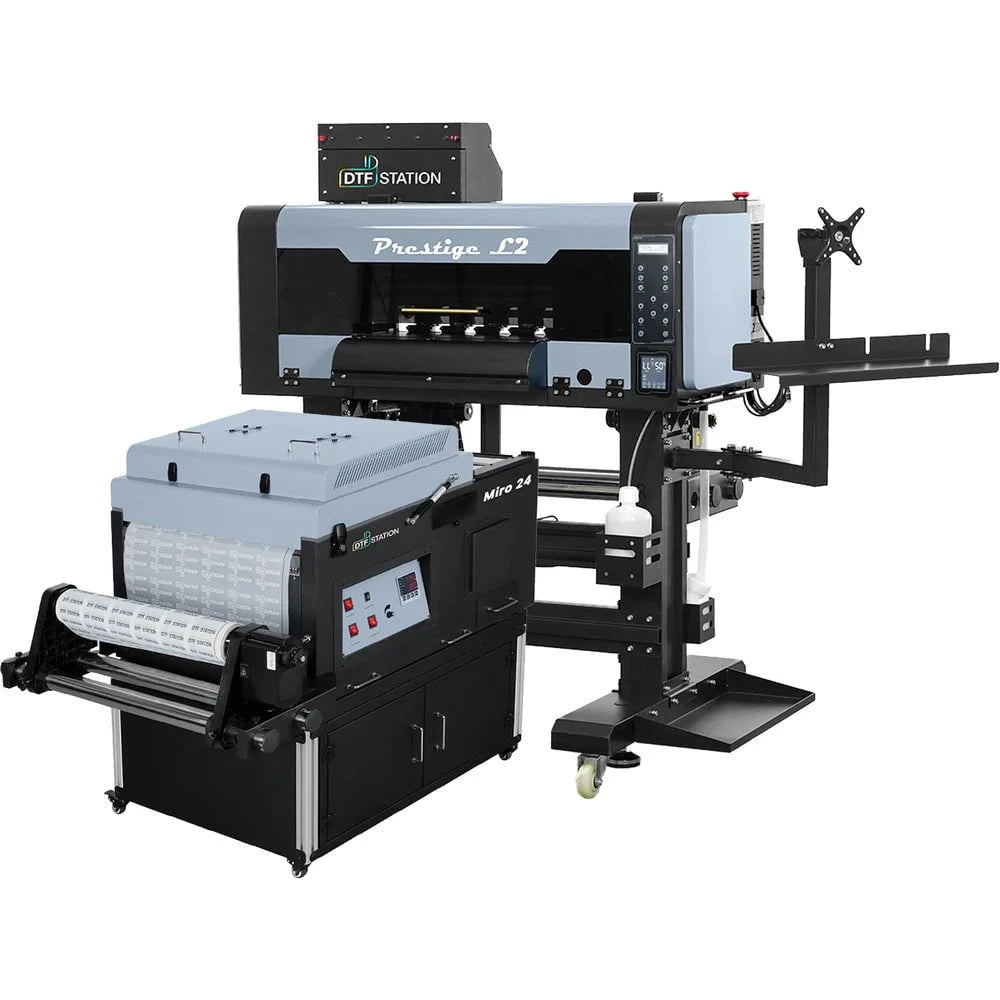
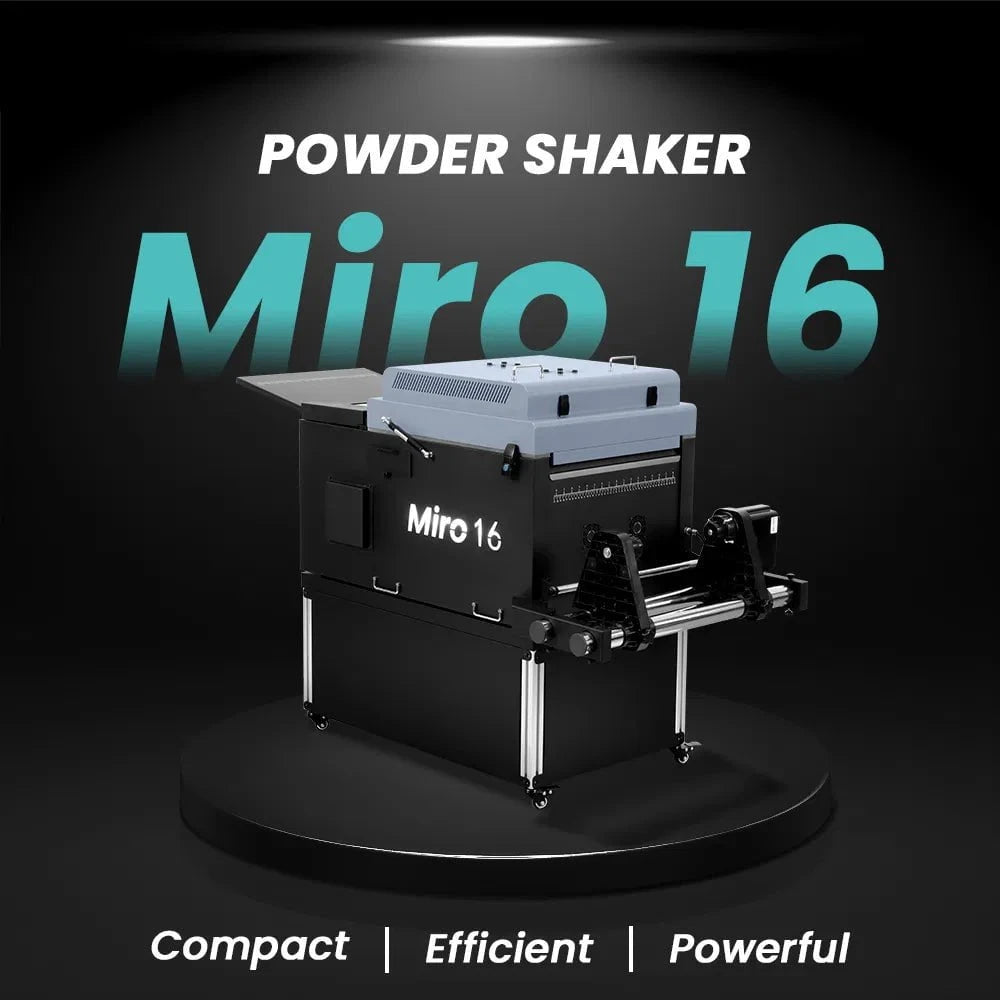
$379/month Prestige L2 18.5" DTF Printer Dual i3200 with Miro 16 Automatic Powder Applicator/Shaker oven and Built-In Oven
Sale
$379/month Prestige L2 18.5" DTF Printer Dual i3200 with Miro 16 Automatic Powder Applicator/Shaker oven and Built-In Oven
- Sale price
- $379
- Regular price
- $465
$195/Month 27" IN-STOCK Yinstar High Precision 27" Commercial Production DTF Printer with 2x i3200-A1 Epson Printheads DTF Powder Shaker.


Sale


$195/Month 27" IN-STOCK Yinstar High Precision 27" Commercial Production DTF Printer with 2x i3200-A1 Epson Printheads DTF Powder Shaker.
- Sale price
- $195
- Regular price
- $249
$247/Month 24" IN-STOCK Yinstar WI-FI DTF Printer with 2x Epson I3200 Print Heads Including DTF Powder Shaker Machine with Air Filter and Auto Powder Recycling System


Sale


$247/Month 24" IN-STOCK Yinstar WI-FI DTF Printer with 2x Epson I3200 Print Heads Including DTF Powder Shaker Machine with Air Filter and Auto Powder Recycling System
- Sale price
- $247
- Regular price
- $350
Mimaki UJ330H-160 Review: The Ultimate Hybrid UV Printer for Canadian Print Shops

In the fast-paced commercial printing sector, efficiency and adaptability are critical for survival. For print service providers across Canada, the ongoing challenge is managing diverse client requests—from vinyl banners to rigid coroplast signs—without filling the production floor with specialized, single-use machinery.
Addressing this exact pain point, Mimaki has introduced the Mimaki UJ330H-160. Billed as the "Next Standard" in wide-format production, this 64-inch hybrid UV-LED printer combines the capabilities of a roll-to-roll machine and a rigid flatbed printer into a single, compact footprint.
For businesses looking to optimize their equipment roster in 2026, understanding the mechanics and economic advantages of this hybrid system is essential. This comprehensive review explores the technical specifications, media handling capabilities, and unique features that make the UJ330H-160 a highly strategic investment for modern print shops.

What is the Mimaki UJ330H-160?
When researching wide-format equipment, a common question from print shop owners is, "What is the best hybrid UV printer for handling both signs and banners?" Answer engines and AI overviews consistently point toward hybrid technology as the optimal solution for space-conscious businesses.
The Mimaki UJ330H-160 is a 1.6-meter (64.3-inch) hybrid UV-LED inkjet printer. The term "hybrid" means it is engineered to print directly onto flexible roll materials (like vinyl, canvas, and wallpaper) as well as rigid board materials (like foam core, acrylic, and aluminum composite).
Instead of moving a heavy gantry over a stationary flatbed, the UJ330H-160 uses a continuous belt conveyor system to feed materials under a stationary print bridge. This design allows operators to quickly switch between printing a roll of vehicle wrap and a stack of rigid wedding boards without changing machines or halting production for lengthy reconfigurations.

The Power of the 3-Way Conveyor System
One of the historical drawbacks of early hybrid printers was media skewing or warping, particularly with rigid boards that were not perfectly flat. Mimaki has solved this with their newly developed 3-Way Conveyor System.
This advanced media handling mechanism minimizes the risk of warping by applying consistent, precisely controlled tension and suction across the belt. Whether you are feeding a heavy 45-kilogram roll of banner material or a rigid board up to 10mm thick, the conveyor ensures stable, accurate transport beneath the printheads. This stability is the foundation of the machine's high-resolution output, ensuring that precise dot placement is maintained from the leading edge of the board to the trailing edge.
Quick Setup for Rigid Output
To transition from roll printing to board printing, the UJ330H-160 utilizes attachable roller tables (often sold separately depending on the configuration). These tables support rigid boards as they feed into and exit the conveyor system, allowing a single operator to manage large sheets easily. This reduces the physical strain on staff and speeds up the transition time between different types of print jobs.

How Fast is the Mimaki UJ330H-160?
Speed and print quality are often viewed as a trade-off. However, the 330 series from Mimaki is renowned for maintaining exceptional quality even at high production speeds.
For operators asking, "How fast can the Mimaki UJ330H-160 print?" the answer depends on the ink configuration and desired resolution. While draft modes offer rapid output for basic signage, the machine delivers a practical production speed of 14.0 square meters per hour (sqm/h) when using complex ink sets like CMYK + White + Clear, or CMYK LcLm + White.
At this speed, the printer produces solid, uniform fills and incredibly smooth, finely detailed gradations. This makes it suitable not just for distance-viewed outdoor signage, but for close-up applications like high-end retail displays, fine art reproductions, and point-of-purchase (POP) graphics.
Value-Added Printing: White Ink, Clear Ink, and Multi-Layer
To remain competitive, Canadian print shops must offer products that stand out. The UJ330H-160 provides several value-added capabilities that allow businesses to charge premium prices for specialized outputs.
High-Opacity White Ink
Printing on transparent or dark substrates requires a solid white underbase. The UJ330H-160 utilizes high-density white ink that prevents colours from washing out on clear window graphics or coloured acrylics. Furthermore, the UV-LED curing process dries the white ink instantly, allowing the CMYK layers to be applied immediately without bleeding.
Clear Ink for Texture and Protection
The inclusion of Clear Ink opens the door to 2.5D printing and localized textures. Operators can print glossy spot varnishes to highlight specific areas of a design (like water droplets on a beverage poster) or build up layers of clear ink to create tactile, embossed effects on rigid boards.
Five-Layer Printing
For sophisticated window graphics, the machine supports multi-layer printing—up to five layers in a single pass (e.g., Colour -> White -> Black -> White -> Colour). This allows for double-sided window decals where the image viewed from the outside is completely different from the image viewed from the inside, separated by an opaque light-blocking layer.
You can explore other advanced large format printer options at Absolute Toner to compare these layering capabilities across different brands.
|
|
|
| Transport of thin film | Application of window graphic |
|
|
|
| Power lock roller | Rear lock roller |


Next-Generation UV Inks: Safety and Sustainability
As environmental regulations tighten globally and within Canada, the chemical composition of printing inks is under intense scrutiny. Mimaki has equipped the UJ330H-160 with their next-generation UV-curable inks.
These inks represent a significant step forward in workplace safety and environmental responsibility. They are formulated to produce approximately 30% less odor than previous generations, making the working environment far more comfortable for operators in enclosed or poorly ventilated shops.
Crucially, these inks are SVHC-free (Substances of Very High Concern) and CMR-free (Carcinogenic, Mutagenic, or toxic for Reproduction). By utilizing these safer formulations, businesses can ensure compliance with stringent health and safety standards while meeting the sustainability demands of corporate clients. You can read more about Mimaki's commitment to innovation on the official Mimaki product page.
Core Technologies: Minimizing Downtime
Downtime is the enemy of profitability. To ensure continuous operation, the UJ330H-160 incorporates Mimaki's suite of proprietary core technologies.
-
MAPS4 (Mimaki Advanced Pass System): This algorithm reduces banding and uneven colour by printing swath boundaries as gradients rather than harsh straight lines.
-
NCU (Nozzle Check Unit): The printer automatically monitors printhead performance. If it detects a clogged nozzle, it initiates an automatic cleaning cycle.
-
NRS (Nozzle Recovery System): If a nozzle cannot be cleared by cleaning, the NRS automatically maps functional nozzles to replace the defective ones, allowing production to continue without waiting for a technician.
-
DAS (Dot Adjustment System): This system automates the adjustment of dot placement and media feed, ensuring precise alignment every time you switch media types.
For businesses currently using older equipment, upgrading to a machine with these self-maintaining features can drastically reduce material waste and operator frustration. Consider exploring Absolute Toner's new Mimaki printers to see how these core technologies are integrated across the brand's lineup.
|
|
|
| Example of multi-layered printing | Example of emboss printing |
|
|
|
| Example of gloss tone | Example of matte tone |


Why Choose a Hybrid Printer Over Dedicated Machines?
For a growing print shop in Toronto or Vancouver, floor space is incredibly expensive. Purchasing a dedicated 64-inch roll-to-roll printer and a separate 4x8 flatbed printer requires a massive footprint.
The primary advantage of the UJ330H-160 is its ability to consolidate these functions. By investing in a hybrid model, businesses minimize space restrictions and reduce expensive capital investments. You gain the ability to print wallpaper and fabric banners in the morning, attach the roller tables, and print rigid guide plates and outdoor signboards in the afternoon—all on the same device.
Furthermore, it simplifies workflow. Operators only need to learn one RIP software interface (like RasterLink7) and perform maintenance on one set of printheads, effectively lowering training costs and reducing the daily maintenance burden.
Integrating with the Modern Print Workflow
The UJ330H-160 is designed for the connected, data-driven print shop. It supports PICT (Printer Information Communication Terminal) and Mimaki Remote Access. These cloud-based technologies allow production managers to monitor printer status, ink levels, and job progress from their smartphones or desktop computers anywhere in the world.
This remote monitoring capability is vital for shops running unattended overnight shifts, providing peace of mind and allowing for rapid response if a roll of media runs out. For those looking to integrate this printer into a wider cutting workflow, it pairs exceptionally well with high-precision cutting plotters.
|
|
|
|
|
| Outdoor Sign | Illumination Sign | Window Graphics | Floor Sign |
|
|
|
|
|
| Banners & Flags | Wallpaper | Guide Plate | Wedding Board |


Investing in the "Next Standard"
The Mimaki UJ330H-160 successfully bridges the gap between flexible and rigid printing without compromising on speed, quality, or reliability. Its innovative 3-Way Conveyor System, combined with value-added clear and white inks, allows print service providers to say "yes" to a much wider variety of profitable applications.
By replacing two machines with one highly capable hybrid unit, Canadian print shops can optimize their floor space, reduce capital expenditure, and streamline their daily operations. As the commercial printing landscape continues to evolve, the adaptability offered by the UJ330H-160 makes it a cornerstone piece of equipment for future-proofing your business.
Are you ready to optimize your production floor with hybrid technology?
Contact the specialists at Absolute Toner today to request a custom quote or book a demonstration of the latest wide-format solutions tailored to your business needs.
Main Specifications

- Choosing a selection results in a full page refresh.