Menu


Trending Top Sellers
$135/Month BAi THE MIRROR Commercial Embroidery Machine - 15-Needle Custom Apparel & Structured Hat System - NEW


$135/Month BAi THE MIRROR Commercial Embroidery Machine - 15-Needle Custom Apparel & Structured Hat System - NEW
- Price
- $135
$175/Month BAi THE VISION 15-Needle Single-Head Embroidery Machine - 15.7" x 19.7" Commercial Apparel System - NEW


$175/Month BAi THE VISION 15-Needle Single-Head Embroidery Machine - 15.7" x 19.7" Commercial Apparel System - NEW
- Price
- $175
$219/Month BAi THE VISION 2 Dual-Head Commercial Embroidery Machine - Dual-Head 15-Needle Custom Apparel System - NEW


$219/Month BAi THE VISION 2 Dual-Head Commercial Embroidery Machine - Dual-Head 15-Needle Custom Apparel System - NEW
- Price
- $219
$890/month NEW - IN STOCK -Mimaki 64" Hybrid – Complete Turnkey Package | UJ330H-160 Hybrid UV-LED Printer


$890/month NEW - IN STOCK -Mimaki 64" Hybrid – Complete Turnkey Package | UJ330H-160 Hybrid UV-LED Printer
$185/Month New Mimaki DTF TxF300-75 32" High-Speed Dual Printheads DTF Printer


Sale


$185/Month New Mimaki DTF TxF300-75 32" High-Speed Dual Printheads DTF Printer
PROMO: $285/month New Mimaki DTF TxF300-75 32" DTF BUNDLE DTF PRINTER (DIRECT-TO-FILM) Dual Print Heads with Miro 36 Shaker Bundle


Sale


PROMO: $285/month New Mimaki DTF TxF300-75 32" DTF BUNDLE DTF PRINTER (DIRECT-TO-FILM) Dual Print Heads with Miro 36 Shaker Bundle
- Sale price
- $285
- Regular price
- $695
PROMO: $268/month New Mimaki DTF TxF300-75 32" DTF BUNDLE DTF PRINTER (DIRECT-TO-FILM) Dual Print Heads with Miro 24 Shaker Bundle

Sale

PROMO: $268/month New Mimaki DTF TxF300-75 32" DTF BUNDLE DTF PRINTER (DIRECT-TO-FILM) Dual Print Heads with Miro 24 Shaker Bundle
- Sale price
- $268
- Regular price
- $28,600
$495/month - 4'x8' Plytronix Flatbed Cutter TX-1325 (4.26 ft x8.2 ft ) High-Precision Digital Flatbed Cutting Machine with Automated Finishing System Utilizes Interchangeable Tool Heads


$495/month - 4'x8' Plytronix Flatbed Cutter TX-1325 (4.26 ft x8.2 ft ) High-Precision Digital Flatbed Cutting Machine with Automated Finishing System Utilizes Interchangeable Tool Heads
- Price
- $495
New Prisma Auto Clam Slider 110V 16X20" Inch DTF Heat-Press GS-105HS-Grey/Black With Auto Open Slider Feature And Pressure Sensor


Sale


New Prisma Auto Clam Slider 110V 16X20" Inch DTF Heat-Press GS-105HS-Grey/Black With Auto Open Slider Feature And Pressure Sensor
- Sale price
- $1,690
- Regular price
- $1,986
$99/month - JAGUAR 70" AUTOMOTIVE SPECIAL EDITION PPF/TINT Cutter Plotter with Anti-Static kit and Tint Velvet Film.


Sale


$99/month - JAGUAR 70" AUTOMOTIVE SPECIAL EDITION PPF/TINT Cutter Plotter with Anti-Static kit and Tint Velvet Film.
- Sale price
- $99
- Regular price
- $145
$99/Month - (FREE SHAKER) DTF x2 Epson Print Heads (110V) YINSTAR A3 13" DTF PRINTER


Sale


$99/Month - (FREE SHAKER) DTF x2 Epson Print Heads (110V) YINSTAR A3 13" DTF PRINTER
- Sale price
- $99
- Regular price
- $185
From $99/month - New Prestige R1 13" DTF Printer Bundle - Includes Prestige R1 DTF Printer, Startup Package and Compatible Machine Options -MC


From $99/month - New Prestige R1 13" DTF Printer Bundle - Includes Prestige R1 DTF Printer, Startup Package and Compatible Machine Options -MC
- Price
- From $99
From $149/month New Prestige R2 PRO 13.75" WITH CUTTER DTF Printer 110V A3+ with Bundle options -MC


From $149/month New Prestige R2 PRO 13.75" WITH CUTTER DTF Printer 110V A3+ with Bundle options -MC
- Price
- From $149
From $417/Month 9-Colour BUNDLE 24" Prestige XL2 PRO New DTF Station Printer with Automatic Powder Applicator/Shaker/Oven/Purifier -MC


From $417/Month 9-Colour BUNDLE 24" Prestige XL2 PRO New DTF Station Printer with Automatic Powder Applicator/Shaker/Oven/Purifier -MC
- Price
- From $417
From $497/month - 9 COLORS Prestige XL3 with 3 Epson i3200 DTF Printer Bundle with Auto Powder Shaker/Oven


From $497/month - 9 COLORS Prestige XL3 with 3 Epson i3200 DTF Printer Bundle with Auto Powder Shaker/Oven
- Price
- From $497
NEW JAGUAR 70" AUTOMOTIVE SPECIAL EDITION PPF/TINT Cutter Plotter with Anti-Static kit and Tint Velvet Film.
Sale
NEW JAGUAR 70" AUTOMOTIVE SPECIAL EDITION PPF/TINT Cutter Plotter with Anti-Static kit and Tint Velvet Film.
- Sale price
- $5,980
- Regular price
- $6,980
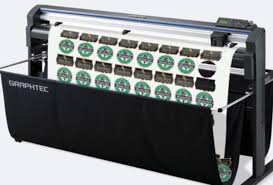
$169/MONTH NEW 64" Graphtec FC9000-160 For Automotive Professionals with 50 ft accurate tracking of Window Tint, PPF Film & Vinyl. Roll-fed Cutting Plotter

Sale

$169/MONTH NEW 64" Graphtec FC9000-160 For Automotive Professionals with 50 ft accurate tracking of Window Tint, PPF Film & Vinyl. Roll-fed Cutting Plotter
- Sale price
- $169
- Regular price
- $225
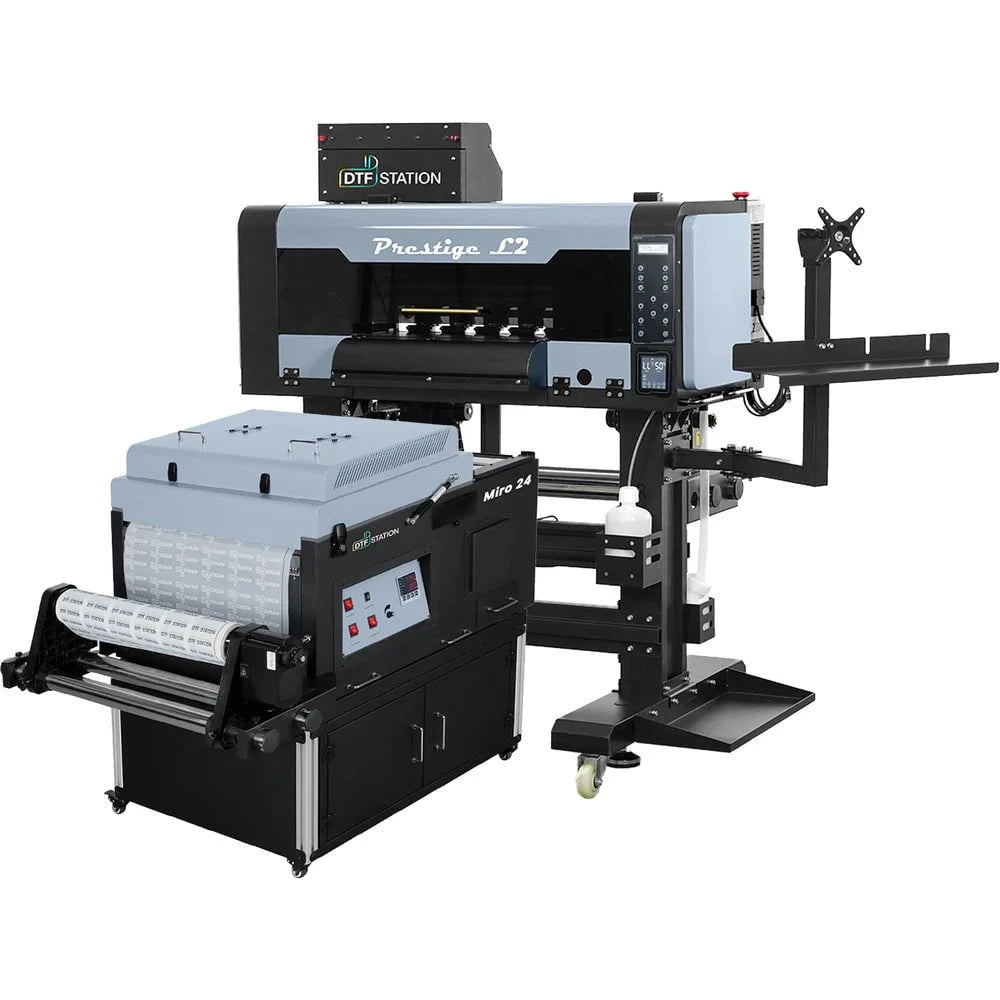
$379/month Prestige L2 18.5" DTF Printer Dual i3200 with Miro 16 Automatic Powder Applicator/Shaker oven and Built-In Oven
Sale
$379/month Prestige L2 18.5" DTF Printer Dual i3200 with Miro 16 Automatic Powder Applicator/Shaker oven and Built-In Oven
- Sale price
- $379
- Regular price
- $465
$195/Month 27" IN-STOCK Yinstar High Precision 27" Commercial Production DTF Printer with 2x i3200-A1 Epson Printheads DTF Powder Shaker.


Sale


$195/Month 27" IN-STOCK Yinstar High Precision 27" Commercial Production DTF Printer with 2x i3200-A1 Epson Printheads DTF Powder Shaker.
- Sale price
- $195
- Regular price
- $249
$247/Month 24" IN-STOCK Yinstar WI-FI DTF Printer with 2x Epson I3200 Print Heads Including DTF Powder Shaker Machine with Air Filter and Auto Powder Recycling System


Sale


$247/Month 24" IN-STOCK Yinstar WI-FI DTF Printer with 2x Epson I3200 Print Heads Including DTF Powder Shaker Machine with Air Filter and Auto Powder Recycling System
- Sale price
- $247
- Regular price
- $350
The Definitive Guide to Upgrading DTF Station DTF Printers to Color Prime Chroma DTF Ink

The Engineering Superiority of Color Prime Chroma Ink
Color Prime Chroma is a highly refined water-based polymer suspension manufactured through a rigorous Korean milling process. It provides enhanced pigment saturation, strict Pantone matching capabilities, and extended garment washability. This exact formulation significantly expands your digital colour gamut without requiring supplementary hardware modifications.
Digital textile printing demands precise chemical formulations to achieve specific brand colours. The newest Chroma variant upgrades the original Color Prime foundation by utilizing heavily purified water to strictly prevent microbial growth within your commercial print architecture. Manufacturers execute an aggressive mechanical milling technique to break down CMYK pigment particles. This ensures highly consistent fluid viscosity through the micro-channels of commercial print heads like those found in the Prestige R1, R2 Pro, and XL3 systems.
Advanced colorimetric data extracted via specialized calibration software demonstrates a massive digital gamut volume exceeding 427,000 for the Chroma ink. This vast chromatic range enables deeply saturated greens, highly accurate neutral grayscales, and intense orange hues previously unattainable in standard four-channel setups.
Performance and Gamut Comparisons
Even when compared against extended RGBO (Red, Green, Blue, Orange) systems, this exact CMYK formulation matches or exceeds output saturation. Shop owners gain superior chromatic performance without maintaining extra fluid channels.
To understand the exhaustive three-year laboratory testing and manufacturing process behind this formulation, review the official DTF Station engineering breakdown below:
For a highly technical deep dive into ICC profiling, colour gamut mapping, and direct comparisons against competing global inks, watch this independent colorimetric analysis:
| Ink Category | Digital Gamut Volume | Key Chromatic Strengths | Hardware Required |
| Color Prime Chroma | 427,000+ (Excellent) | Intense greens, deep reds, neutral greys. | Standard CMYK + W |
| Legacy Color Prime | 350,000+ (Good) | Solid baseline saturation. | Standard CMYK + W |
| Standard US/Chinese Inks | Variable (Lower) | Adequate for hobbyists; duller greens. | Standard CMYK + W |
| Standard RGBO Systems | Variable (High) | Good oranges and blues, but complex. | 6-Channel System |
Phase 1: Pre-Transition Hardware Preparation
Executing a secure ink transition requires lowering existing fluid volumes, securing dedicated extraction syringes with extended tubing, and performing immediate hardware maintenance. Operators must thoroughly clean the capping station, wiper blades, and print head perimeter to guarantee adequate system suction pressure.
Preparation strictly prevents chemical cross-contamination. Old fluid must not mix with the new Chroma formula. Mixing disparate chemical formulations often causes immediate pigment coagulation. This rapid thickening severely damages micro-nozzles and requires costly hardware replacements across your production floor.
Schedule this maintenance window when your current CMYK tanks are nearly empty. Ink represents a major production expense. Running your levels down naturally reduces chemical waste and limits the manual extraction volume required by your technicians. Ensure you have extra silicone tubing, an industrial 60ml syringe, and lint-free swabs ready.
Step-by-Step Manual Ink Extraction
System flushing completely evacuates legacy pigment from the internal delivery lines and damper reservoirs. Technicians extract residual reservoir fluid manually before utilizing native software utility sequences to purge the remaining liquid directly into the primary waste collection receptacle. This prevents catastrophic cross-contamination.
Accurate extraction begins at the main reservoir. Secure your syringe to the extended tubing. Insert this assembly directly to the bottom of the CMYK tanks.
Watch the complete visual guides below to see this exact extraction process performed on the Prestige R1 and the Prestige R2 Pro / L2 systems:
Replacing DTF Inks In The Prestige R1:
Replacing DTF Inks In The Prestige R2, L2, XL2, XL3, and XL4:
-
Extract the Fluid: Pull the syringe plunger slowly. Pulling with excessive force creates a vacuum snap that ejects dye backwards onto your workspace.
-
Isolate the Waste: Deposit all pulled fluid into a designated external waste bottle.
-
Preserve the White Channel: The white ink formulation remains entirely unchanged. You only extract cyan, magenta, yellow, and black.
-
Dispose Responsibly: Operators should always consult the Government of Canada regulations for hazardous waste to confirm exact municipal disposal procedures for water-based commercial pigments.
Software-Assisted Line Purging Protocols
After manual reservoir extraction, operators initiate the native ink-fill function through the printer interface or companion pilot software. This mechanical action engages the internal pump system, actively pulling the remaining stagnant fluid from the supply lines into the waste tank. This ensures clear pathways for the upgrade.
Open your primary control interface to begin the sequence. If you operate a Prestige XL2 Pro, navigate into your pilot software, target H1 for the left head, and trigger the ink charge command.
-
Select the designated colour print head (frequently labeled H1 or Left Head) inside your software.
-
Engage the "Ink Charge" or "Fill Ink" mechanical command.
-
Visually track the transparent delivery tubes until they run completely clear and show air bubbles.
-
Resolve Blockages: Occasionally, a stubborn colour line refuses to drain. To correct this, manually clamp the valves on the successfully drained tubes. This concentrates the total suction force directly onto the blocked line.
Phase 2: Loading and Priming the Chroma Formulation
Loading the upgraded polymer suspension involves aggressively agitating the new bottles to homogenize the pigment before filling your empty reservoirs. Once the chambers are full, operators must re-engage the internal pump sequence to push the fresh, highly saturated fluid down into the print head.
Remove the plastic tamper cap ring from the bottle neck entirely before pouring. Dropping foreign plastic into your main tank immediately obstructs the capillary flow. Fill every CMYK chamber strictly to the top indicator line.
Once full, engage the fill ink command again. Watch the vibrant new fluid travel down the clear tubing. Wait patiently until all lines present a solid, unbroken stream of colour entering the dampers.
-
Perform Head Cleanings: Your print head requires sustained mechanical pressure to adapt to the new fluid viscosity. Run three consecutive, continuous head cleanings.
-
Verify Nozzle Integrity: Print a diagnostic nozzle check directly onto a strip of clear transfer film to gauge the immediate output quality.
-
Inspect Hardware: If the check presents broken lines or colour starvation, your internal hardware filters are likely failing. You must explore our premium inventory of compatible DTF printing supplies to secure replacement dampers immediately.
Absolute Toner Logistics and Canadian Distribution
Absolute Toner engineers dynamic supply chain logistics to deliver verified commercial consumables rapidly across the Greater Toronto Area and nationwide. Our highly optimized Canadian fulfillment network ensures your professional print facilities receive replacement inks, dampers, and hardware maintenance supplies with absolutely minimal operational downtime.
Securing authentic materials dictates your overall output reliability. Our regional distribution centre executes high-velocity dispatch protocols for enterprise clients stretching from Vaughan to major commercial hubs across the country. We maintain stringent temperature-controlled inventory standards to guarantee product freshness upon arrival.
Upgrading to this exact formulation produces highly durable garments featuring verified, consistent curing profiles. To guarantee your staff handles these chemical upgrades safely, we advise reviewing safety protocols outlined by the Canadian Centre for Occupational Health and Safety (CCOHS). Contact our technical procurement team today to order authentic Color Prime Chroma ink and secure your specific production requirements.
- Choosing a selection results in a full page refresh.